📝 Original Info
- Title: Web World Models
- ArXiv ID: 2512.23676
- Date: 2025-12-29
- Authors: Researchers from original ArXiv paper
📝 Abstract
Language agents increasingly require persistent worlds in which they can act, remember, and learn. Existing approaches sit at two extremes: conventional web frameworks provide reliable but fixed contexts backed by databases, while fully generative world models aim for unlimited environments, but the world is constructed primarily through generation, making it harder to maintain a fixed, deterministic global framework, reducing controllability. In this work, we introduce the Web World Model (WWM), a middle ground where world state and "physics" are implemented in ordinary web code to ensure logical consistency, while large language models generate context, narratives, and high-level decisions on top of this structured latent state. We build a suite of WWMs on a realistic web stack, including an infinite travel atlas grounded in real geography, fictional galaxy explorers, web-scale encyclopedic and narrative worlds, and simulation-and game-like environments. Across these systems, we identify practical design principles for WWMs: separating code-defined rules from model-driven imagination, representing latent state as typed web interfaces, and utilizing deterministic generation to achieve unlimited but structured exploration. Our results suggest that web stacks themselves can serve as a scalable substrate for world models, enabling controllable yet open-ended environments.
💡 Deep Analysis
Deep Dive into Web World Models.
Language agents increasingly require persistent worlds in which they can act, remember, and learn. Existing approaches sit at two extremes: conventional web frameworks provide reliable but fixed contexts backed by databases, while fully generative world models aim for unlimited environments, but the world is constructed primarily through generation, making it harder to maintain a fixed, deterministic global framework, reducing controllability. In this work, we introduce the Web World Model (WWM), a middle ground where world state and “physics” are implemented in ordinary web code to ensure logical consistency, while large language models generate context, narratives, and high-level decisions on top of this structured latent state. We build a suite of WWMs on a realistic web stack, including an infinite travel atlas grounded in real geography, fictional galaxy explorers, web-scale encyclopedic and narrative worlds, and simulation-and game-like environments. Across these systems, we iden
📄 Full Content
Web World Models
Jichen Feng∗1,3
Yifan Zhang∗1
Chenggong Zhang∗2
Yifu Lu∗1
Shilong Liu1†
Mengdi Wang1†
1Princeton University
2University of California, Los Angeles
3University of Pennsylvania
Project Page: https://princeton-ai2-lab.github.io/Web-World-Models/
Abstract
Language agents increasingly require persistent worlds in which they can act, remember, and
learn. Existing approaches sit at two extremes: conventional web frameworks provide reliable
but fixed contexts backed by databases, while fully generative world models aim for unlimited
environments, but the world is constructed primarily through generation, making it harder to
maintain a fixed, deterministic global framework, reducing controllability. In this work, we
introduce the Web World Model (WWM), a middle ground where world state and “physics”
are implemented in ordinary web code to ensure logical consistency, while large language models
generate context, narratives, and high-level decisions on top of this structured latent state. We
build a suite of WWMs on a realistic web stack, including an infinite travel atlas grounded
in real geography, fictional galaxy explorers, web-scale encyclopedic and narrative worlds, and
simulation- and game-like environments. Across these systems, we identify practical design
principles for WWMs: separating code-defined rules from model-driven imagination, representing
latent state as typed web interfaces, and utilizing deterministic generation to achieve unlimited
but structured exploration. Our results suggest that web stacks themselves can serve as a scalable
substrate for world models, enabling controllable yet open-ended environments.
Web Framework
Web World Model
World Model
Context is
bounded by DB-
backed content.
Framework
sets rules; LLMs fill
in content.
Models generate
the whole world.
Controllability
Controllability
Unlimited Context
Text/code based env
Controllability
Text/code based env
Unlimited Context
Unlimited Context
Text/code based env
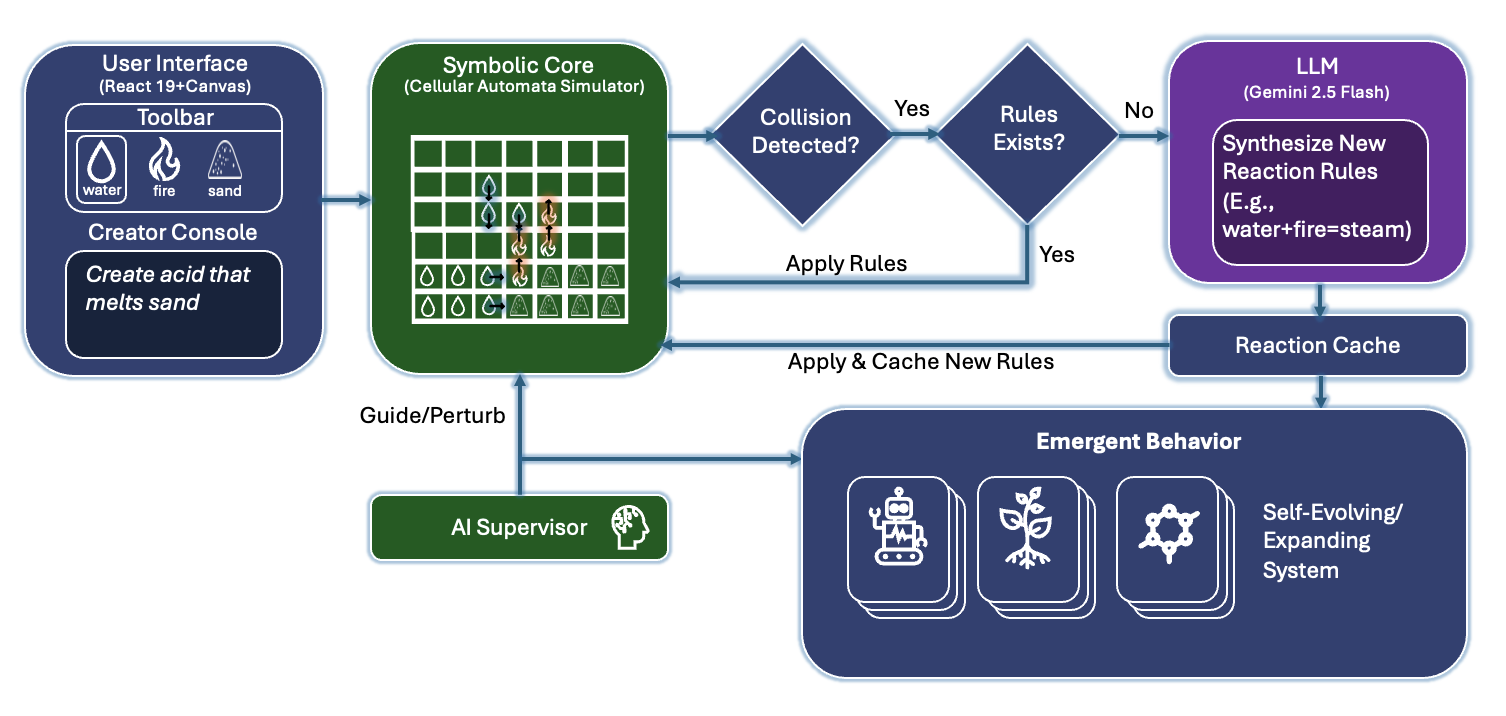
Figure 1 Left: Traditional Web Frameworks fix context in databases, limiting scalability. Center: The Web
World Model (Ours) decouples logic from content, generating unlimited context via LLMs upon a code-based
physics layer without heavy data storage. Right: Fully generative world models can produce unlimited
context and rich video/3D content, but when the world is constructed primarily through generation, it is
harder to maintain a fixed, deterministic global framework, reducing controllability.
∗Equal contribution;
†Corresponding authors.
1
arXiv:2512.23676v1 [cs.AI] 29 Dec 2025
1
Introduction
Modern language agents increasingly need persistent environments in which they can act, remember,
and grow. Today, most practical systems sit at one of two extremes (Figure 1). On one side,
conventional web frameworks operate with a fixed context: application state is stored in databases
and exposed through hand-crafted endpoints. This design offers reliability, robust engineering
tooling, and clear security boundaries, but the world agents can inhabit is ultimately bounded by
the schema developers anticipated in advance. On the other side, general world models attempt to
generate environments directly in the latent space of a model, in principle supporting unlimited
context and arbitrary environment types. However, these fully generative worlds are difficult to
control, hard to debug, and costly to scale, and they often lack the structural guarantees needed for
long-running applications. As a result, there is a missing middle ground between fixed-context web
applications and unconstrained world models.
We propose to fill this gap with the notion of a Web World Model (WWM). A Web World
Model is a world whose state and “physics” are defined by ordinary web code (e.g., TypeScript
modules, HTTP handlers, and database schemas), while large language models generate context
and narratives on top of this structured latent state. In this view, code specifies what kinds of
entities exist, how they interact, and which actions are possible; the model is invoked to enrich these
entities with descriptions, stories, or task-specific reasoning. WWMs thus inherit the controllability,
observability, and tooling of web frameworks, yet they can procedurally expand to an effectively
unlimited state space by using language models to synthesize new content on demand. Compared
with fixed web systems, WWMs are not bound to a small, static context; compared with fully
generative world models, they offer a programmable substrate that can be tested, versioned, and
deployed using standard web infrastructure.
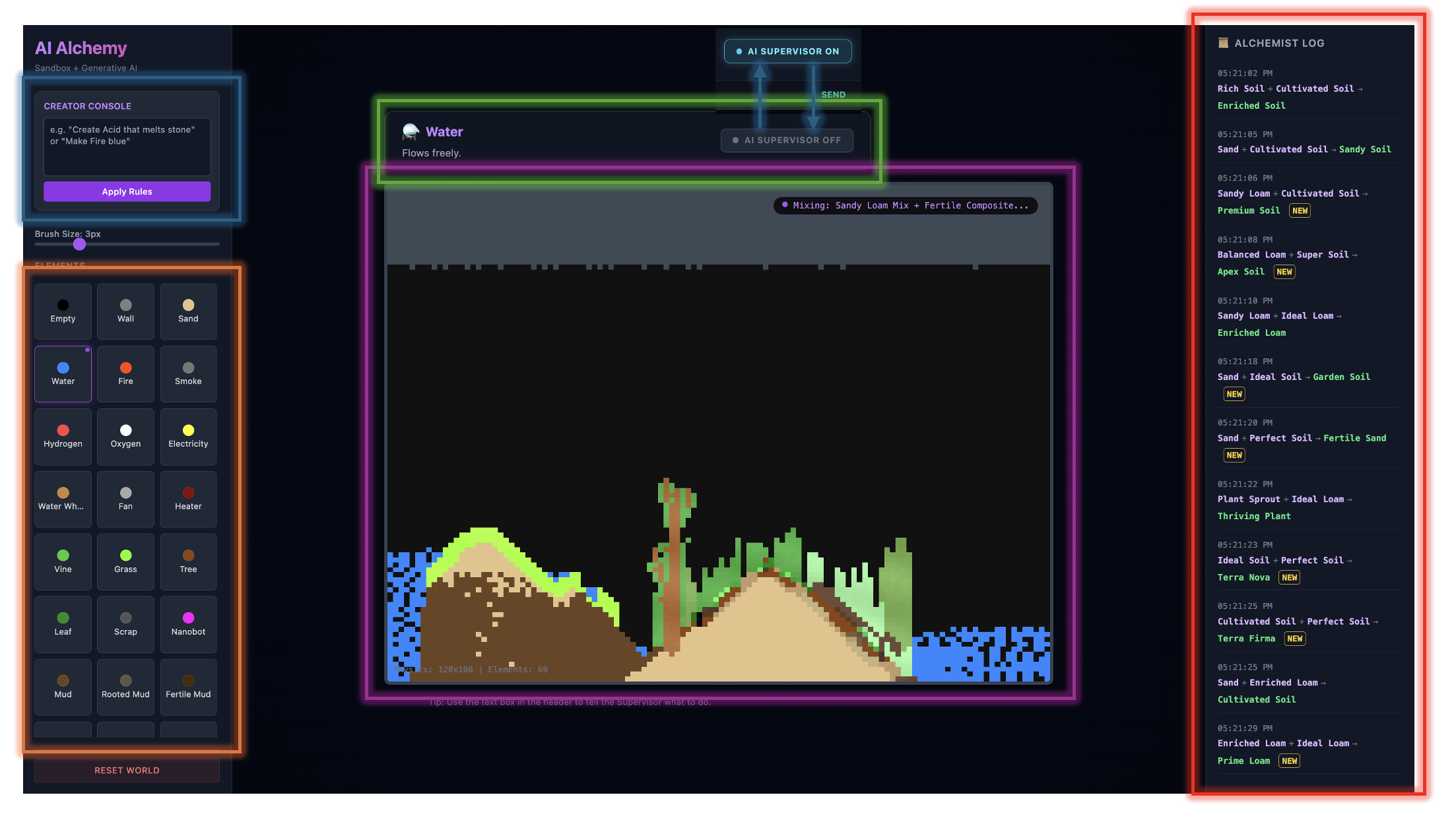
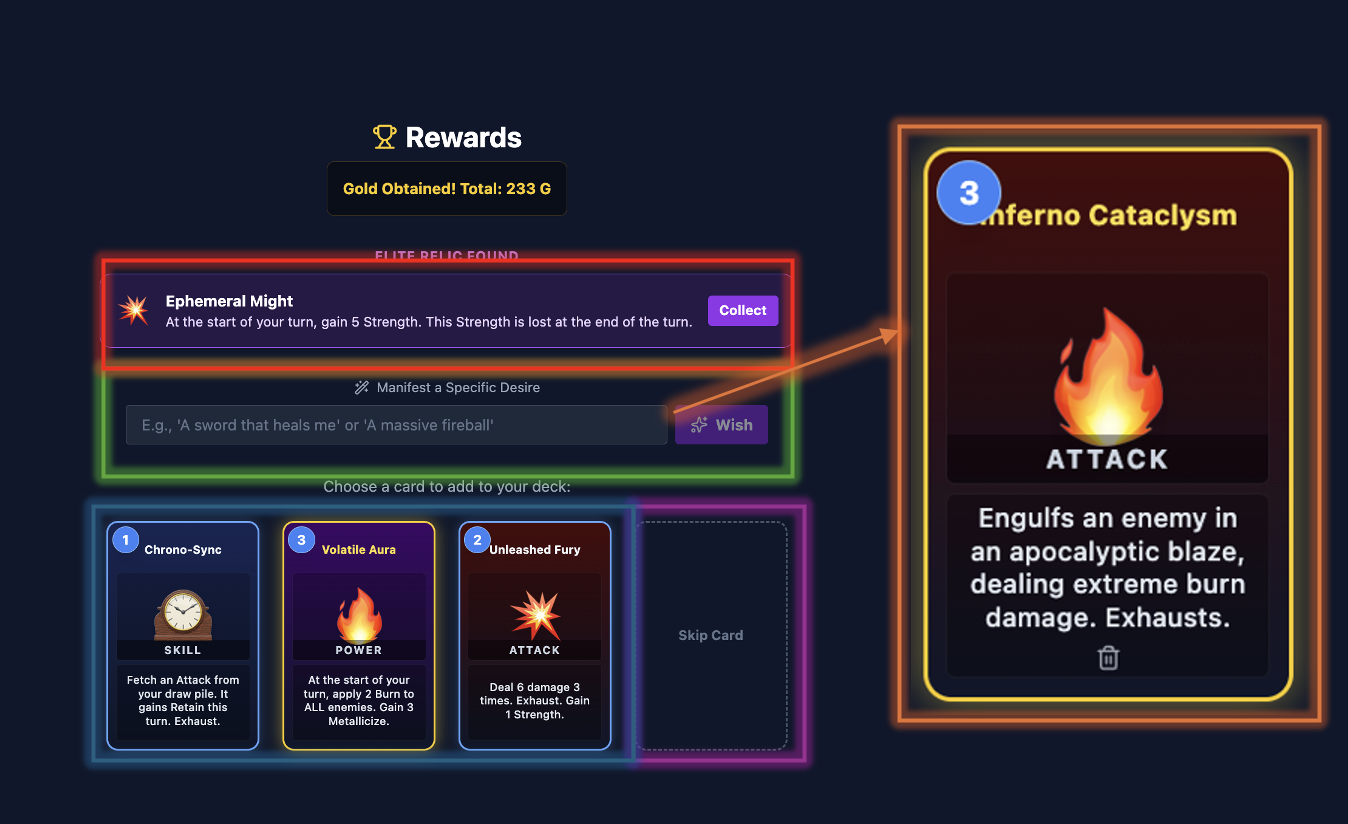
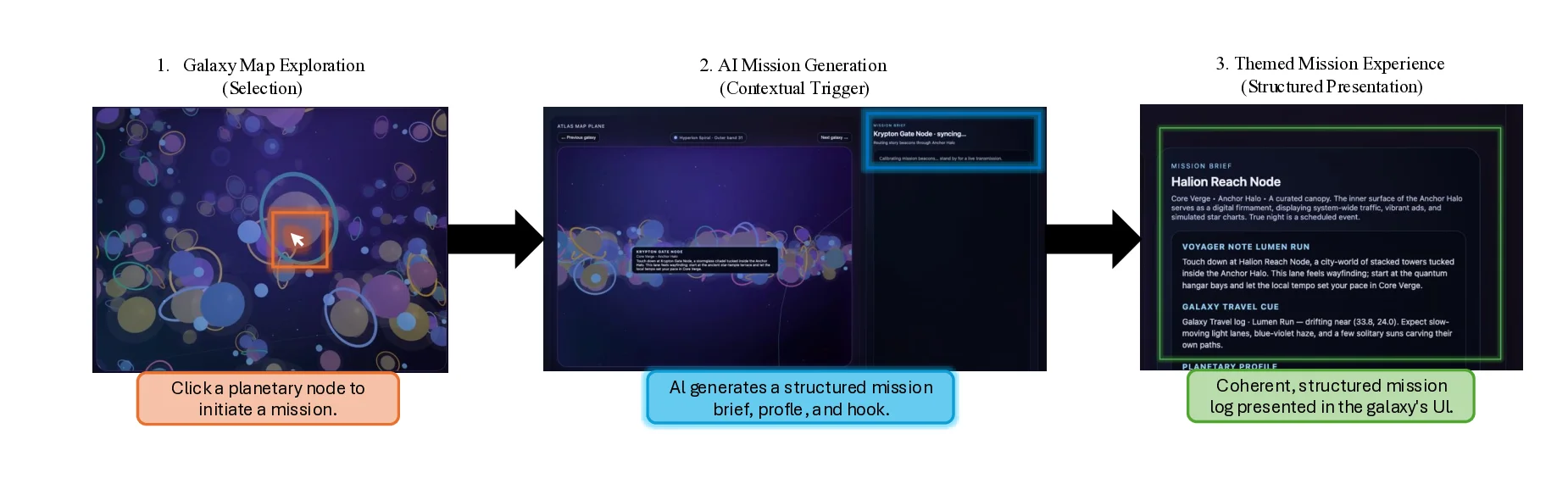
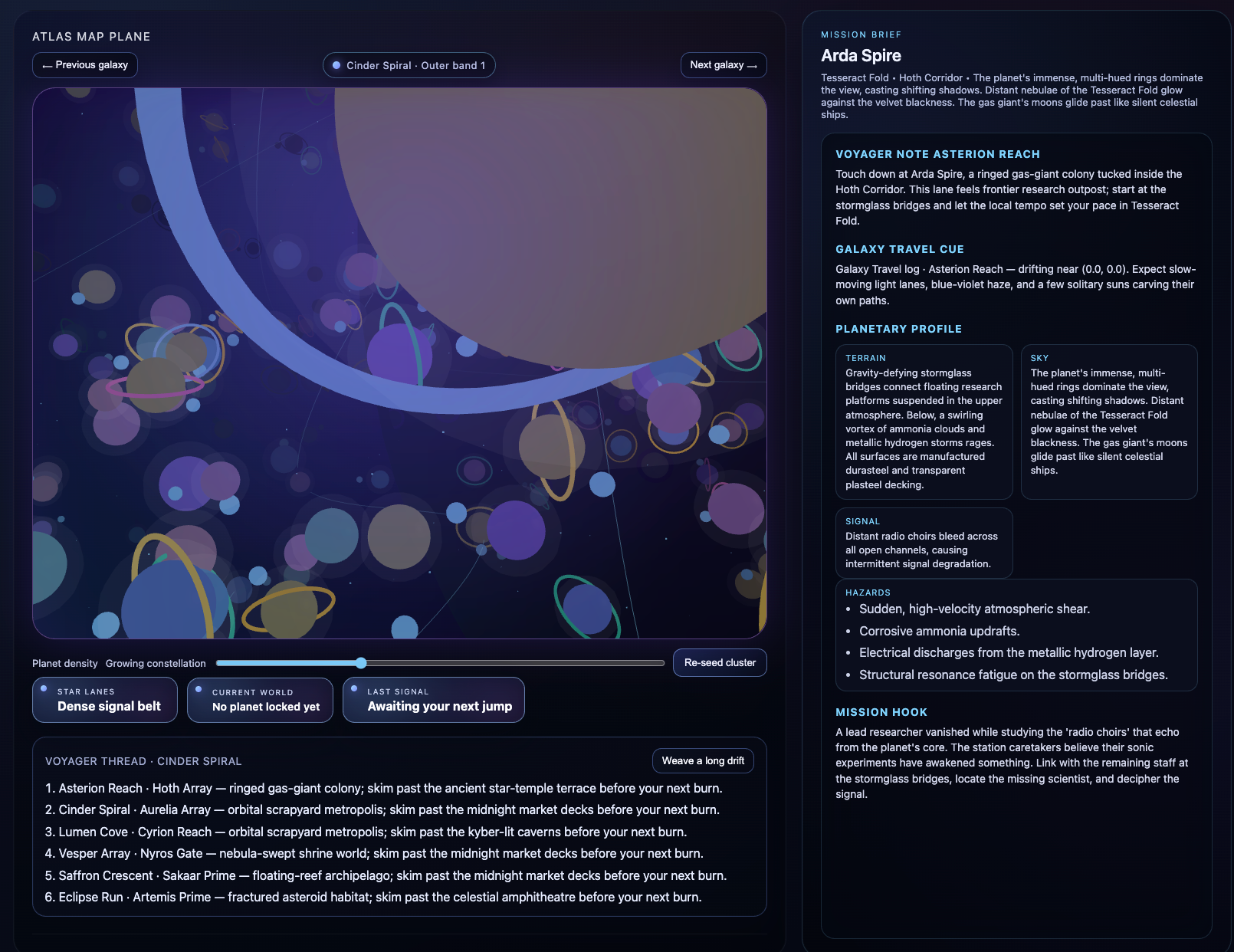
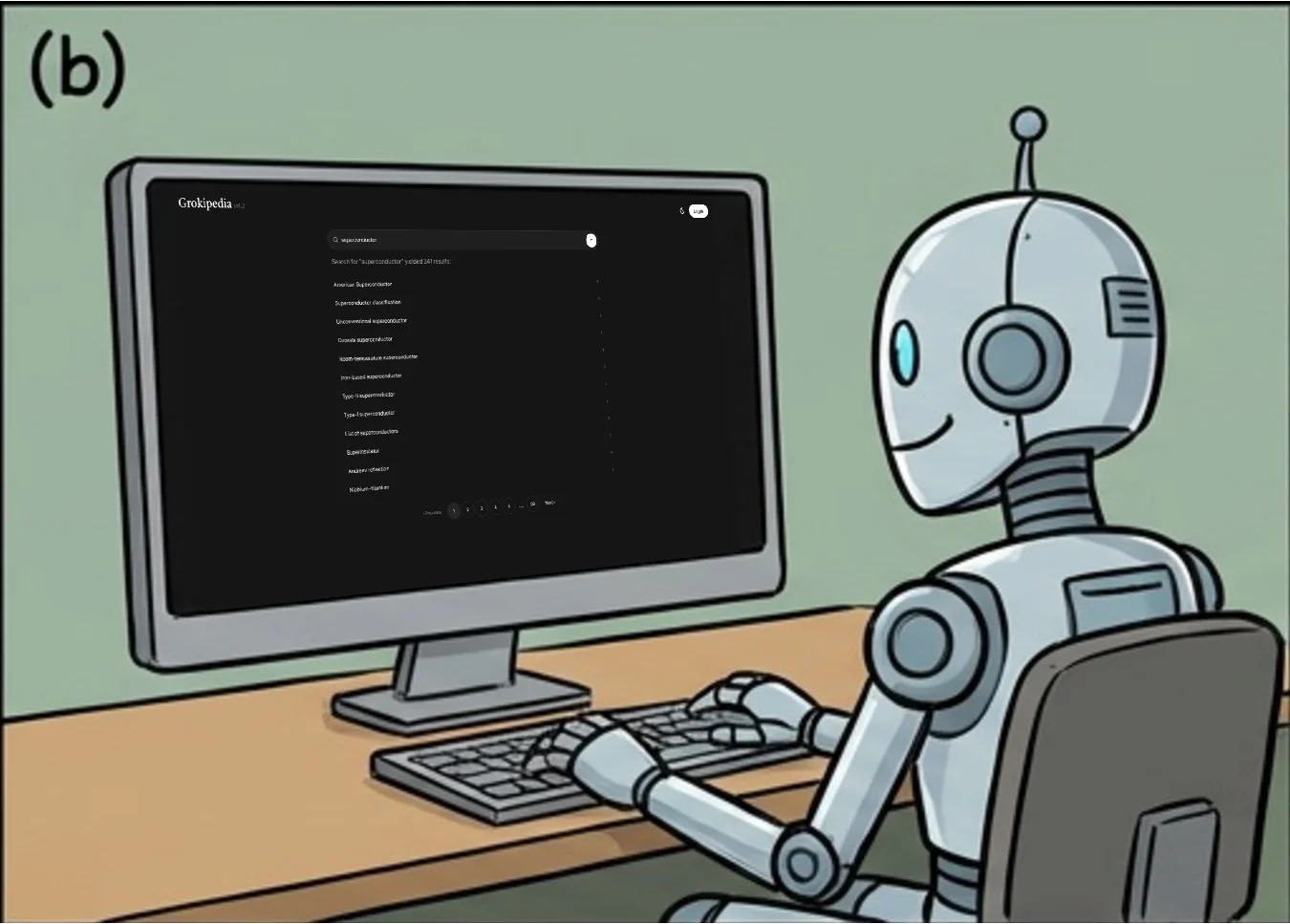
Figure 2 Illustrations of a series of Web World Models introduced in this work. Details are presented in
Section 3.
To make this idea concrete, we implement a series of Web World Models on a unified web
technology stack. These systems span a wide range of domains. An Infinite Travel Atlas turns the
2
real Earth into an explorable atlas, where any coordinate can be expanded into rich pl
…(Full text truncated)…
📸 Image Gallery
Reference
This content is AI-processed based on ArXiv data.