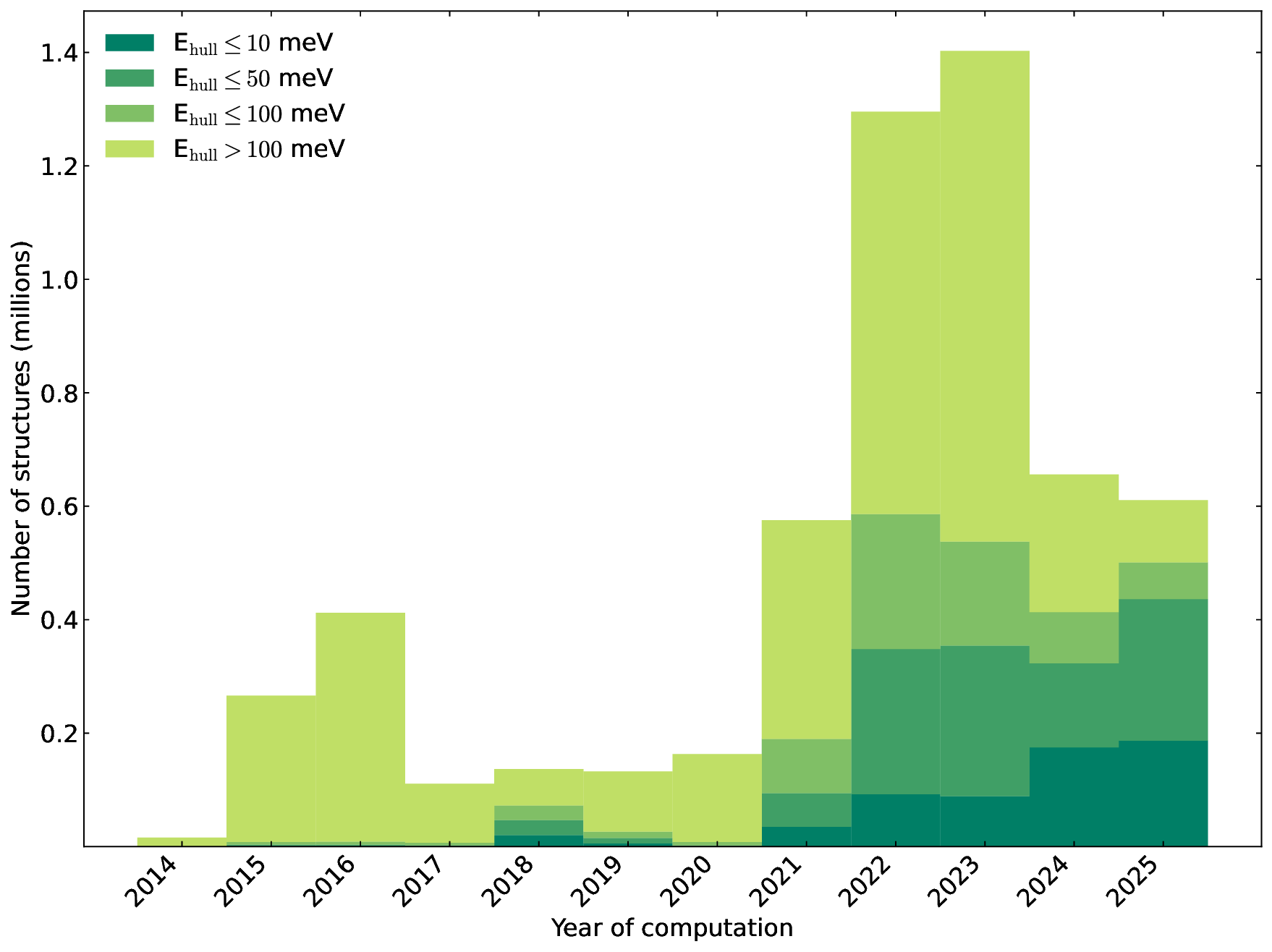
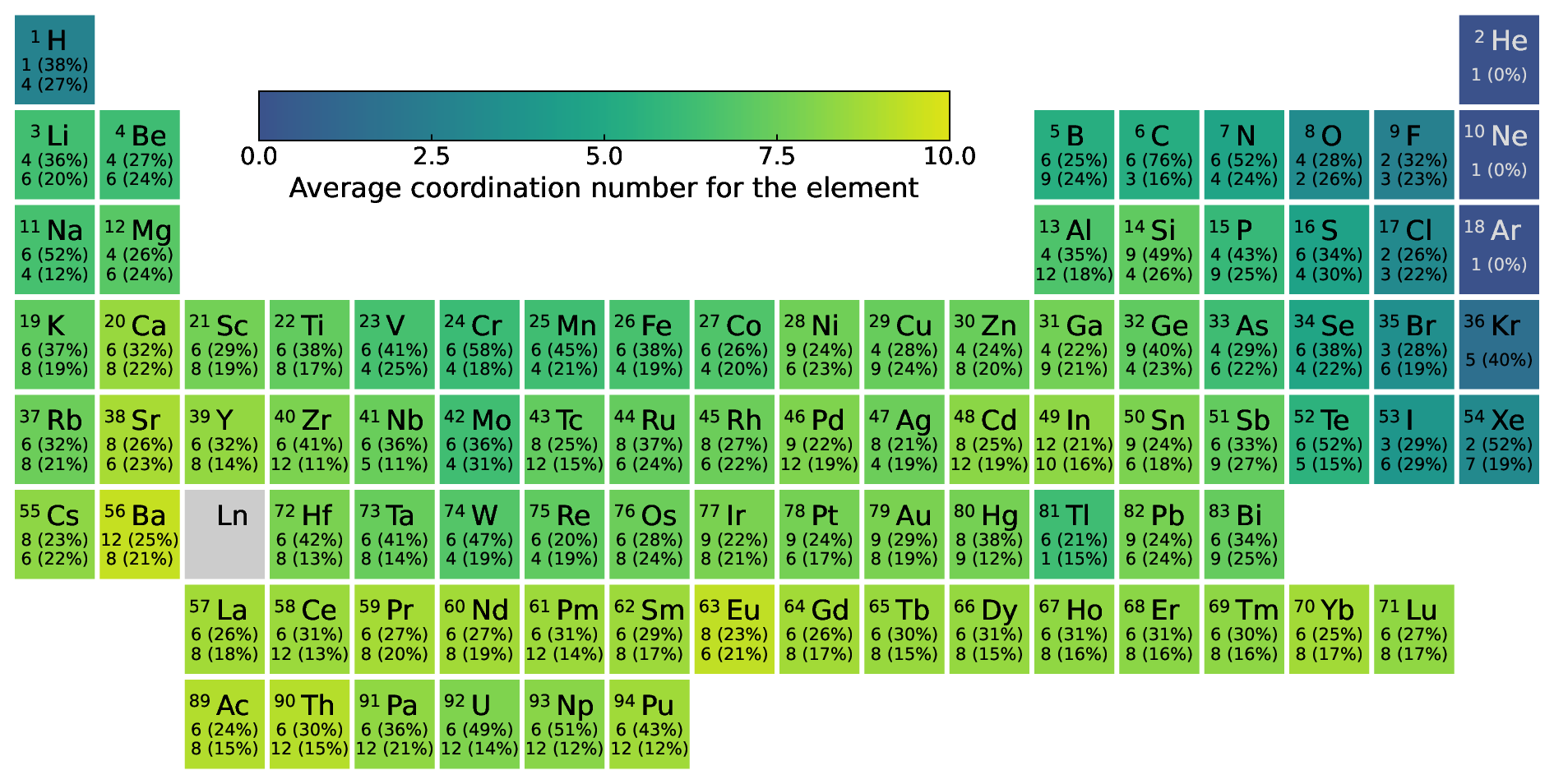
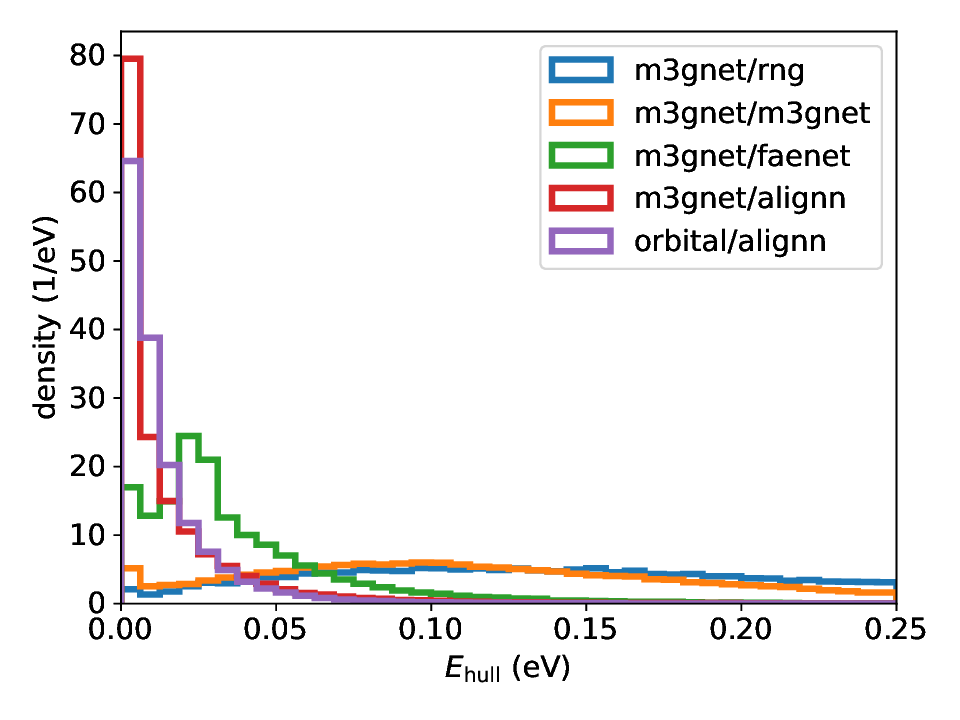
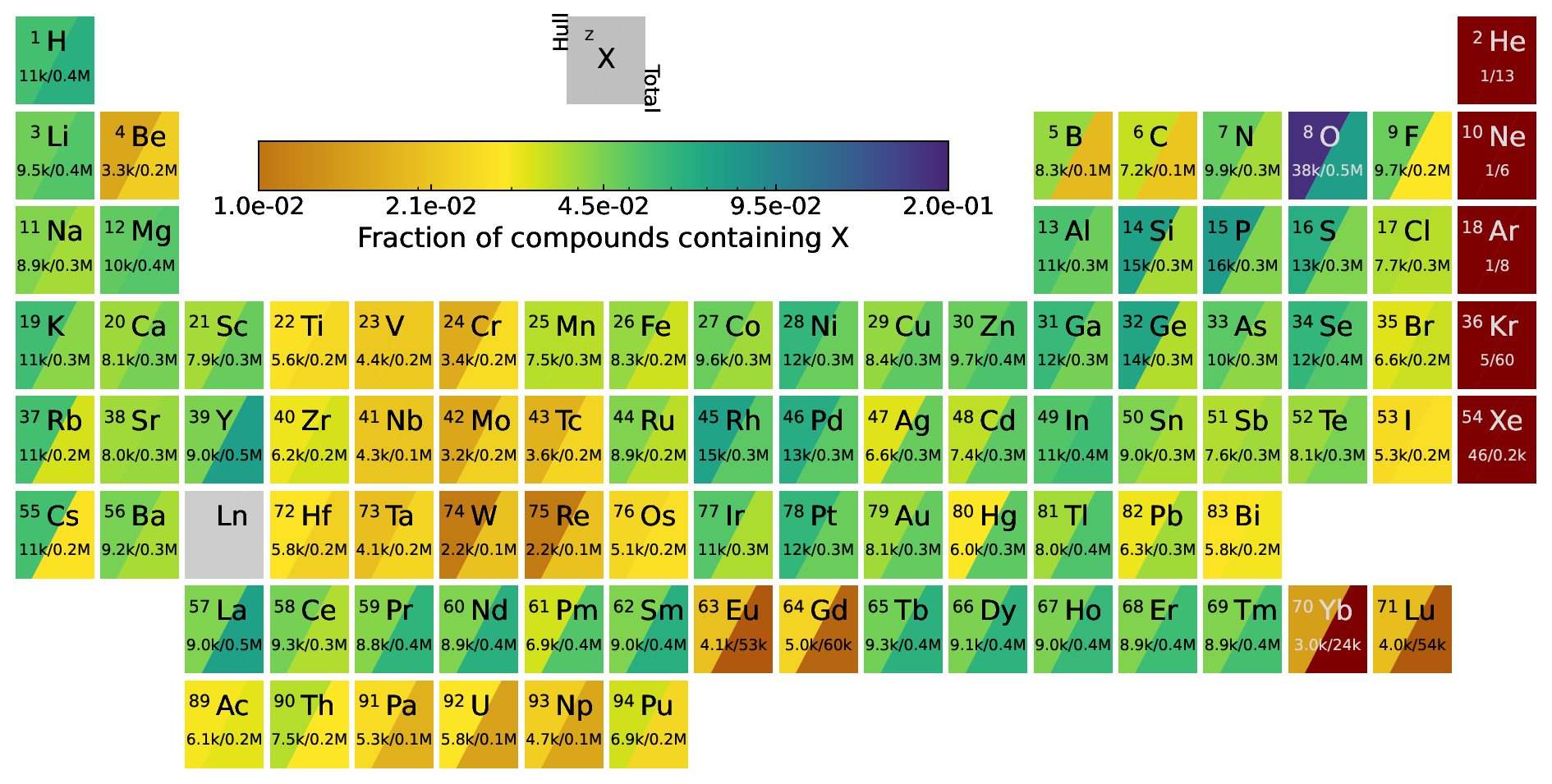
We present a novel multi-stage workflow for computational materials discovery that achieves a 99% success rate in identifying compounds within 100 meV/atom of thermodynamic stability, with a threefold improvement over previous approaches. By combining the Matra-Genoa generative model, Orb-v2 universal machine learning interatomic potential, and ALIGNN graph neural network for energy prediction, we generated 119 million candidate structures and added 1.3 million DFT-validated compounds to the Alexandria database, including 74 thousand new stable materials. The expanded Alexandria database now contains 5.8 million structures with 175 thousand compounds on the convex hull. Predicted structural disorder rates (37-43%) match experimental databases, unlike other recent AI-generated datasets. Analysis reveals fundamental patterns in space group distributions, coordination environments, and phase stability networks, including sub-linear scaling of convex hull connectivity. We release the complete dataset, including sAlex25 with 14 million out-of-equilibrium structures containing forces and stresses for training universal force fields. We demonstrate that fine-tuning a GRACE model on this data improves benchmark accuracy. All data, models, and workflows are freely available under Creative Commons licenses.
Deep Dive into AI-Driven Expansion and Application of the Alexandria Database.
We present a novel multi-stage workflow for computational materials discovery that achieves a 99% success rate in identifying compounds within 100 meV/atom of thermodynamic stability, with a threefold improvement over previous approaches. By combining the Matra-Genoa generative model, Orb-v2 universal machine learning interatomic potential, and ALIGNN graph neural network for energy prediction, we generated 119 million candidate structures and added 1.3 million DFT-validated compounds to the Alexandria database, including 74 thousand new stable materials. The expanded Alexandria database now contains 5.8 million structures with 175 thousand compounds on the convex hull. Predicted structural disorder rates (37-43%) match experimental databases, unlike other recent AI-generated datasets. Analysis reveals fundamental patterns in space group distributions, coordination environments, and phase stability networks, including sub-linear scaling of convex hull connectivity. We release the compl
AI-Driven Expansion and Application of the Alexandria Database
Théo Cavignac,1 Jonathan Schmidt,2 Pierre-Paul De Breuck,1 Antoine Loew,1
Tiago F. T. Cerqueira,3 Hai-Chen Wang,1 Anton Bochkarev,4 Yury Lysogorskiy,4
Aldo H. Romero,5 Ralf Drautz,4 Silvana Botti,1, ∗and Miguel A. L. Marques1, †
1Research Center Future Energy Materials and Systems of the University Alliance Ruhr
and ICAMS, Ruhr University Bochum, Universitätsstraße 150, D-44801 Bochum, Germany
2Department of Materials, ETH Zürich, Zürich, CH-8093, Switzerland
3CFisUC, Department of Physics, University of Coimbra, Rua Larga, 3004-516 Coimbra, Portugal
4ICAMS, Ruhr-Universität Bochum, Universitätstrasse 150, 44801 Bochum,
Germany and ACEworks GmbH, Hagen-Hof-Weg 1, 44797 Bochum, Germany
5Department of Physics, West Virginia University, Morgantown, WV 26506, USA
(Dated: December 11, 2025)
We present a novel multi-stage workflow for computational materials discovery that achieves a
99% success rate in identifying compounds within 100 meV/atom of thermodynamic stability, with
a threefold improvement over previous approaches. By combining the Matra-Genoa generative
model, Orb-v2 universal machine learning interatomic potential, and ALIGNN graph neural
network for energy prediction, we generated 119 million candidate structures and added 1.3
million DFT-validated compounds to the Alexandria database, including 74 thousand new stable
materials.
The expanded Alexandria database now contains 5.8 million structures with 175
thousand compounds on the convex hull.
Predicted structural disorder rates (37–43%) match
experimental databases, unlike other recent AI-generated datasets. Analysis reveals fundamental
patterns in space group distributions, coordination environments, and phase stability networks,
including sub-linear scaling of convex hull connectivity. We release the complete dataset, including
sAlex25 with 14 million out-of-equilibrium structures containing forces and stresses for training
universal force fields.
We demonstrate that fine-tuning a GRACE model on this data improves
benchmark accuracy. All data, models, and workflows are freely available under Creative Commons
licenses.
I.
INTRODUCTION
Recent advances in availability of large materials
databases
serves
as
evidence
of
the
success
of
high-throughput (HT) materials discovery [1–8] and
provide reservoirs of hypothetical compounds that are
thermodynamically stable or close to stability. Despite
these advances, sampling the vast combinatorial space of
possible materials remains computationally intensive and
unfeasible by brute force. Fortunately, the development
of machine learning (ML) models has greatly accelerated
this process [9–13]. Conversely, we have also witnessed
a dramatic increase of data available to train new
models [3, 7, 8, 14].
Such a positive feedback loop
has significantly accelerated the material discovery for
technological applications ranging from energy storage
to catalysis and electronics.
The Alexandria database represents one of the
largest collections of ab initio calculations and is the
largest open database for thermodynamically stable
materials. Currently, it encompasses approximately 5.8
million structures calculated using density functional
theory (DFT), of which 175 thousand structures lie on
the convex hull.
The previous iteration of this dataset has been
∗silvana.botti@rub.de
† miguel.marques@rub.de
extensively utilized by the scientific community.
For
instance, all universal force-field models within the top
five [10, 14–18] of the Matbench Discovery ranking [19]
were trained using Alexandria data.
Some of these
force fields have advanced to the point where they
can reliably predict structural, vibrational, and thermal
properties [20], defect energies [21, 22], and infrared
spectra [23], thereby unlocking new avenues for exploring
physical phenomena.
Beyond
training
machine-learning
force
fields,
Alexandria has also been employed in the development
of generative models [24].
In addition to serving as a
training resource, this extensive database provides a
valuable foundation for data-driven design of functional
materials.
For instance, subsets of Alexandria have
been used to identify novel dielectric semiconductors [25],
novel
two
dimensional
materials
[26]
and
hard
magnets [27].
Furthermore, state-of-the-art machine-
learning–assisted high-throughput design frameworks
for
conventional
high-Tc
superconductors
leverage
Alexandria as their primary search space [28–30].
A major challenge in the growth of Alexandria is
to generate novel structures that are potentially located
near the convex hull with high success rate.
During
standard prototype-based high-throughput studies the
success rate is of the order of 0.1% [31].
To increase
the success rate of standard HT search, Wang et al. [32]
used data-driven chemical similarity measures to guide
systematic substitution, i.e. replacing elements in stable
or near-stable compounds with similar elements.
This
arXiv:251
…(Full text truncated)…
This content is AI-processed based on ArXiv data.