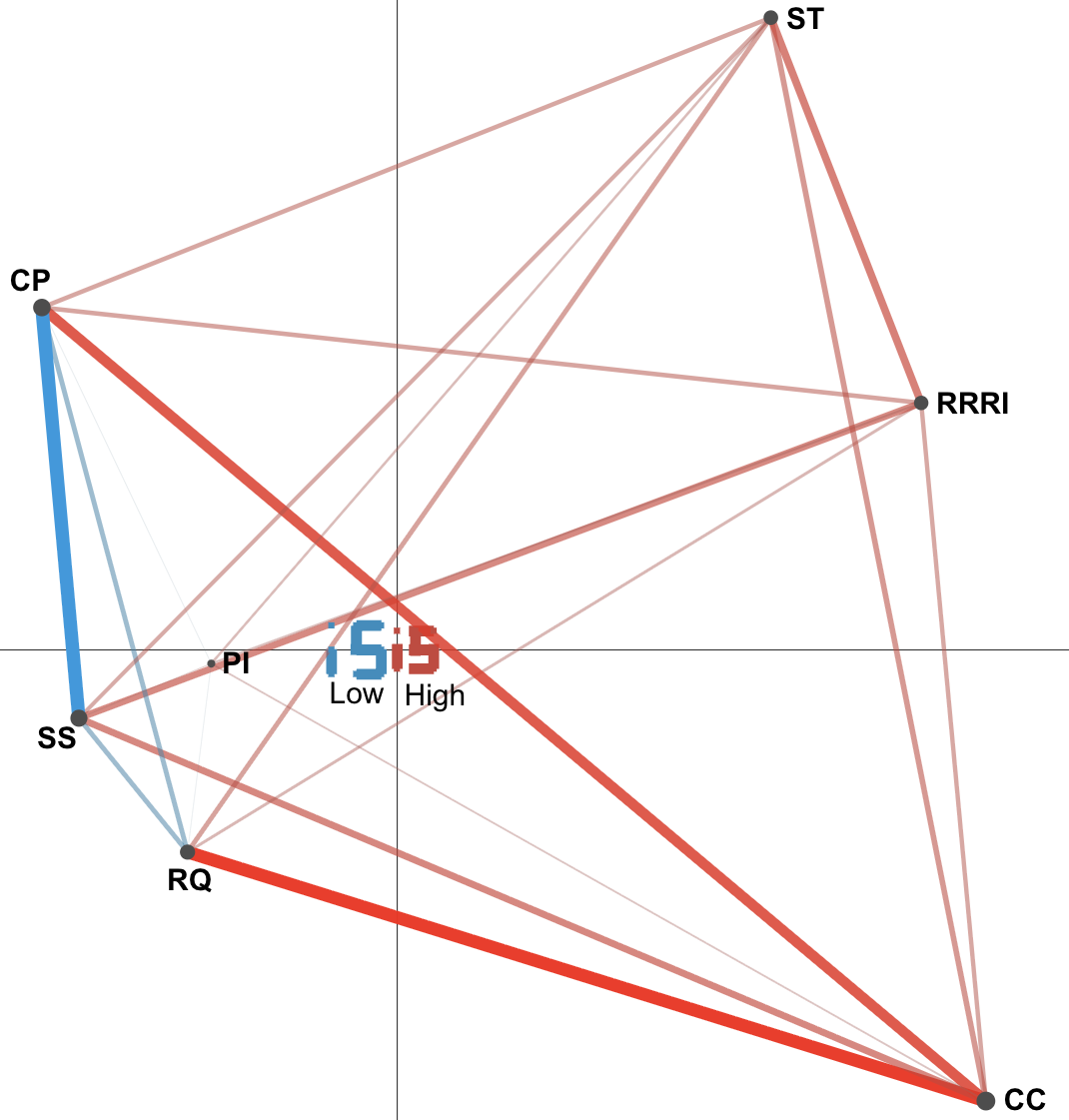
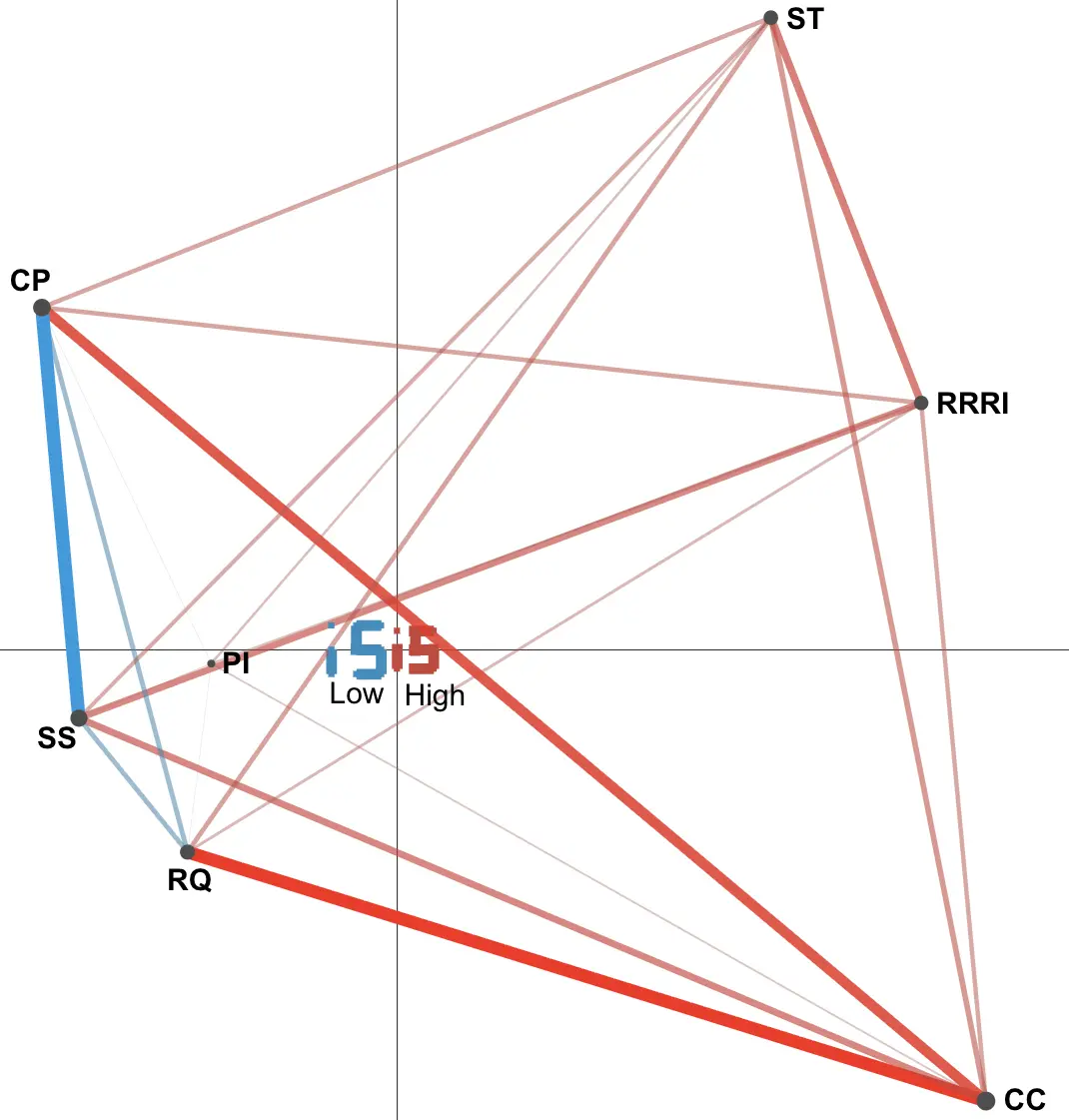
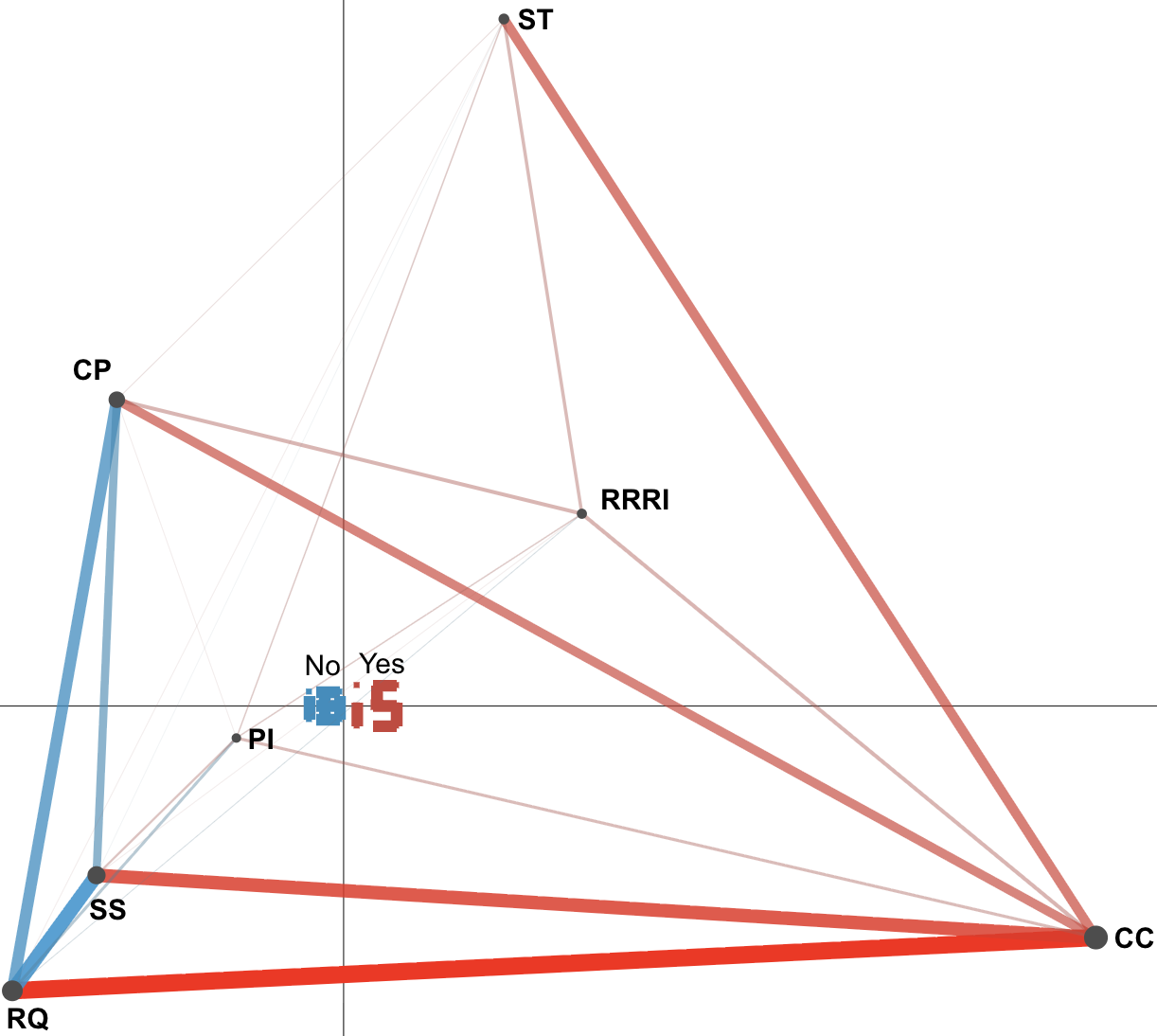
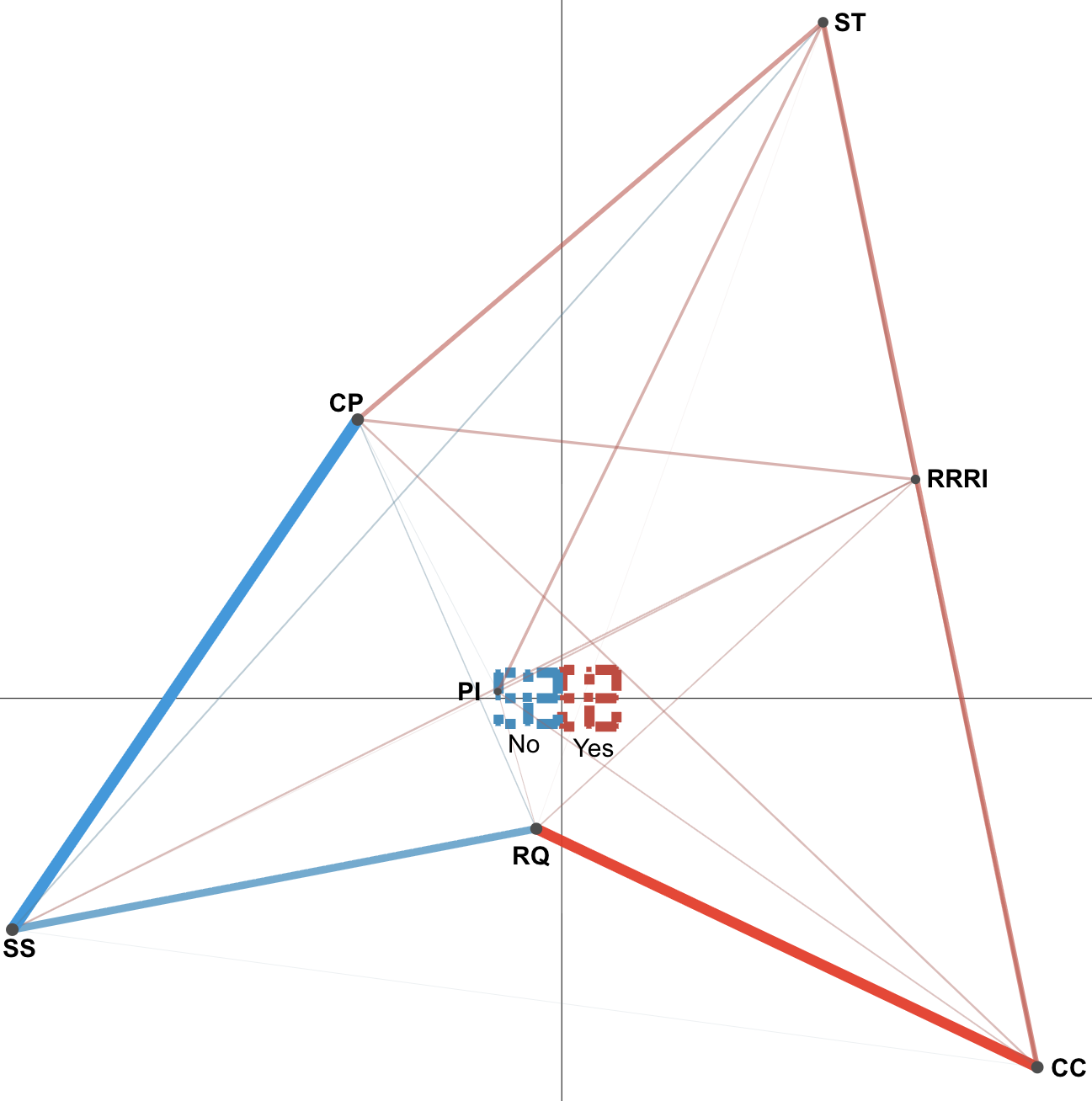
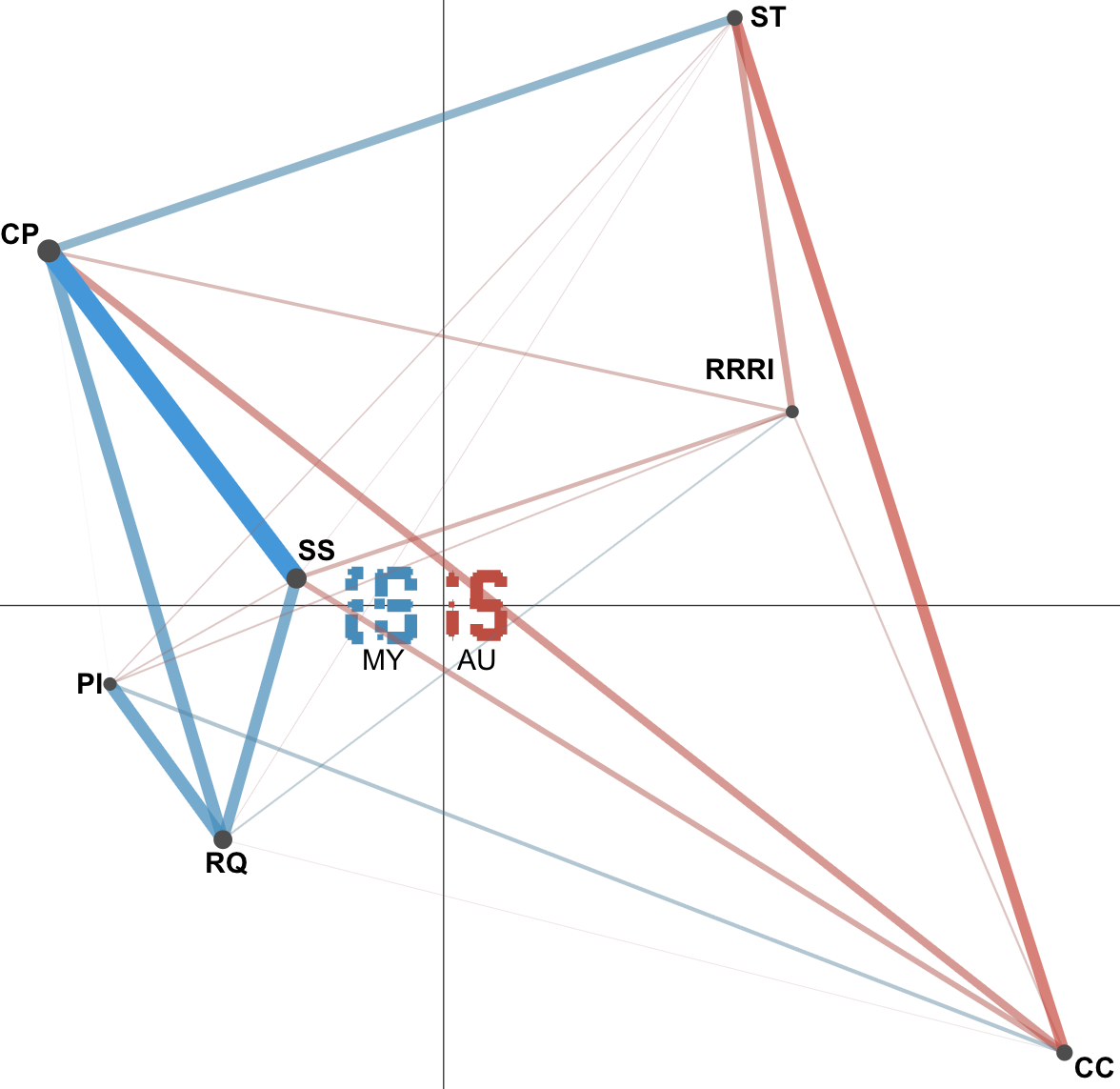
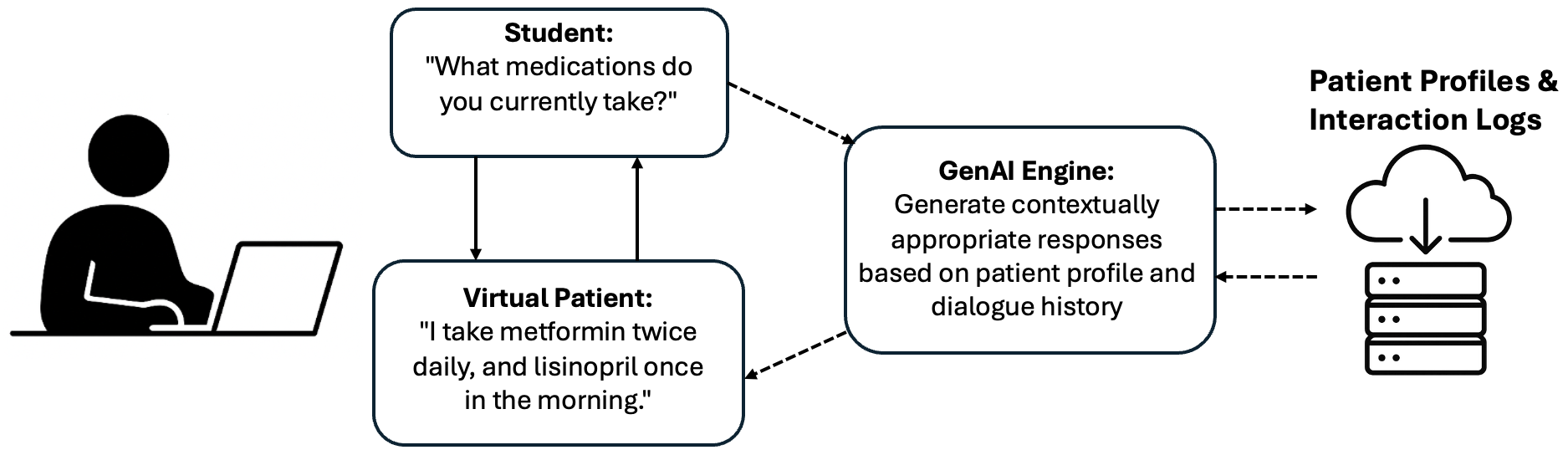
Assessment of medication history-taking has traditionally relied on human observation, limiting scalability and detailed performance data. While Generative AI (GenAI) platforms enable extensive data collection and learning analytics provide powerful methods for analyzing educational traces, these approaches remain largely underexplored in pharmacy clinical training. This study addresses this gap by applying learning analytics to understand how students develop clinical communication competencies with GenAI-powered virtual patients -- a crucial endeavor given the diversity of student cohorts, varying language backgrounds, and the limited opportunities for individualized feedback in traditional training settings. We analyzed 323 students' interaction logs across Australian and Malaysian institutions, comprising 50,871 coded utterances from 1,487 student-GenAI dialogues. Combining Epistemic Network Analysis to model inquiry co-occurrences with Sequential Pattern Mining to capture temporal sequences, we found that high performers demonstrated strategic deployment of information recognition behaviors. Specifically, high performers centered inquiry on recognizing clinically relevant information, integrating rapport-building and structural organization, while low performers remained in routine question-verification loops. Demographic factors including first-language background, prior pharmacy work experience, and institutional context, also shaped distinct inquiry patterns. These findings reveal inquiry patterns that may indicate clinical reasoning development in GenAI-assisted contexts, providing methodological insights for health professions education assessment and informing adaptive GenAI system design that supports diverse learning pathways.
Deep Dive into Uncovering Students' Inquiry Patterns in GenAI-Supported Clinical Practice: An Integration of Epistemic Network Analysis and Sequential Pattern Mining.
Assessment of medication history-taking has traditionally relied on human observation, limiting scalability and detailed performance data. While Generative AI (GenAI) platforms enable extensive data collection and learning analytics provide powerful methods for analyzing educational traces, these approaches remain largely underexplored in pharmacy clinical training. This study addresses this gap by applying learning analytics to understand how students develop clinical communication competencies with GenAI-powered virtual patients – a crucial endeavor given the diversity of student cohorts, varying language backgrounds, and the limited opportunities for individualized feedback in traditional training settings. We analyzed 323 students’ interaction logs across Australian and Malaysian institutions, comprising 50,871 coded utterances from 1,487 student-GenAI dialogues. Combining Epistemic Network Analysis to model inquiry co-occurrences with Sequential Pattern Mining to capture temporal
Uncovering Students’ Inquiry Patterns in GenAI-Supported Clinical Practice: An
Integration of Epistemic Network Analysis and Sequential Pattern Mining
JIAMENG WEI, Monash University, Australia
DINH DANG, Monash University, Australia
KAIXUN YANG, Monash University, Australia
EMILY STOKES, Monash University, Australia
AMNA MAZEH, Monash University, Australia
ANGELINA LIM, Monash University, Australia
DAVID WEI DAI, University College London, United Kingdom
JOEL MOORE, Monash University, Australia
YIZHOU FAN, Peking University, China
DANIJELA GASEVIC, Monash University, Australia
DRAGAN GASEVIC, Monash University, Australia
GUANLIANG CHEN∗, Monash University, Australia
Assessment of medication history-taking has traditionally relied on human observation, limiting scalability and detailed performance
data. While Generative AI (GenAI) platforms enable extensive data collection and learning analytics provide powerful methods for
analyzing educational traces, these approaches remain largely underexplored in pharmacy clinical training. This study addresses this
gap by applying learning analytics to understand how students develop clinical communication competencies with GenAI-powered
virtual patients—a crucial endeavor given the diversity of student cohorts, varying language backgrounds, and the limited opportunities
for individualized feedback in traditional training settings. We analyzed 323 students’ interaction logs across Australian and Malaysian
institutions, comprising 50,871 coded utterances from 1,487 student-GenAI dialogues. Combining Epistemic Network Analysis to model
inquiry co-occurrences with Sequential Pattern Mining to capture temporal sequences, we found that high performers demonstrated
strategic deployment of information recognition behaviors. Specifically, high performers centered inquiry on recognizing clinically
relevant information, integrating rapport-building and structural organization, while low performers remained in routine question-
verification loops. Demographic factors including first-language background, prior pharmacy work experience, and institutional
context, also shaped distinct inquiry patterns. These findings reveal inquiry patterns that may indicate clinical reasoning development
∗Corresponding author.
Authors’ Contact Information: Jiameng Wei, jiameng.wei@monash.edu, Monash University, Australia; Dinh Dang, ddan0023@student.monash.edu,
Monash University, Australia; Kaixun Yang, kaixun.yang1@monash.edu, Monash University, Australia; Emily Stokes, emily.stokes@monash.edu, Monash
University, Australia; Amna Mazeh, amna.mazeh@monash.edu, Monash University, Australia; Angelina Lim, angelina.lim@monash.edu, Monash
University, Australia; David Wei Dai, david.dai@ucl.ac.uk, University College London, United Kingdom; Joel Moore, Joel.Moore@monash.edu, Monash
University, Australia; Yizhou Fan, fyz@pku.edu.cn, Peking University, China; Danijela Gasevic, Danijela.Gasevic@monash.edu, Monash University,
Australia; Dragan Gasevic, dragan.gasevic@monash.edu, Monash University, Australia; Guanliang Chen, guanliang.chen@monash.edu, Monash University,
Australia.
Permission to make digital or hard copies of all or part of this work for personal or classroom use is granted without fee provided that copies are not
made or distributed for profit or commercial advantage and that copies bear this notice and the full citation on the first page. Copyrights for components
of this work owned by others than ACM must be honored. Abstracting with credit is permitted. To copy otherwise, or republish, to post on servers or to
redistribute to lists, requires prior specific permission and/or a fee. Request permissions from permissions@acm.org.
© 2025 ACM.
Manuscript submitted to ACM
Manuscript submitted to ACM
1
arXiv:2512.06018v1 [cs.CY] 4 Dec 2025
2
Wei et al.
in GenAI-assisted contexts, providing methodological insights for health professions education assessment and informing adaptive
GenAI system design that supports diverse learning pathways.
Additional Key Words and Phrases: Generative Artificial Intelligence, Pharmacy Education, Medication History-Taking, Clinical
Communication, Epistemic Network Analysis, Sequential Pattern Mining
ACM Reference Format:
Jiameng Wei, Dinh Dang, Kaixun Yang, Emily Stokes, Amna Mazeh, Angelina Lim, David Wei Dai, Joel Moore, Yizhou Fan, Danijela
Gasevic, Dragan Gasevic, and Guanliang Chen. 2025. Uncovering Students’ Inquiry Patterns in GenAI-Supported Clinical Practice: An
Integration of Epistemic Network Analysis and Sequential Pattern Mining. 1, 1 (December 2025), 17 pages. https://doi.org/XXXXXXX.
XXXXXXX
1
Introduction
Medication history-taking represents a fundamental competency in health professions education, encompassing the
systematic processes through which clinicians identify medication needs, review current therapies, and synthesize
information to ensure safe prescribing practices [3]. Within pharmacy education, medication history-taking compe-
tencies can
…(Full text truncated)…
This content is AI-processed based on ArXiv data.