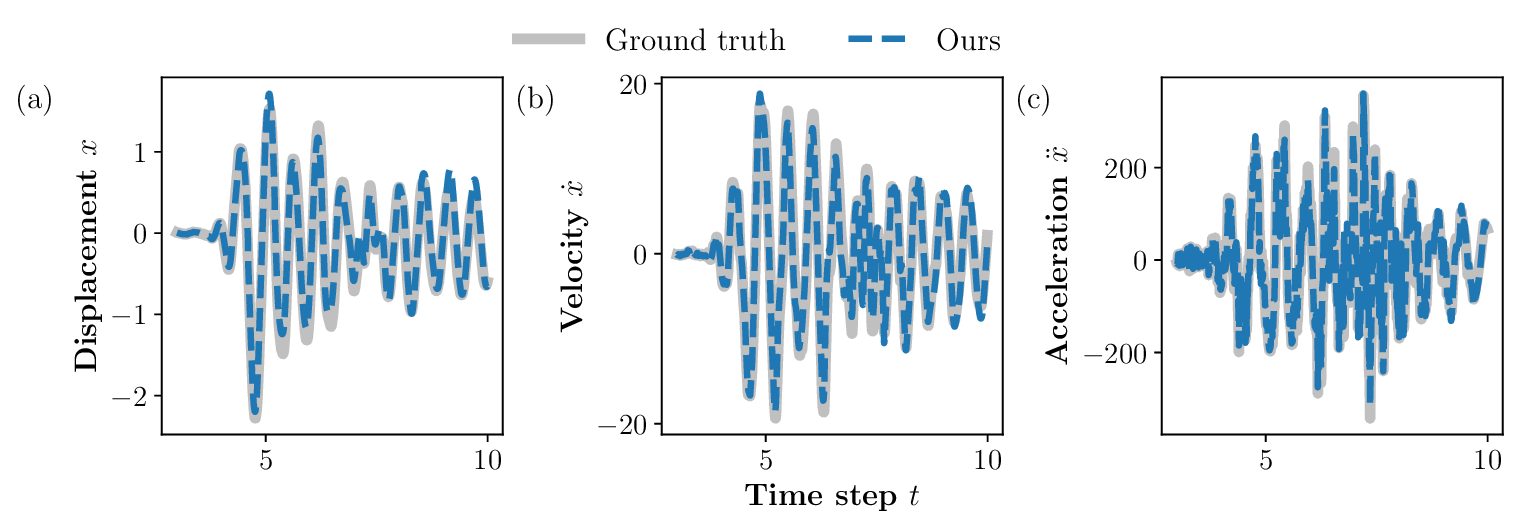
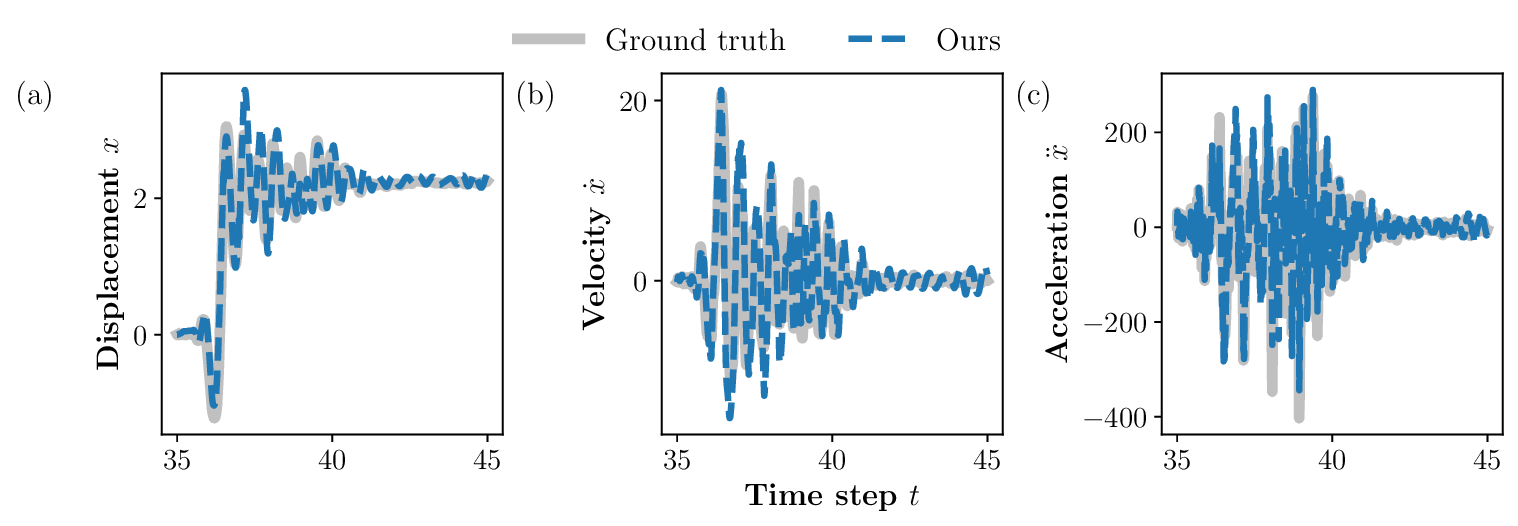
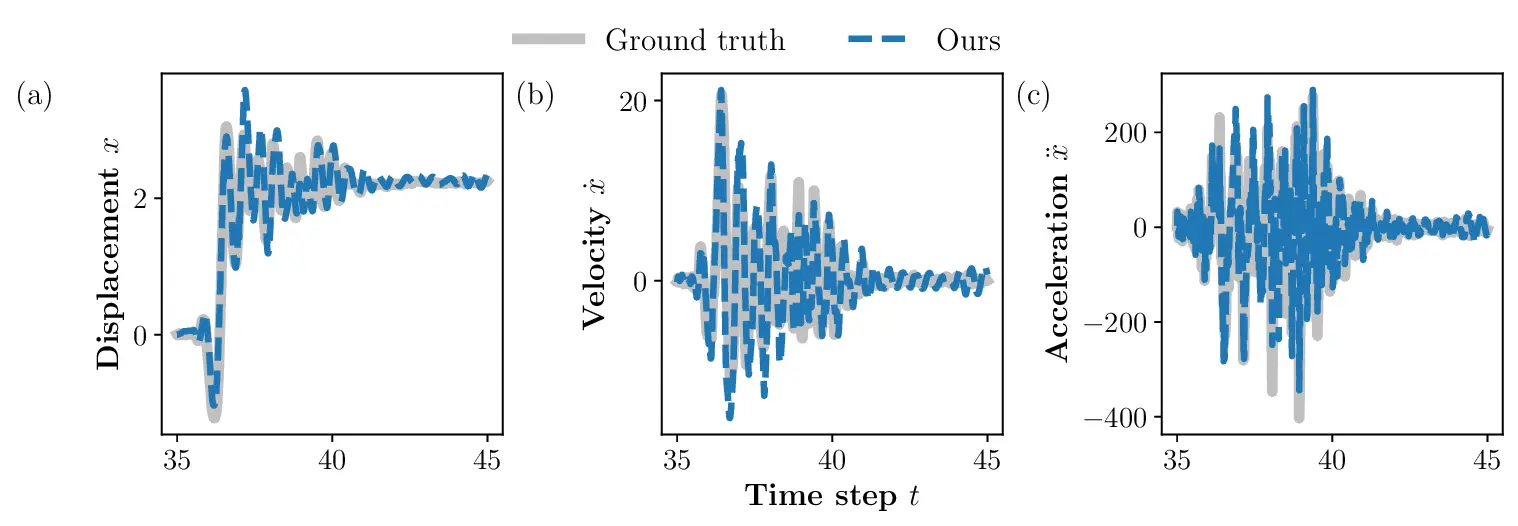
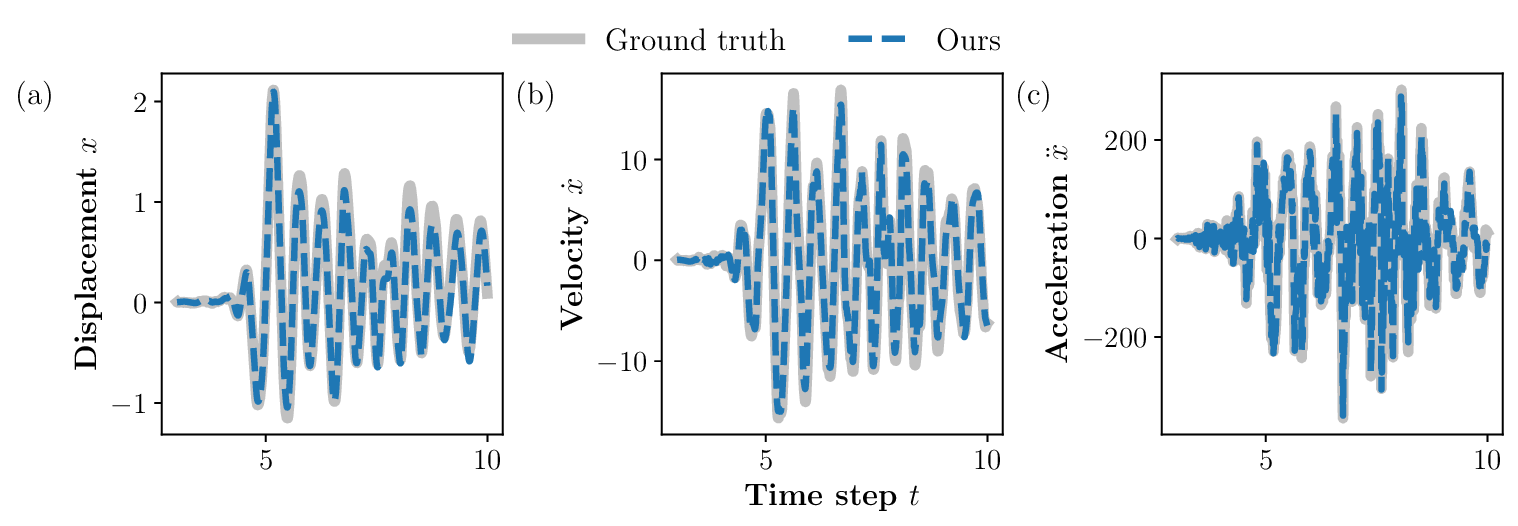
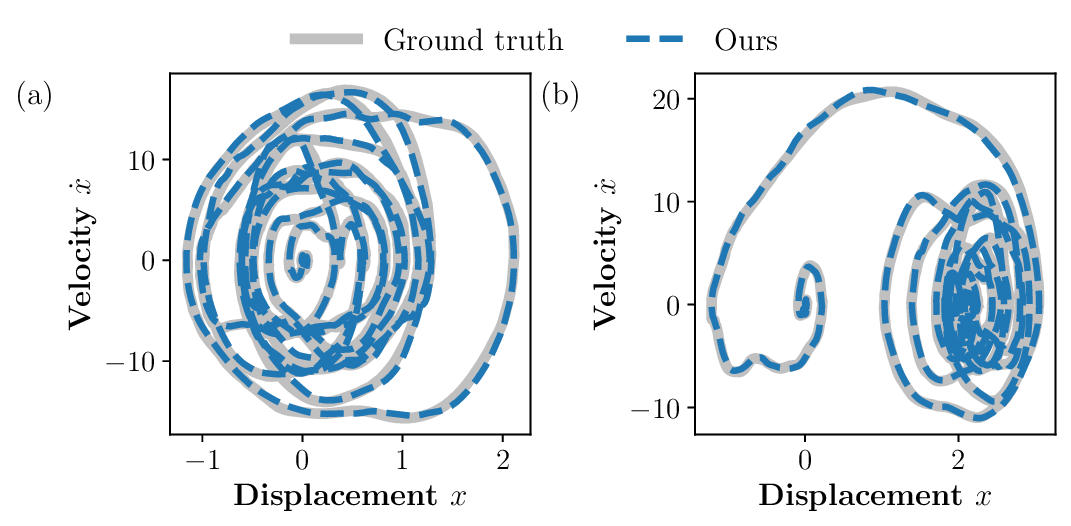
Hysteresis is a nonlinear phenomenon with memory effects, where a system's output depends on both its current state and past states. It is prevalent in various physical and mechanical systems, such as yielding structures under seismic excitation, ferromagnetic materials, and piezoelectric actuators. Analytical models like the Bouc-Wen model are often employed but rely on idealized assumptions and careful parameter calibration, limiting their applicability to diverse or mechanism-unknown behaviors. Existing equation discovery approaches for hysteresis are often system-specific or rely on predefined model libraries, which limit their flexibility and ability to capture the hidden mechanisms. To address these, this research develops a unified framework that integrates learning of internal variables (commonly used in modeling hysteresis) and symbolic regression to automatically extract internal hysteretic variable, and discover explicit governing equations directly from data without predefined libraries as required by methods such as sparse identification of nonlinear dynamics (SINDy). Solving the discovered equations naturally enables prediction of the dynamic responses of hysteretic systems. This work provides a systematic view and approach for both equation discovery and characterization of hysteretic dynamics, defining a unified framework for these types of problems.
Deep Dive into 데이터 기반 히스테리시스 모델 자동 추출을 위한 통합 내부 변수 학습 및 심볼릭 회귀 프레임워크.
Hysteresis is a nonlinear phenomenon with memory effects, where a system’s output depends on both its current state and past states. It is prevalent in various physical and mechanical systems, such as yielding structures under seismic excitation, ferromagnetic materials, and piezoelectric actuators. Analytical models like the Bouc-Wen model are often employed but rely on idealized assumptions and careful parameter calibration, limiting their applicability to diverse or mechanism-unknown behaviors. Existing equation discovery approaches for hysteresis are often system-specific or rely on predefined model libraries, which limit their flexibility and ability to capture the hidden mechanisms. To address these, this research develops a unified framework that integrates learning of internal variables (commonly used in modeling hysteresis) and symbolic regression to automatically extract internal hysteretic variable, and discover explicit governing equations directly from data without predefi
Hysteresis is a common nonlinear phenomenon observed in a broad spectrum of engineering and physical systems, including ferromagnetic materials [1], piezoelectric actuators [2], structural materials [3], damping devices [4,5], and shape memory alloys [6]. Hysteresis, characterized by its path-dependent behavior, refers to systems in which the output depends not only on the current state, but also on the history of past states. This memory effect often appears as input-output loops, and is especially evident in systems that involve energy dissipation, plastic deformation, or phase transitions [7,8]. In nonlinear dynamic systems, hysteresis presents significant challenges for modeling, control, and prediction, owing to its multivalued behavior, rate dependence, and sensitivity to input history. Accurately capturing hysteresis behavior is therefore crucial in applications such as structural health monitoring [9], smart material design [10], and precision actuation systems [11,12].
In response to these needs, numerous mathematical models have been proposed over the past decades to characterize hysteretic behaviors. Among these, the Bouc-Wen model [7] is one of the most widely adopted, owing to its capability to replicate a wide variety of hysteresis loops via differential equations that describe the evolution of an internal variable. Its parameters provide physical interpretability and offer flexibility in capturing both softening and hardening behaviors. In addition to the Bouc-Wen model, other approaches such as the Preisach [13], Duhem [14], and Prandtl-Ishlinskii [15] models offer complementary frameworks, and have been effectively applied in domains where rate-independent behavior or saturation effects are predominant. However, these models typically require prior knowledge of the system structure or involve challenging calibration procedures, limiting their generalizability to complex or mechanism-unknown hysteretic dynamics.
In recent years, data-driven modeling has opened new venues for discovering governing laws directly from measured data [16][17][18][19][20][21]. The sparse identification of nonlinear dynamics (SINDy) [22] has shown strong potential in extracting compact and interpretable dynamic equations, by applying sparse regression with a predefined library of candidate functions. Extensions such as SINDy with control [22], physics-informed SINDy [23,24], implicit SINDy [25], and a sparse structural system identification method applied to hysteretic systems [26] have significantly expanded its applicability to control systems, hidden-variable models, constrained physical systems, and hysteretic dynamics (our focus in this paper). Nevertheless, the effectiveness of SINDy-type methods strongly relies on the expressiveness of the chosen function library, which constrains their ability to capture non-polynomial dynamics, rate-dependent behaviors, and discontinuities. Selecting an appropriate function library is itself a nontrivial task, often requiring prior knowledge or trial-and-error tuning. Furthermore, many dynamical systems involve essential internal states-referred to as internal hysteretic variables in hysteretic systems, or simply as internal variables for brevity in this paper -which are not directly observable but are required to capture implicit evolution and memory effects. Consequently, these methods are not well-suited for such cases.
These limitations become particularly critical in the context of hysteretic systems, where complex memory-dependent behaviors introduce additional challenges. (i) First, internal variables -such as restoring forces or internal displacements -are often not directly measurable [27], complicating the construction of state-space representations. (ii) Second, hysteresis is typically characterized by strong memory and rate dependence, which static or memoryless models are unable to capture. In this research, the proposed framework addresses these issues through a proposed solver-based internal variable learning scheme, which enables the learning of hysteretic variables (see Section 3.2 for details). (iii) Third, the presence of non-smooth mathematical operations, such as absolute values or sign functions, precludes the use of Taylor expansions and hinders the application of gradient-based optimization techniques. Our framework further tackles this challenge by employing equation discovery to flexibly utilize data for recovering explicit expressions of complex structures (see Section 3.3 for details). These challenges become even more pronounced in dynamic systems where the governing laws are implicit or nonlinear in unstructured ways. Consequently, there is a growing need for modeling frameworks capable of simultaneously inferring internal variables, capturing memory effects, and producing interpretable governing equations directly from data.
A variety of approaches have been proposed for equation discovery in hysteretic systems, which in this paper are cl
…(Full text truncated)…
This content is AI-processed based on ArXiv data.