a person wearing decorative forehead jewelry, speaking" "a person speaking with burning trees in the background"
Source Video Edited First Frame "a person wearing a fedora hat, speaking and moving his hand" Figure 1 . Given a source video and an edited first frame, our method propagates the visual edit. The resulting video precisely retains the subject's identity and frame-accurate source motion, while faithfully adopting the new appearance from the edited frame.
Deep Dive into 첫 프레임 편집을 전체 영상에 자연스럽게 전파하는 방법.
a person wearing decorative forehead jewelry, speaking" “a person speaking with burning trees in the background”
Source Video Edited First Frame “a person wearing a fedora hat, speaking and moving his hand” Figure 1 . Given a source video and an edited first frame, our method propagates the visual edit. The resulting video precisely retains the subject’s identity and frame-accurate source motion, while faithfully adopting the new appearance from the edited frame.
In-Context Sync-LoRA for Portrait Video Editing
Sagi Polaczek1
Or Patashnik1
Ali Mahdavi-Amiri2
Daniel Cohen-Or1
1Tel Aviv University
2Simon Fraser University
“a person wearing
decorative
forehead jewelry,
speaking”
”a person
speaking with
burning trees in
the background“
Source Video
Edited First Frame
“a person wearing
a fedora hat,
speaking and
moving his hand”
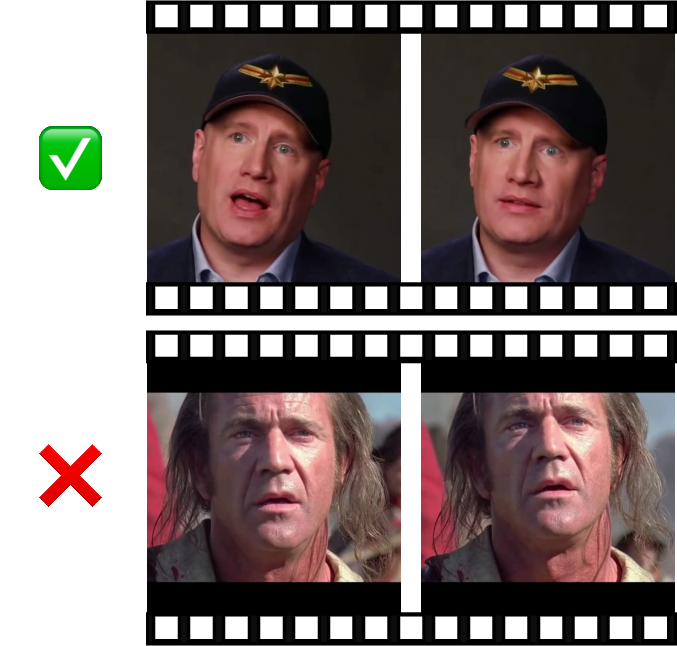
Figure 1. Given a source video and an edited first frame, our method propagates the visual edit. The resulting video precisely retains the
subject’s identity and frame-accurate source motion, while faithfully adopting the new appearance from the edited frame.
Abstract
Editing portrait videos is a challenging task that requires
flexible yet precise control over a wide range of modi-
fications, such as appearance changes, expression edits,
or the addition of objects. The key difficulty lies in pre-
serving the subject’s original temporal behavior, demand-
ing that every edited frame remains precisely synchronized
with the corresponding source frame.
We present Sync-
LoRA, a method for editing portrait videos that achieves
high-quality visual modifications while maintaining frame-
accurate synchronization and identity consistency. Our ap-
proach uses an image-to-video diffusion model, where the
edit is defined by modifying the first frame and then propa-
gated to the entire sequence. To enable accurate synchro-
nization, we train an in-context LoRA using paired videos
that depict identical motion trajectories but differ in ap-
pearance.
These pairs are automatically generated and
curated through a synchronization-based filtering process
that selects only the most temporally aligned examples for
training. This training setup teaches the model to combine
motion cues from the source video with the visual changes
introduced in the edited first frame.
Trained on a com-
pact, highly curated set of synchronized human portraits,
Sync-LoRA generalizes to unseen identities and diverse ed-
its (e.g., modifying appearance, adding objects, or chang-
ing backgrounds), robustly handling variations in pose and
expression. Our results demonstrate high visual fidelity and
strong temporal coherence, achieving a robust balance be-
tween edit fidelity and precise motion preservation. Project
page: https://sagipolaczek.github.io/Sync-LoRA/ .
1. Introduction
With the rapid advancement of diffusion-based video edit-
ing techniques, text- and image-driven methods have gained
prominence for achieving high-quality, temporally consis-
tent edits [19, 27, 57].
These techniques hold strong
promise for applications in advertising, film production,
game development, and interactive media, where fine-
grained control over visual content is essential.
A particular interest in video editing lies in the editing
of portrait videos, as a large portion of visual media fea-
tures humans [17, 20, 35]. Editing portrait videos presents
a uniquely demanding challenge. On the one hand, the vi-
sual appearance of the subject must be modified according
arXiv:2512.03013v1 [cs.CV] 2 Dec 2025
to a user-defined instruction. On the other hand, the result-
ing video is expected to preserve the exact motion patterns
of the source video. This requirement goes beyond visual
consistency across frames. The edited video should follow
the source on a frame-by-frame basis so that every blink,
gaze shift, or articulation occurs at the same moment as in
the source. This level of temporal synchronization is critical
in talking-head scenarios, where even small misalignment
may render the output unfaithful to the source performance.
At the same time, the desired edit is often localized and spe-
cific, such as adding a mustache, changing an expression, or
inserting a visual accessory. The goal is to alter only what is
strictly required by the instruction, leaving all other visual
content and motion untouched. Achieving this combination
of precise synchronization, a minimal editing footprint, and
temporal identity preservation remains an open challenge
for most existing video editing techniques [17, 27, 29, 37].
Inspired by the In-Context LoRA (IC-LoRA) paradigm
[1, 9, 11, 26, 46, 65], we introduce Sync-LoRA, a method
designed to generate precisely synchronized edited portrait
videos. The edit is guided by modifying only the first frame
of the source video, which, together with a text prompt, de-
fines the visual transformation to be applied. Our key idea
is to fine-tune an image-to-video diffusion model using cu-
rated pairs of videos, one showing the original sequence and
the other its edited counterpart. These paired videos are
constructed to be frame-accurately synchronized, meaning
that corresponding frames exhibit identical motion trajecto-
ries while differing only in the aspects altered by the edit.
To obtain such pairs, we develop a two-stage pipeline:
generation followed by synchronization-based filtering. In
the generation stage, a vision-language model produces
diverse subject prompts and edit
…(Full text truncated)…
This content is AI-processed based on ArXiv data.