스마트그리드 통합 시뮬레이션 백본 모델
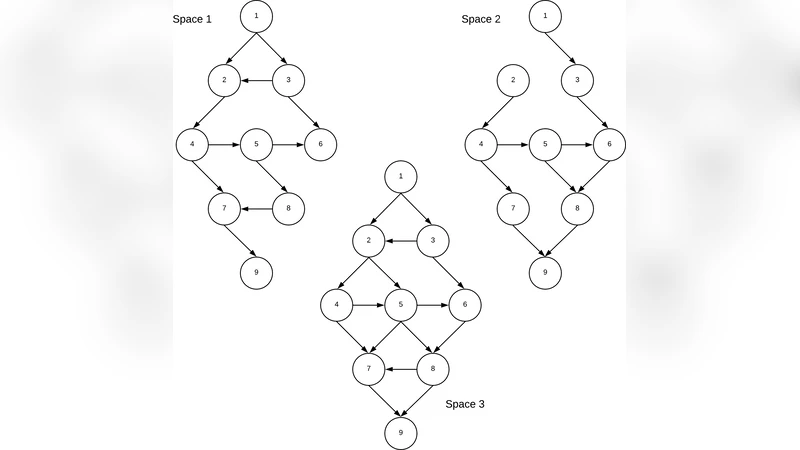
Smart grid technological advances present a recent class of complex interdisciplinary modeling and increasingly difficult simulation problems to solve using traditional computational methods. To simulate a smart grid requires a systemic approach to integrated modeling of power systems, energy markets, demand-side management, and much other resources and assets that are becoming part of the current paradigm of the power grid. This paper presents a backbone model of a smart grid to test alternative scenarios for the grid. This tool simulates disparate systems to validate assumptions before the human scale model. Thanks to a distributed optimization of subsystems, the production and consumption scheduling is achieved while maintaining flexibility and scalability.
💡 Research Summary
The paper addresses the growing complexity of smart‑grid modeling, which now must encompass not only traditional power‑flow calculations but also energy‑market dynamics, demand‑side management, distributed energy resources, electric‑vehicle charging, and emerging policy constraints. To meet this challenge, the authors propose a “backbone” simulation framework that integrates these heterogeneous subsystems into a single, coherent model. Each domain—generation‑dispatch, market clearing, load‑response, renewable integration, etc.—is encapsulated as an independent optimization module with its own objective function (e.g., cost minimization, revenue maximization, peak‑shaving) and local constraints.
The central technical contribution is the use of distributed optimization techniques, such as the Alternating Direction Method of Multipliers (ADMM) or primal‑dual coordination, to achieve a globally consistent solution. In practice, each module solves its local problem in parallel, then exchanges boundary variables (e.g., net power injections, price signals) with a coordinating layer. The coordinator enforces system‑wide constraints—power‑flow equations, voltage limits, market equilibrium—by adjusting Lagrange multipliers and iteratively reconciling the local solutions. This approach yields two major benefits. First, computational load is spread across modules, enabling near‑real‑time simulation even for large‑scale networks because the heavy lifting is performed concurrently. Second, the modular architecture provides extensibility: new technologies (blockchain‑based trading, vehicle‑to‑grid services) or policy changes can be introduced by updating or adding the relevant module without redesigning the entire model.
A distinctive aspect of the work is positioning the backbone model as a pre‑human‑scale validation tool. Before committing to high‑fidelity, field‑level simulations that are costly and time‑consuming, researchers can explore a wide range of “what‑if” scenarios—such as sudden spikes in renewable output, aggressive demand‑response events, or volatile market prices—within the backbone environment. This early‑stage testing helps to filter unrealistic assumptions, identify potential bottlenecks, and guide the configuration of more detailed models.
The authors also discuss limitations. Convergence speed can degrade as the number of modules and the size of the network increase, potentially leading to communication overhead and latency that undermine real‑time applicability. Data standardization and cybersecurity across modules remain open issues; inconsistent formats or insecure exchanges could compromise model integrity. Moreover, the current implementation focuses primarily on physical and economic dimensions, leaving out social, regulatory, and environmental factors that are increasingly relevant to smart‑grid planning.
In conclusion, the paper delivers a comprehensive, scalable simulation backbone that unifies power‑system, market, and demand‑side models through distributed optimization. It offers a practical pathway for researchers, system operators, and policymakers to evaluate alternative grid configurations, assess the impact of emerging technologies, and refine strategies before investing in detailed, human‑scale studies. Future work is suggested in three directions: (1) accelerating convergence via advanced algorithms or high‑speed communication protocols, (2) integrating artificial‑intelligence‑driven forecasting and control to enhance predictive capability, and (3) expanding the framework to incorporate non‑technical layers such as regulatory compliance, environmental impact, and stakeholder acceptance. Such extensions would solidify the backbone model as a cornerstone for both operational decision‑making and long‑term strategic planning in the evolving smart‑grid ecosystem.