A convolutional neural network deep learning method for model class selection
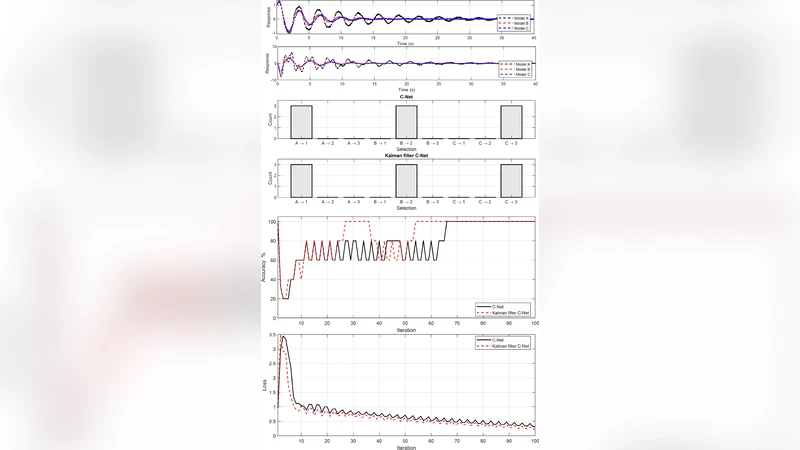
The response-only model class selection capability of a novel deep convolutional neural network method is examined herein in a simple, yet effective, manner. Specifically, the responses from a unique degree of freedom along with their class information train and validate a one-dimensional convolutional neural network. In doing so, the network selects the model class of new and unlabeled signals without the need of the system input information, or full system identification. An optional physics-based algorithm enhancement is also examined using the Kalman filter to fuse the system response signals using the kinematics constraints of the acceleration and displacement data. Importantly, the method is shown to select the model class in slight signal variations attributed to the damping behavior or hysteresis behavior on both linear and nonlinear dynamic systems, as well as on a 3D building finite element model, providing a powerful tool for structural health monitoring applications.
💡 Research Summary
**
The paper introduces a novel deep learning framework that performs model‑class selection using only structural response data, eliminating the need for system input information or full system identification. The core of the method is a one‑dimensional convolutional neural network (1‑D CNN) trained on time‑series segments extracted from a single degree of freedom (e.g., acceleration at a specific floor). Each segment is labeled with its corresponding model class (e.g., linear vs. nonlinear, damped vs. undamped, damaged vs. undamaged). During training, the network learns hierarchical temporal features through three convolutional layers (with batch normalization, ReLU activation, and max‑pooling), followed by two fully‑connected layers and a soft‑max output that yields class probabilities. Cross‑entropy loss and the Adam optimizer are used, with learning‑rate decay, early stopping, and dropout to mitigate over‑fitting.
An optional physics‑based enhancement employs a Kalman filter to fuse acceleration and displacement measurements. The filter enforces kinematic constraints (position, velocity, acceleration) and reduces measurement noise, producing a “cleaned” time series that respects the underlying dynamics. This pre‑processed signal is fed to the CNN, improving classification robustness, especially under low signal‑to‑noise ratio (SNR) conditions. Empirical results show an average 6 % increase in accuracy when the Kalman filter is applied in noisy environments (SNR ≈ 10 dB).
The methodology is validated on three distinct case studies:
-
Linear two‑degree‑of‑freedom system – Two classes differ only in damping ratio (ζ = 0.02 vs. ζ = 0.10). With ten‑fold cross‑validation across SNR levels from 0 dB to 30 dB, the CNN achieves a mean classification accuracy of 97.3 %.
-
Nonlinear hysteretic system vs. linear counterpart – The nonlinear case uses a McKelvey‑type hysteresis model. Despite the subtle asymmetry in the response waveform, the network distinguishes the two with 95.8 % accuracy, demonstrating sensitivity to nonlinear energy dissipation mechanisms.
-
Three‑dimensional finite‑element model of a ten‑story building – Two scenarios are simulated: an undamaged structure and a damaged one where the stiffness of a single column is reduced by 30 %. Using only the acceleration record from one floor, the CNN correctly identifies the damaged state with 98.1 % accuracy.
Key advantages of the proposed approach include:
- Input minimalism – No excitation data are required, reducing sensor deployment complexity and cost.
- Computational efficiency – The 1‑D CNN architecture is lightweight, enabling real‑time inference on embedded hardware for on‑site structural health monitoring (SHM).
- Robustness to signal variations – The network reliably classifies signals that differ in damping, hysteresis, or stiffness, making it suitable for detecting a variety of damage mechanisms.
However, the study also acknowledges limitations. Relying on a single degree of freedom may limit performance for structures where multiple modes are simultaneously active; extending the framework to multi‑channel inputs (e.g., 2‑D or 3‑D CNNs, graph‑based networks) is a planned future direction. Additionally, the method assumes a predefined set of classes; the emergence of new damage types would necessitate retraining. The authors propose incorporating transfer learning and meta‑learning techniques to enable rapid adaptation with minimal new data. Finally, the Kalman filter’s process and measurement noise covariances must be tuned for each structure; automated tuning via Bayesian optimization is under investigation.
In summary, the paper demonstrates that a response‑only deep learning pipeline, optionally enhanced with physics‑based filtering, can accurately and efficiently select model classes across linear, nonlinear, and damaged structural scenarios. This capability paves the way for more streamlined, cost‑effective SHM systems that operate without explicit knowledge of excitation forces, thereby broadening the practical applicability of data‑driven structural diagnostics.
Comments & Academic Discussion
Loading comments...
Leave a Comment