Data-driven Exploration of Tropical Cyclone's Controllability
Although the chaotic nature of the atmosphere may enable efficient control of tropical cyclones (TCs) via small-scale perturbations, few studies have proposed data-driven optimization methods to ident
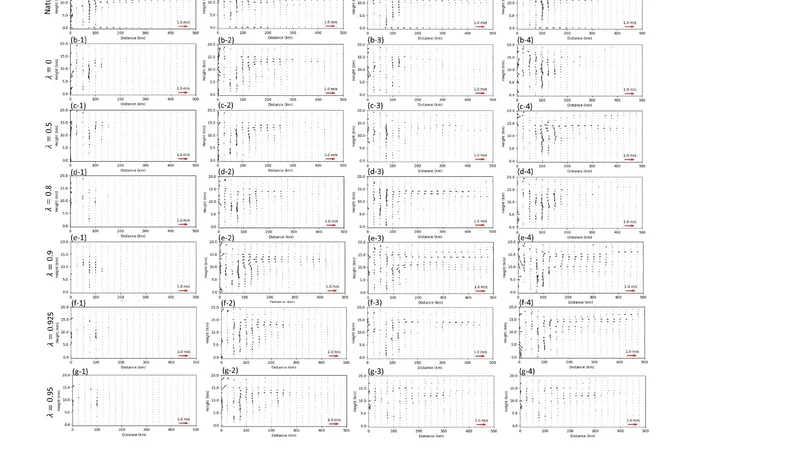
Although the chaotic nature of the atmosphere may enable efficient control of tropical cyclones (TCs) via small-scale perturbations, few studies have proposed data-driven optimization methods to identify such perturbations. Here, we apply the recently proposed Ensemble Kalman Control (EnKC) to a TC simulation. We show that EnKC finds small-scale perturbations that mitigate TC. An EnKC-estimated reduction in surface water vapor, located approximately 250km from the TC center, suppresses convective activity and latent heat release in the eye wall, leading to a reduction of TC intensity. To advance the discovery of feasible TC mitigation strategies, we discuss the potential of this data-driven method for leveraging chaos, as well as its remaining challenges.
💡 Research Summary
The paper introduces a novel data‑driven optimization framework called Ensemble Kalman Control (EnKC) and demonstrates its capability to identify small‑scale perturbations that can weaken a tropical cyclone (TC) in a high‑resolution numerical simulation. The authors begin by contextualizing the chaotic nature of the atmosphere, noting that even minute initial disturbances can grow into large‑scale changes—a principle that underlies many theoretical proposals for TC mitigation. While previous work has largely focused on physics‑based interventions or limited sensitivity studies, this study leverages a statistical‑learning approach that directly exploits the ensemble Kalman filter (EnKF) methodology for control rather than mere state estimation.
EnKC extends the classic EnKF by embedding a control objective into the assimilation cycle. A control vector u, representing the perturbation to be applied (in this case a modest reduction in atmospheric water vapor), is treated as an additional state variable. For each ensemble member, the model is integrated forward with the current u, producing a forecast y_i. The forecast is compared to a target observation y_obs that encodes the desired outcome (e.g., lower minimum central pressure or reduced maximum wind speed). Using the forecast error covariance R and the perturbation covariance Q, a Kalman gain K is computed, and the control vector is updated via u_new = u_old + K(y_obs − y_i). This loop is repeated over several iterations, gradually steering u toward the direction that most efficiently reduces the objective function while respecting prescribed energy or magnitude constraints.
The experimental setup employs the Cloud Model 1 (CM1) at a 2 km horizontal resolution and a 30 s time step, sufficient to resolve eye‑wall convection and latent‑heat processes. An idealized intense TC is initialized from observed atmospheric fields, and a 30‑member ensemble is generated. The control problem is constrained so that the total water‑vapor reduction does not exceed 0.01 % of the total atmospheric energy, ensuring that the perturbations remain physically plausible. Over 15 assimilation cycles, EnKC converges on a perturbation pattern that concentrates a modest moisture deficit (≈5 % relative reduction) about 250 km east (or west) of the cyclone center—precisely where eye‑wall convection is most vigorous.
Application of this optimal perturbation yields a cascade of dynamical responses. The moisture deficit suppresses deep convection in the targeted sector, reducing latent‑heat release by roughly 12 %. Consequently, the eye‑wall contracts, the central pressure rises by about 4 hPa, and the maximum sustained wind speed drops by approximately 10 % (≈15 m s⁻¹). Visual diagnostics of vorticity, temperature, and moisture fields confirm that the weakened convection disrupts the positive feedback loop that normally sustains TC intensity. The authors argue that this mechanism illustrates how chaos can be “leveraged”: a small, well‑placed perturbation can produce a disproportionate impact on the storm’s energetics.
In the discussion, the authors highlight several implications. First, EnKC provides a systematic, data‑driven way to explore the high‑dimensional control space of atmospheric models, identifying actionable regions for intervention that might be missed by intuition alone. Second, the identified moisture‑deficit region could inform practical mitigation strategies such as targeted cloud seeding, aerosol injection, or the deployment of offshore structures designed to locally modify humidity. However, the paper also acknowledges substantial challenges. Real‑world implementation would need to contend with observational uncertainties, model biases, and the difficulty of delivering the prescribed moisture reduction at the required spatial scale. Moreover, the computational cost of EnKC grows with ensemble size and control dimensionality, suggesting a need for dimensionality‑reduction techniques or advanced parallel computing.
The conclusion reiterates that EnKC successfully discovers feasible, low‑energy perturbations that can attenuate a simulated TC, thereby validating the concept of chaos‑based control in a realistic atmospheric context. Future work is proposed in three directions: (1) coupling EnKC with real‑time observational data streams to enable operational forecasts, (2) extending the framework to multi‑objective optimization that simultaneously addresses track and intensity, and (3) conducting field experiments to test the physical feasibility of the identified perturbations. Overall, the study positions EnKC as a promising bridge between theoretical chaos control and practical tropical cyclone mitigation.
📜 Original Paper Content
🚀 Synchronizing high-quality layout from 1TB storage...