📝 Original Info
- Title: A Principle-based Framework for the Development and Evaluation of Large Language Models for Health and Wellness
- ArXiv ID: 2512.08936
- Date: 2025-10-23
- Authors: Researchers from original ArXiv paper
📝 Abstract
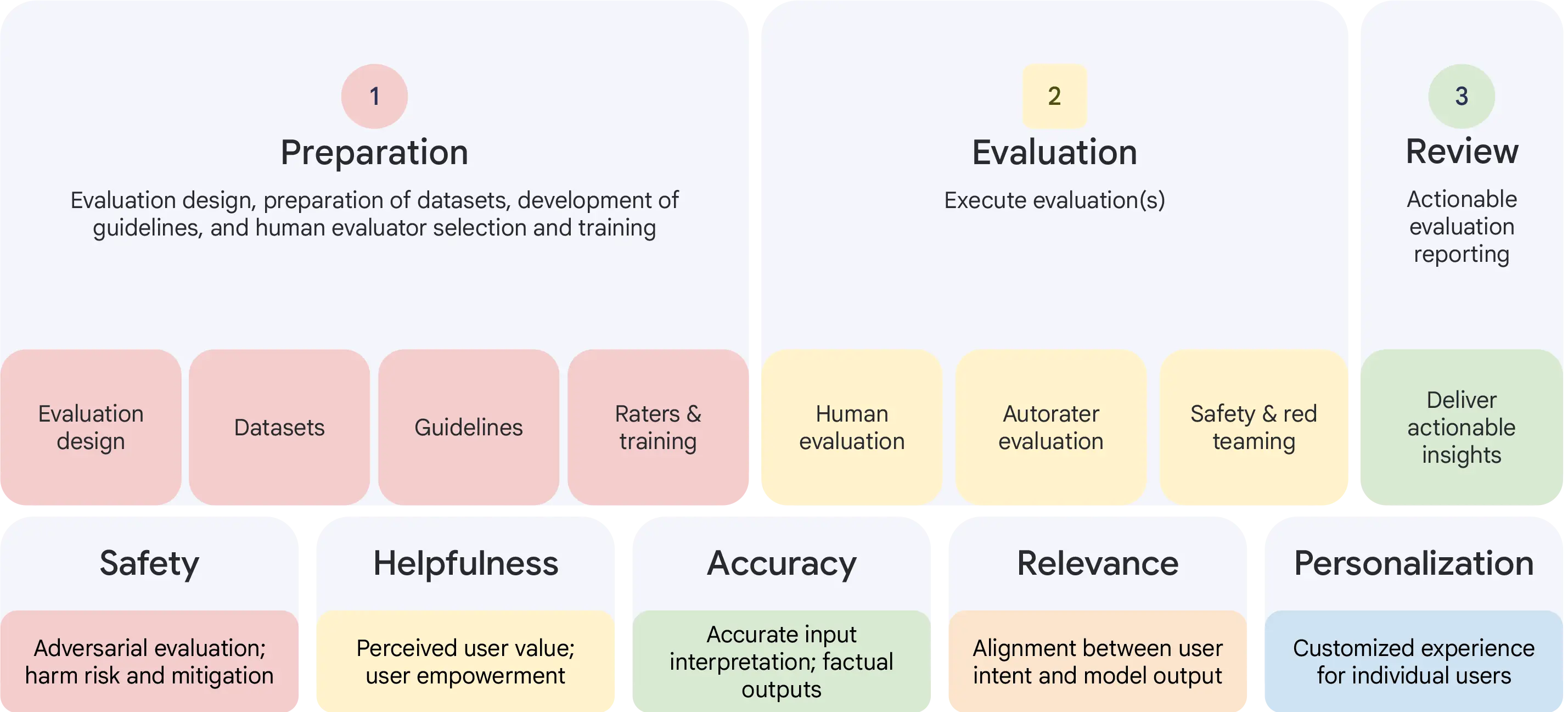
The incorporation of generative artificial intelligence into personal health applications presents a transformative opportunity for personalized, data-driven health and fitness guidance, yet also poses challenges related to user safety, model accuracy, and personal privacy. To address these challenges, a novel, principle-based framework was developed and validated for the systematic evaluation of LLMs applied to personal health and wellness. First, the development of the Fitbit Insights explorer, a large language model (LLM)-powered system designed to help users interpret their personal health data, is described. Subsequently, the safety, helpfulness, accuracy, relevance, and personalization (SHARP) principle-based framework is introduced as an end-to-end operational methodology that integrates comprehensive evaluation techniques including human evaluation by generalists and clinical specialists, autorater assessments, and adversarial testing, into an iterative development lifecycle. Through the application of this framework to the Fitbit Insights explorer in a staged deployment involving over 13,000 consented users, challenges not apparent during initial testing were systematically identified. This process guided targeted improvements to the system and demonstrated the necessity of combining isolated technical evaluations with real-world user feedback. Finally, a comprehensive, actionable approach is established for the responsible development and deployment of LLM-powered health applications, providing a standardized methodology to foster innovation while ensuring emerging technologies are safe, effective, and trustworthy for users.
💡 Deep Analysis
Deep Dive into A Principle-based Framework for the Development and Evaluation of Large Language Models for Health and Wellness.
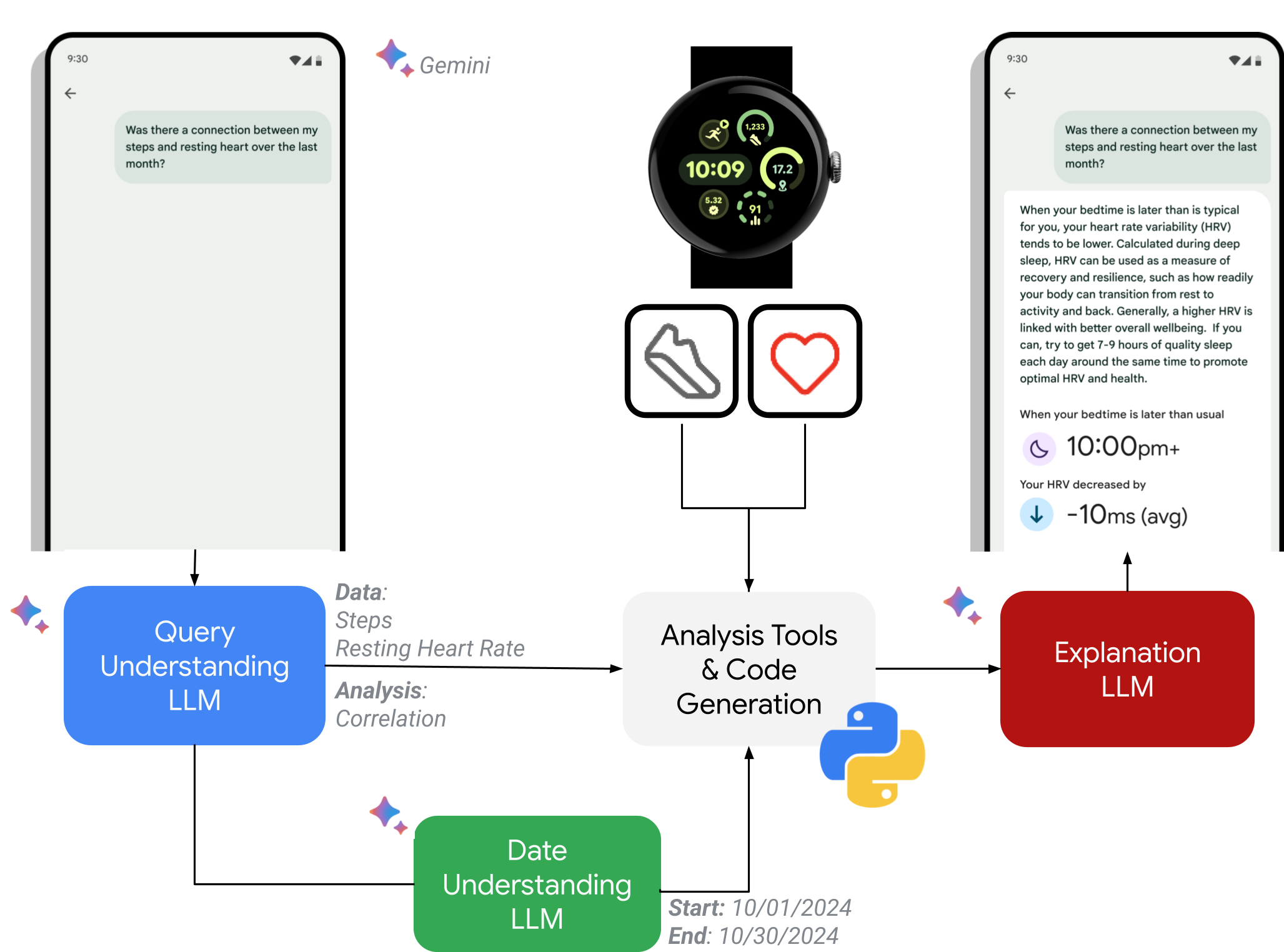
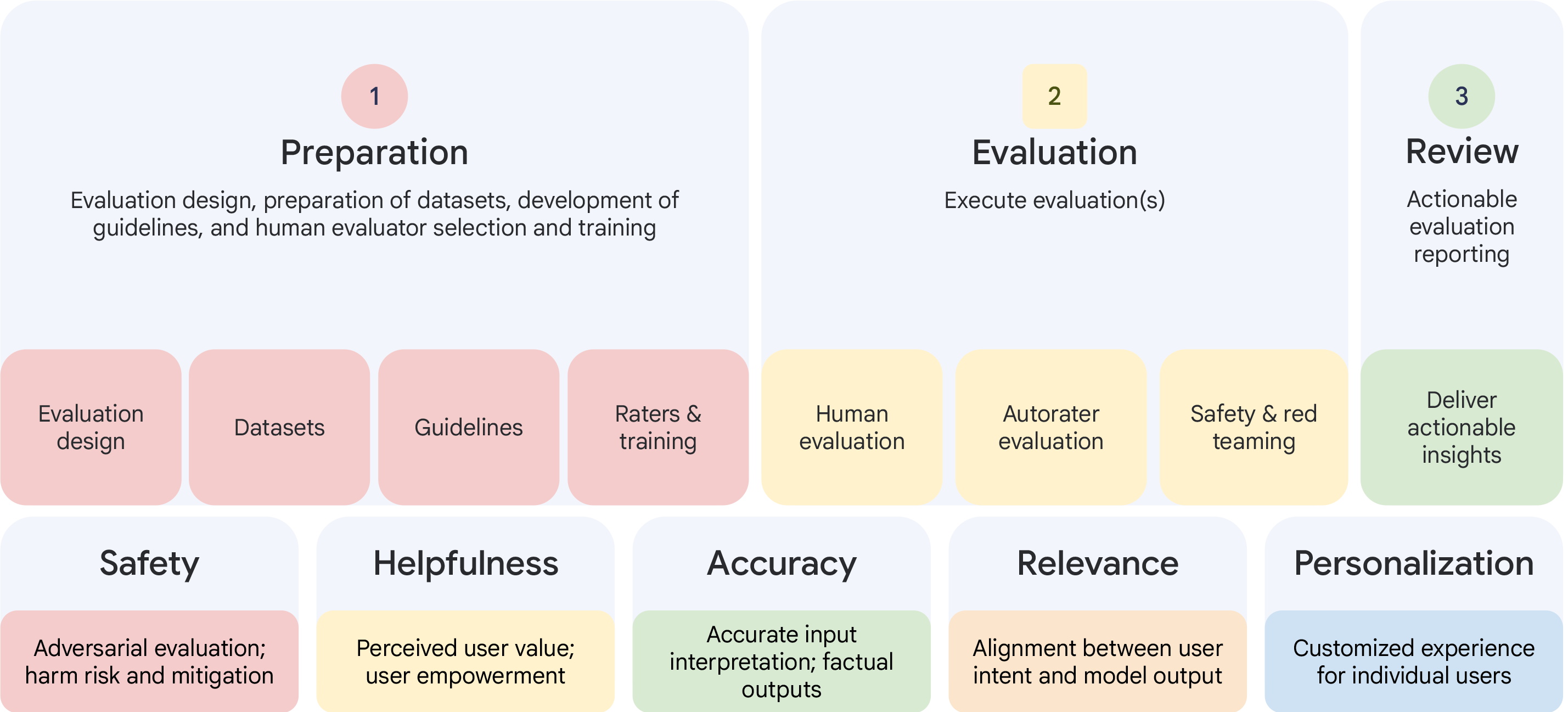
The incorporation of generative artificial intelligence into personal health applications presents a transformative opportunity for personalized, data-driven health and fitness guidance, yet also poses challenges related to user safety, model accuracy, and personal privacy. To address these challenges, a novel, principle-based framework was developed and validated for the systematic evaluation of LLMs applied to personal health and wellness. First, the development of the Fitbit Insights explorer, a large language model (LLM)-powered system designed to help users interpret their personal health data, is described. Subsequently, the safety, helpfulness, accuracy, relevance, and personalization (SHARP) principle-based framework is introduced as an end-to-end operational methodology that integrates comprehensive evaluation techniques including human evaluation by generalists and clinical specialists, autorater assessments, and adversarial testing, into an iterative development lifecycle. T
📄 Full Content
2025-12-11
A Principle-based Framework for the
Development and Evaluation of Large
Language Models for Health and Wellness
Brent Winslow1,∗, Jacqueline Shreibati1, Javier Perez1, Hao-Wei Su1, Nichole Young-Lin1, Nova Hammerquist1,
Daniel McDuff1, Jason Guss1, Jenny Vafeiadou1, Nick Cain1, Alex Lin1, Erik Schenck1, Shiva Rajagopal1,
Jia-Ru Chung2, Anusha Venkatakrishnan1, Amy Armento Lee1, Maryam Karimzadehgan1, Qingyou Meng1,
Rythm Agarwal1, Aravind Natarajan1, Tracy Giest1,
1Google Research, 2Tezerakt LLC,
The incorporation of generative artificial intelligence into personal health applications presents a
transformative opportunity for personalized, data-driven health and fitness guidance, yet also poses
challenges related to user safety, model accuracy, and personal privacy. To address these challenges, a
novel, principle-based framework was developed and validated for the systematic evaluation of LLMs
applied to personal health and wellness. First, the development of the Fitbit Insights explorer, a
large language model (LLM)-powered system designed to help users interpret their personal health
data, is described. Subsequently, the safety, helpfulness, accuracy, relevance, and personalization
(SHARP) principle-based framework is introduced as an end-to-end operational methodology that
integrates comprehensive evaluation techniques including human evaluation by generalists and clinical
specialists, autorater assessments, and adversarial testing, into an iterative development lifecycle.
Through the application of this framework to the Fitbit Insights explorer in a staged deployment
involving over 13,000 consented users, challenges not apparent during initial testing were systematically
identified. This process guided targeted improvements to the system and demonstrated the necessity
of combining isolated technical evaluations with real-world user feedback. Finally, a comprehensive,
actionable approach is established for the responsible development and deployment of LLM-powered
health applications, providing a standardized methodology to foster innovation while ensuring emerging
technologies are safe, effective, and trustworthy for users.
1. Introduction
A fundamental shift is underway in personal health management, as individuals transition from
episodic, reactive care to a proactive model driven by personal informatics (Spatz et al., 2024). This
transformation is being enabled by consumer health sensing applications, such as wearable devices
and mobile applications (Huhn et al., 2022), now being used by hundreds of millions to billions of
users worldwide. These tools track a wide range of physiological and behavioral data, allowing for
noninvasive, affordable, and scalable health monitoring in daily life (Roos and Slavich, 2023). While
these tools have been increasingly successful in capturing vast amounts of data, a significant challenge
remains in providing users the ability to understand their health data in ways that are safe, helpful,
accurate, relevant and personalized in the real world. Effectively translating and leveraging both
wearable and user provided data into actionable, individualized guidance represents an important
next step in the evolution of personal health technology.
Recent advancements in generative artificial intelligence, particularly the development of large
language models (LLMs), offer a powerful and timely solution to this data interpretation challenge
(Thirunavukarasu et al., 2023). These models are able to process large amounts of data, identify
Corresponding author(s): bwinslow@google.com
© 2025 Google. All rights reserved.
arXiv:2512.08936v1 [cs.HC] 23 Oct 2025
A Principle-based Framework for the Development and Evaluation of Large Language Models for Health and Wellness
patterns, and reason over vast and complex datasets, including the multimodal and continuous data
generated by health sensing technologies. Agentive tools built on these models, along with their
capacity for nuanced, conversational interactions may allow them to function as personal health and
fitness coaches, capable of identifying subtle trends in personal data, contextualizing information,
and answering questions using personalized language. However, the application of LLMs to sensitive
health data introduces significant challenges regarding privacy, reliability, and the potential for
inaccuracy (Haltaufderheide and Ranisch, 2024). In addition, successful implementation requires
careful navigation of the complex and evolving policy landscape, such as health data privacy laws, AI-
based software regulations, and state-of-the-art health science. A robust methodology for evaluating
the safety and efficacy of these systems is a critical prerequisite for their responsible deployment in
personal health applications (Palaniappan et al., 2024).
Evaluation is the practice of measuring AI system performance or impact (Weidinger et al., 2023),
and represents the driving force behind advancements in LLM research (
…(Full text truncated)…
📸 Image Gallery
Reference
This content is AI-processed based on ArXiv data.