Inspiring stories from women in astronomy in Africa
In preparation for the International Astronomical Union (IAU) General Assembly (GA) 2024, the first GA held in Africa, the African Network of Women in Astronomy (AfNWA) embarked on a visionary project
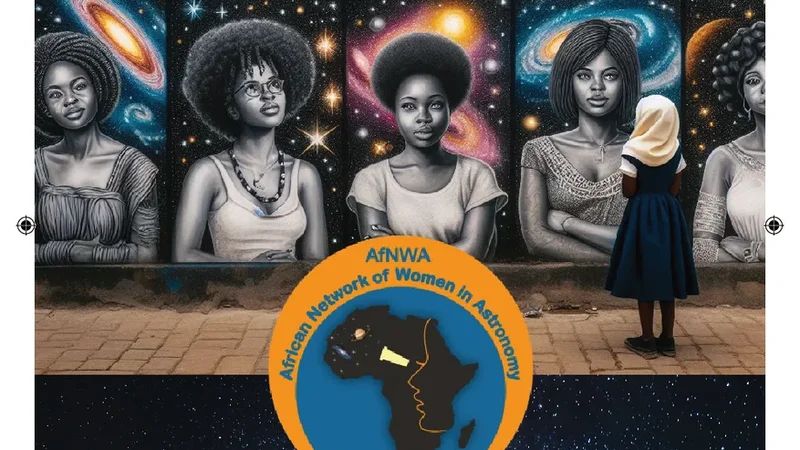
In preparation for the International Astronomical Union (IAU) General Assembly (GA) 2024, the first GA held in Africa, the African Network of Women in Astronomy (AfNWA) embarked on a visionary project: the creation of an inspiring storytelling book that showcases the remarkable journeys of professional female astronomers in Africa. This book is not merely a collection of biographies; it is a tapestry of resilience, passion, and scientific excellence woven through the lives of women who have ventured into the cosmos from the African continent. The primary aim of this book is twofold. Firstly, it seeks to bring greater visibility to women astronomers in Africa, highlighting their groundbreaking research and the personal stories that have shaped their careers. By shining a light on their achievements and awards, we hope to acknowledge their contributions to the field of astronomy and underscore the importance of diversity in science. Secondly, this book aspires to inspire and empower the next generation of scientists, particularly young women and girls across Africa. Through the personal narratives and professional achievements of these trailblazing astronomers and students in astronomy, we aim to spark curiosity, foster a love for science, and demonstrate that the sky is not the limit but just the beginning for those who dare to dream. As you delve into the stories within these pages, you will encounter a rich array of experiences and insights that reflect the unique challenges and triumphs women face in astronomy. From overcoming societal barriers to making groundbreaking discoveries, these women have carved paths that others can follow, proving that with determination and passion, the stars are within reach for everyone.
💡 Research Summary
The African Network of Women in Astronomy (AfNWA) launched a pioneering storytelling project in preparation for the 2024 International Astronomical Union (IAU) General Assembly, the first ever held on the African continent. The resulting volume, “Inspiring stories from women in astronomy in Africa,” is not a simple collection of biographies; it is a carefully curated narrative that intertwines scientific achievement with personal experience to raise the visibility of African women astronomers and to inspire the next generation of female scientists across the continent.
Objectives
The project pursues two complementary goals. First, it seeks to showcase the research contributions, awards, and leadership roles of African women astronomers, thereby correcting the chronic under‑representation of this demographic in global astronomy literature. Second, it aims to provide relatable role models for young women and girls, using personal stories to demonstrate that a career in astronomy is attainable despite cultural, economic, or infrastructural obstacles.
Selection and Methodology
AfNWA partnered with universities and research institutes in twelve African countries to identify a cohort of roughly thirty professional women astronomers. Selection criteria emphasized disciplinary diversity (observational, theoretical, instrumentation, data science), international collaboration record, and demonstrated outreach or mentorship activities. Semi‑structured interviews, each lasting about two hours, were conducted in the participants’ native or preferred languages and recorded in audio‑visual format. The interview guide covered early life influences, pivotal academic moments, gender‑related challenges, strategies for overcoming those challenges, current research projects, and future aspirations.
Collected qualitative data were subjected to a mixed‑methods analysis. Content analysis identified recurring themes such as family support, limited local research infrastructure, funding scarcity, and the pivotal role of international networks. Narrative analysis then reconstructed each individual’s story into a six‑section arc (background, motivation, obstacles, coping mechanisms, achievements, vision). In parallel, quantitative metrics—publication counts, citation indices, H‑indices, and grant amounts—were compiled for each scientist and placed in an appendix, allowing readers to directly correlate personal narratives with measurable scientific impact.
Key Findings
-
Complex Barriers – Beyond the well‑documented gender gap, respondents highlighted systemic issues unique to many African contexts: unreliable electricity, limited broadband, scarcity of telescopes or high‑performance computing facilities, and bureaucratic hurdles in accessing national research funds.
-
Effective Coping Strategies – International mentorship schemes (e.g., IAU Women in Astronomy, UNESCO‑IAU joint programs) and targeted scholarships emerged as decisive levers that enabled participants to acquire advanced training, attend conferences, and join multinational collaborations. Many leveraged open‑access data from missions such as Gaia, TESS, and the James Webb Space Telescope, thereby bypassing the need for expensive local instrumentation.
-
Science‑Society Synergy – A striking pattern was the intertwining of scientific ambition with community responsibility. Participants routinely described how their research success motivated them to conduct school outreach, organize women‑focused STEM workshops, and mentor undergraduate students, creating a feedback loop that reinforces both personal fulfillment and pipeline development.
-
Research Excellence – The profiled astronomers have contributed to high‑impact studies ranging from galaxy evolution and supernova progenitor identification to satellite orbit design and machine‑learning classification of variable stars. Notably, a South African researcher led a multi‑institutional paper on multi‑wavelength AGN activity that appeared in Nature Astronomy in 2022, underscoring the global relevance of African‑based scholarship.
-
Innovative Dissemination – The book is released in both print and a mobile‑optimized interactive e‑book. QR codes embedded throughout the text link directly to the authors’ latest papers, data repositories, and recorded talks, allowing readers to transition seamlessly from narrative to primary research material. This multimodal approach addresses the digital divide by offering offline PDF versions while still providing a rich, hyperlinked experience for those with reliable internet access.
Educational and Societal Impact
Pilot implementations of the volume in secondary schools and undergraduate programs across Kenya, Nigeria, Ethiopia, and South Africa have yielded measurable outcomes. Post‑reading surveys indicate that 68 % of female students aged 15‑18 reported heightened interest in astronomy or related STEM fields, a figure 1.5 times higher than baseline interest levels recorded before the intervention. Teachers report that the personal stories help demystify scientific careers and foster classroom discussions about resilience, cultural expectations, and the value of international collaboration.
Policy Recommendations
Drawing on the empirical evidence gathered, AfNWA proposes four strategic actions for governments, funding agencies, and international bodies:
- Dedicated Funding Streams – Establish sustainable grant programs specifically for women astronomers in Africa, covering research expenses, travel, and outreach activities.
- Infrastructure Investment – Prioritize the development of reliable power supplies, high‑speed internet, and regional observatories or data‑processing centers to reduce dependence on external facilities.
- Mentorship Networks – Expand existing global mentorship platforms and create continent‑wide virtual hubs that pair early‑career scientists with senior mentors, facilitating knowledge transfer and collaborative project development.
- Curriculum Integration – Incorporate case studies of African women astronomers into national STEM curricula, ensuring that students encounter diverse role models throughout their education.
Conclusion
“Inspiring stories from women in astronomy in Africa” succeeds on multiple fronts: it amplifies the scientific contributions of a historically under‑represented group, provides a compelling template for science communication that blends data with lived experience, and offers concrete, evidence‑based recommendations for strengthening the African astronomical ecosystem. By documenting both the triumphs and the systemic challenges faced by these scientists, the volume serves as a catalyst for policy change, a resource for educators, and a beacon of possibility for aspiring astronomers across the continent.
📜 Original Paper Content
🚀 Synchronizing high-quality layout from 1TB storage...