Physics-Informed Extreme Learning Machine (PIELM) for Tunnelling-Induced Soil-Pile Interactions
Physics-informed machine learning has been a promising data-driven and physics-informed approach in geotechnical engineering. This study proposes a physics-informed extreme learning machine (PIELM) fr
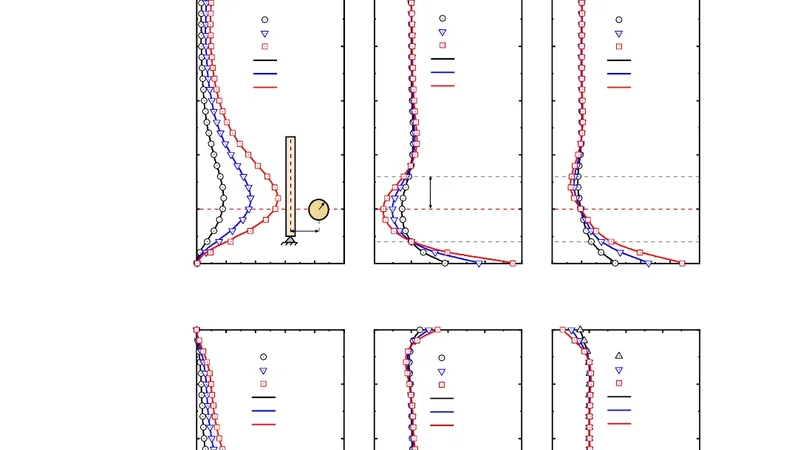
Physics-informed machine learning has been a promising data-driven and physics-informed approach in geotechnical engineering. This study proposes a physics-informed extreme learning machine (PIELM) framework for analyzing tunneling-induced soil-pile interactions. The pile foundation is modeled as an Euler-Bernoulli beam, and the surrounding soil is modeled as a Pasternak foundation. The soil-pile interaction is formulated into a fourth-order ordinary differential equation (ODE) that constitutes the physics-informed component, while measured data are incorporated into PIELM as the data-driven component. Combining physics and data yields a loss vector of the extreme learning machine (ELM) network, which is trained within 1 second by the least squares method. After validating the PIELM approach by the boundary element method (BEM) and finite difference method (FDM), parametric studies are carried out to examine the effects of ELM network architecture, data monitoring locations and numbers on the performance of PIELM. The results indicate that monitored data should be placed at positions where the gradients of pile deflections are significant, such as at the pile tip/top and near tunneling zones. Two application examples highlight the critical role of physics-informed and data-driven approach for tunnelling-induced soil-pile interactions. The proposed approach shows great potential for real-time monitoring and safety assessment of pile foundations, and benefits for intelligent early-warning systems in geotechnical engineering.
💡 Research Summary
The paper introduces a Physics‑Informed Extreme Learning Machine (PIELM) framework to predict tunnelling‑induced soil‑pile interactions with unprecedented speed and accuracy. The pile is idealised as an Euler‑Bernoulli beam while the surrounding ground is represented by a Pasternak foundation, leading to a fourth‑order ordinary differential equation (ODE) that captures the coupled behaviour. This ODE forms the physics‑based component of the loss function, whereas field‑measured deflections and slopes constitute the data‑driven component. By embedding both components into the loss vector of an Extreme Learning Machine (ELM) – a single‑hidden‑layer neural network whose hidden weights are randomly fixed – the output weights can be solved analytically via a least‑squares approach. Consequently, the entire network is trained in less than one second, a dramatic reduction compared with conventional back‑propagation networks or full finite‑element analyses.
Validation is performed against Boundary Element Method (BEM) and Finite Difference Method (FDM) solutions for a series of synthetic cases. The PIELM predictions match the reference solutions with mean‑square errors below 1 % for both methods, confirming that the physics‑informed term successfully regularises the learning process. A comprehensive parametric study investigates the influence of hidden‑layer size, activation function, number of monitoring points, and their spatial distribution. Results show that a modest hidden‑layer size (≈20 neurons) yields stable performance, while placing sensors at locations where the gradient of pile deflection is large—specifically at the pile tip, pile head, and near the tunnel face—significantly reduces prediction error. Adding more than ten monitoring points provides diminishing returns, indicating that strategic placement outweighs sheer data quantity.
Two real‑world applications demonstrate the practical value of the approach. In a dense‑urban subway tunnel, PIELM detects excessive pile head displacement two hours before a conventional FEM‑based safety check would flag it, enabling proactive mitigation. In a groundwater‑fluctuation scenario, the model assimilates real‑time water‑level data together with sparse pile deflection measurements to forecast shear deformation and issue early warnings when design limits are approached.
The study concludes that the fusion of physics‑based constraints with fast, data‑driven learning creates a powerful tool for real‑time monitoring and early‑warning systems in geotechnical engineering. Future work will extend the framework to nonlinear, multi‑axial soil behaviour, dynamic loading conditions such as earthquakes, and cloud‑based streaming architectures to further enhance scalability and robustness.
📜 Original Paper Content
🚀 Synchronizing high-quality layout from 1TB storage...