2025 EERI LFE Travel Study - Mexico: Lessons in soft soils, subsidence, and site effects
The 1985 M8.1 Mexico City earthquake marked a turning point in Mexican earthquake engineering, underscoring the influence of soft soils, subsidence, and site effects on seismic performance in the Vall
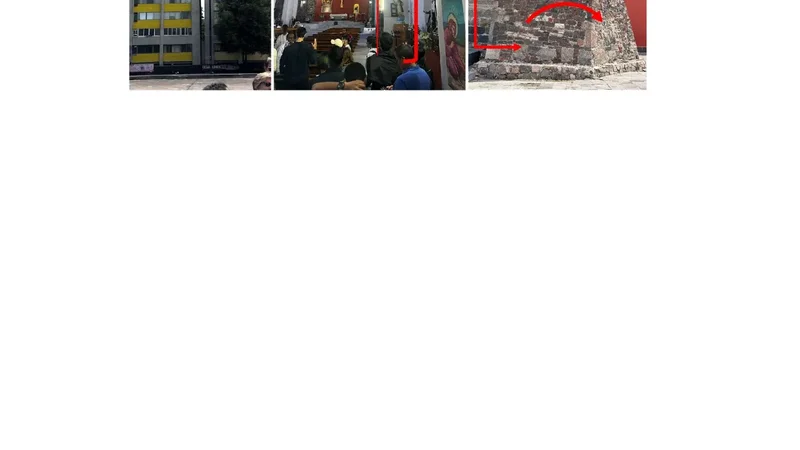
The 1985 M8.1 Mexico City earthquake marked a turning point in Mexican earthquake engineering, underscoring the influence of soft soils, subsidence, and site effects on seismic performance in the Valley of Mexico. In the four decades since, both research and engineering practice have evolved significantly, shaped by subsequent events such as the 2017 M7.1 Puebla-Morelos earthquake. Integrating observations made during the Learning from Earthquakes Travel Study program and desk study findings, this paper summarizes the progression of geotechnical knowledge and practice in Mexico City, through the lessons of 1985 and 2017, through the lens of site effects, soil zonation, subsidence and emerging directions and future trends.
💡 Research Summary
The paper provides a comprehensive review of how geotechnical knowledge and engineering practice in Mexico City have evolved from the seminal 1985 M8.1 earthquake to the more recent 2017 M7.1 Puebla‑Morelos event, using observations from the 2025 EERI Learning from Earthquakes (LFE) Travel Study and an extensive desk‑based investigation. The authors begin by revisiting the 1985 disaster, emphasizing that the city’s deep, soft lacustrine clay (the “L‑zone”) amplified seismic waves in the 0.2‑1.0 Hz band, prolonged shaking, and caused severe damage to structures that were not designed for such site effects. Early shortcomings identified were (1) the neglect of nonlinear soil stiffness and damping, (2) the lack of explicit soil‑structure interaction (SSI) considerations, and (3) insufficient data on long‑term subsidence and groundwater fluctuations.
Subsequent decades saw a proliferation of field recordings, centrifuge tests, and advanced numerical modeling. Researchers documented a clear strain‑dependent transition: low‑amplitude motions exhibit high stiffness, while larger strains trigger softening and high damping, leading to a two‑ to three‑fold increase in spectral amplitudes at low frequencies. Three‑dimensional finite‑element simulations demonstrated that foundation type, depth, and embedment significantly modify site amplification, confirming that SSI must be an integral part of the design process.
The 2017 Puebla‑Morelos earthquake offered a modern test case. Although the same soft‑soil envelope was involved, many buildings were constructed to contemporary codes that incorporate nonlinear foundation concepts. Recorded peak ground accelerations were up to 1.5 times higher than those anticipated by older design spectra, especially in the newly defined “Very Soft” zones where amplification factors reached 4–5. The event highlighted the necessity of designing foundations that can dissipate energy (high‑damping, nonlinear foundations) rather than relying solely on stiffness. Moreover, the study linked groundwater level oscillations to cyclic positive‑negative pore pressures, which in turn reduced the shear strength of the lacustrine clays, underscoring the importance of long‑term subsidence modeling.
A major contribution of the paper is the refinement of the city’s soil‑zonation scheme. Moving from a three‑zone classification (Hard, Medium, Soft) to a five‑zone framework (Very Hard, Hard, Medium, Soft, Very Soft) allows engineers to assign more accurate natural periods, damping ratios, and site amplification factors to each zone. The authors propose a “Period‑Damping Curve” methodology that updates site amplification in real time as new field data become available, facilitating a dynamic, performance‑based design approach.
Looking forward, the authors outline three research and practice pathways: (1) development of coupled hydro‑mechanical models that predict long‑term subsidence driven by groundwater fluctuations, (2) deployment of high‑resolution MEMS accelerometers, fiber‑optic strain sensors, and AI‑based data analytics for continuous monitoring and early warning, and (3) creation of a simulation‑experiment hybrid framework that integrates centrifuge‑validated nonlinear soil models directly into large‑scale numerical analyses of SSI. These directions aim to shift the paradigm from static, conservative designs toward adaptive, data‑driven strategies that can better protect Mexico City and other megacities built on soft sediments.
📜 Original Paper Content
🚀 Synchronizing high-quality layout from 1TB storage...