Modeling Time-dependent CO$_2$ Intensities in Multi-modal Energy Systems with Storage
CO$_2$ emission reduction and increasing volatile renewable energy generation mandate stronger energy sector coupling and the use of energy storage. In such multi-modal energy systems, it is challenging to determine the effect of an individual player…
Authors: Christopher Ripp, Florian Steinke
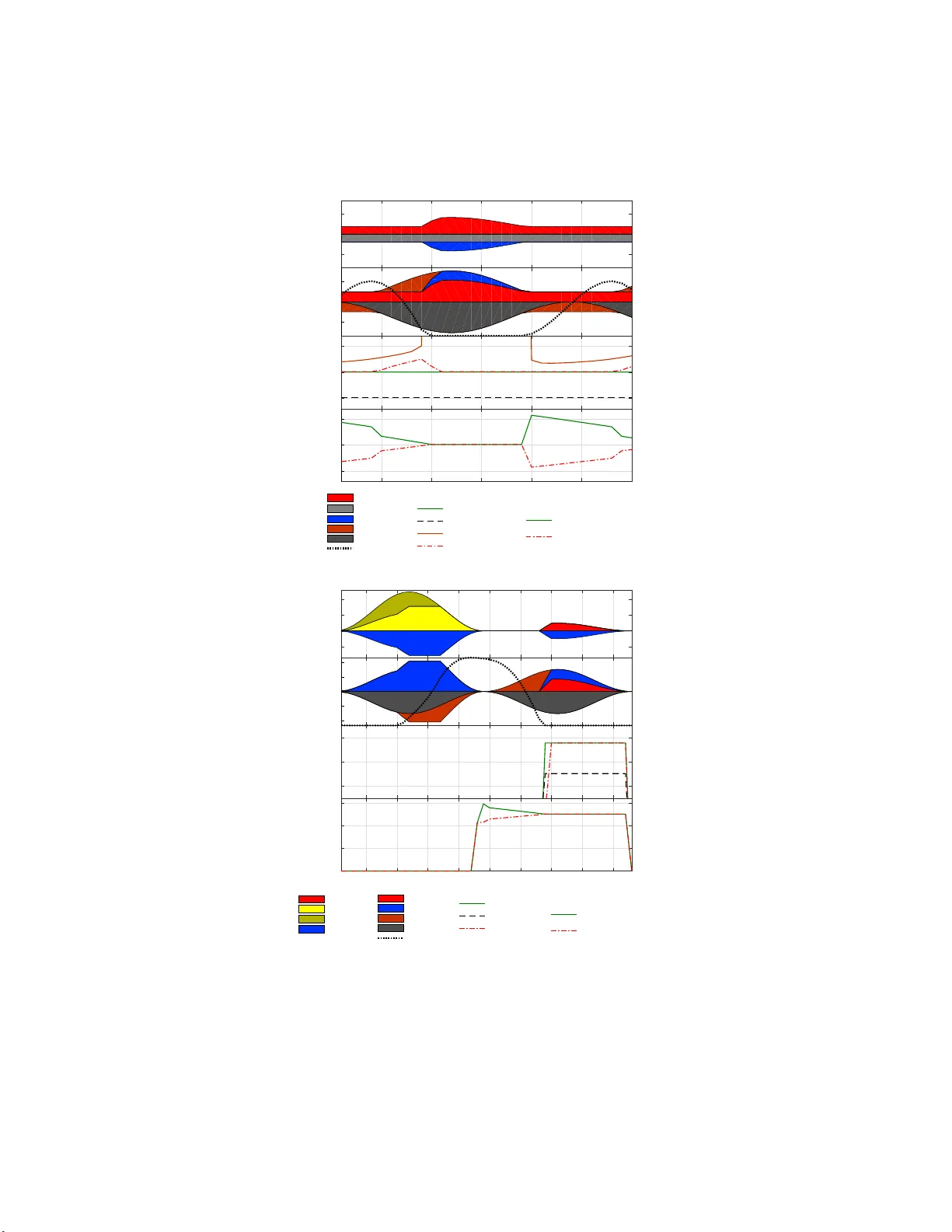
Mo deling Time-dep enden t CO 2 In tensit ies in Multi-mo dal Energy Syst ems with Storage ✩ Christopher Ripp ∗ , Florian Steink e Dep artment of Ele ctric al Engine ering and Informatio n T e chnolo gy, T e chnic al University Darmstadt, Darmstadt, Germany Abstract CO 2 emission reduction and increasing v olatile renew able energy generation mandate stronger energy sector coupling and the use of energy storage. In suc h multi-modal energy system s, it is c hallenging to determine the effect of an individual pla y er’s consumption pattern on to ov erall CO 2 emissions. This, ho w ev er, is often imp ortan t to ev a lua te the suitabilit y of lo cal CO 2 re- duction measures. Due t o renew ables’ volatilit y , the traditional approach of using ann ual av erage CO 2 in tensities p er energy fo rm is no longer accurate, but the time of consumption should b e c onsidered. Moreov er, CO 2 in tensities are highly coupled ov er time and differen t energy forms due to sector cou- pling and energy storage. W e in tro duce and compare tw o no v el metho ds for computing time-dependen t CO 2 in tensities , that address diffe ren t ob jectiv es: the first metho d determines CO 2 in tensities of the energy system as is. The second metho d analyzes ho w o v erall C O 2 emissions w o uld c hange in resp onse to infinitesimal demand c hanges. Giv en a digita l tw in of the energy system in form of a linear prog ram, we show how to compute these sensitivities ve ry efficien tly . W e presen t the results of b oth metho ds for tw o sim ulated test energy systems and discuss their differen t implications. Keywor ds: , carb on inte nsit y of energy, energy con v ersion, energy stora g e, p ow er system a nalysis ✩ This resear ch did not receive any sp ecific g rant from funding agencies in the public, commercial, or not-for- profit sectors . ∗ Corresp o nding author. Department of Electrical Engineering and Information T ech- nology , T echnical Universit y Darmstadt, Dar mstadt, Germany Email addr ess: christ opher .ripp@eins.tu-darmstadt.de (Christopher Ripp) Pr eprint submitte d to Applie d Ener gy Novemb er 27, 2024 1. In tro duction The P aris climate a greemen t mandates a dra stic decrease of CO 2 emis- sions in order to keep climate c hange within the tw o degree goal for g lo bal w a rming. Besides v arious efficiency improv emen ts in energy pro duction and consumption tec hnologies, the energy sector needs to accommo date a v ery high share o f renew able electricit y to reac h this goal [1]. This dev elopment is already under w a y , with mem b er states of the EU predicted to hit their renew able electricit y target of 20% for 2020, further aiming for 27% b y 2030 [2]. F ro m a tec hnical p oin t of view, ev en 10 0% renew able electricit y migh t b e tec hnically realizable [3]. Ho w ev er, suc h systems require more flexible energy consumption and the in terlinking of all energy sectors to bala nce v olatile re- new able pro duction – a tr end often called sector coupling [4], multimodal or m ulti-energy systems [5]. During the course of this energy tra nsition, an y pla y er in the system has to tak e n umerous decisions abo ut ho w to c hange his lo cal b eha vior and energy setup. F or example, a univ ersit y has to decide whether to inv est in com bined heat and p ow er plan ts on campus or in electric heating with heat pumps , ho w f ar to extend its internal heat distribution g rid, and how to op erate all of these comp onents to gether in an optimal w a y . Besides the financials, the CO 2 effect of an y such lo cal action needs to b e w ell-understo o d. It could also b e the basis for CO 2 taxes or levies to incen tivize emission-reducing b eha vior. Since individual lo cal energy changes do no t c hange the system as a whole a lot, a straig ht-forw ard w a y fo r estimating the CO 2 effect of lo cal actions is to use the CO 2 in tensities of a ll energy fo r ms consumed fro m the enregy system and m ultiply these with the pro jected changes of demand o r generation patterns. Computing CO 2 in tensities suc h that they yield the plausible implications is, how ev er, not a trivial task. Sev eral kno wn approaches use ann ual a v erage CO 2 in tensities , see sec- tion 2. Since highly volatile renew ables impact t he electricit y generation mix in a strongly time-dep enden t manner, the CO 2 in tensit y should, how ev er, rather b e regarded as a time-dep enden t quantit y . No ne o f t he previous re- searc h do es tak e in to accoun t the effect of large-scale storage or full-scale sector coupling, that is reasonable to assume f or highly renew able energy systems . Storage may b e c harged with CO 2 neutral energy , e.g. from solar p ow er, in whic h case any output from that storage should also b e regarded as CO 2 free. If, how ev er, it is c harged with energy fro m fossil sources, this is not t he case. Sector coupling interlinks the CO 2 in tensit y from one energy 2 form with the other, p oten tially with circular reasoning. F or example, a ga s p ow er plant may b e regarded as pro ducing CO 2 neutral electricity and heat if it is run on renew ably generated gas, a fact that again dep ends on the CO 2 in tensit y of the electricit y the gas was generated from. In this pap er, w e describ e a nd compare t w o new metho ds to determine time-dep enden t CO 2 in tensities . Both metho ds are consisten t for fully multi- mo dal energy systems and the use of significant storage. The k ey idea of the first metho d, from now o n called ”as-is” analysis, is to exactly tra ce all CO 2 emissions r elat ed to an y kind of energy flow or storage con ten t throughout the whole energy system. All energy forms are treated equally . The second metho d, from now on called ”what-if” analysis, calculates the differen tial c hange in the total CO 2 emissions of the system with resp ect to an infinites- imal c ha ng e of the demand in a given energy form and a giv en time. As is show n in the exp erimen ts and discussed thereafter, the resulting CO 2 in- tensit y v alues for the tw o approac hes a re often ve ry different, as are the implications one should draw from them. Dep ending o n the exact purp ose of the query , ho w ev er, b oth approac hes can suitably b e emplo y ed. Our w ork extends previous w o rk, o utlined in section 2, b y correctly con- sidering fully m ulti-mo dal systems including a solution to circular reason- ing problems and as well as non- negligible storage. Concerning a compu- tational p ersp ectiv e, w e presen t another imp ortant con tribution: w e show ho w to compute the CO 2 sensitivities of the what-if analysis v ery efficien tly , at least for common linear progr a mming (LP) optimization based energy system mo dels. Moreo v er, w e compare t w o approach es for computing CO 2 in tensities on concrete examples and discuss the meaning and applicatio n of eac h computational approach. The prop osed metho ds ar e describ ed in section 3. The computational tric k fo r efficien t what- if a nalysis is presen ted in section 4 . In section 5, w e demonstrate the results for b oth approache s for tw o t est energy systems, highligh ting the effects of large-scale stora g e as w ell as sector coupling onto time-dep enden t CO 2 in tensities . In section 6 summarize our findings, discuss the different b enefits a nd limitations of our tw o approac hes, and giv e a brief outlo ok. 2. Related W ork The ev aluation and discussion of CO 2 emissions of v ario us energy pro duc- tion t echnologies a nd the influences o f changes in an electrical energy system 3 on these emissions has b een studied for some y ears (e.g. [6, 7, 8, 9, 10, 11]). Dep ending on the scop e of the studies, e.g. countries or tec hnologies, differ- en t metho dolog ies w ere used and differen t results we re presen ted. Y et there is no general rule whic h tec hnology reduces the emissions at most and w on t will b e. The effect of system c hanges on CO 2 has to b e individually answ ered for eac h system design. The mo st commonly used and widely accepted ap- proac h to determine the effect on CO 2 emissions is t he computat ion o f the marginal CO 2 emission of the resp ectiv ely regarded energy system. There- for, the marginal CO 2 in tensit y follow s as the ratio b etw een a dditio nal CO 2 divided b y the additiona l use of energy . The most common approach es to compute marginal CO 2 in tensities used mo deled or observ ed load duration curv es in com binatio n with merit orders to iden tify the marginal pro duc- tion source. V oo rsp o ols et. al presen ted in the y ear 2000 a new to ol and metho dolgy f o r the economic dispatch to estimate marginal and incremen tal emissions factors to p oin t out the o ptim um measures to mitiga te CO2 emis- sions for the electricit y g eneratio n [9]. In 200 2 Marnay et. al calculated the historic marginal CO 2 emissions of the California electric p ow er sector b y using a lo a d curv e approac h and compared this v alues to the a v erage CO 2 emissions [8]. In a further researc h V o orsp o ol et. al used this metho dolgy to compute the difference of GHG emission b etw een differen t predicted scenar- ios of the ev olution of the b elgium energy system [10 ]. In 2010 Hawk es et. al introduced a new a pproac h to calculate the so called short term marginal CO 2 in tensit y , whic h represen ts only little structural change, via linear re- gression based on historic data of great britain’ electric energy pro duction from 2002- 2009 [6]. They also compared the calculated historic a v erage CO 2 in tensities with the calculated marginal CO 2 in tensities and made predic- tions o f f uture b eha vior b y sligh tly changing the underlying pro duction mix via manipulating the historical dat a . In 2014 they extend their w o rk a nd in tro duced the so called long r un marginal CO 2 in tensit y , whic h displa ys the effect o f structural c ha ng e in the electricit y system [7]. Based o n Hawk es lin- ear regression approach Siler-Ev ans et. al computed v a rious marg inal green house gas emission intens ities of the U.S. electricit y system [12] based on historic data from 200 6 through 2011. All previous studies hav e in common that their fo cus lies o n the estima- tion of CO 2 in tensities of historic energy mix based on historical given data. As well as they limit these estimations to the electric energy system and not tak en into accoun t that high p otential in sa ving CO 2 lies in the con v ersion of p ow er to x in higly RES p en trated systems. Some studies, e.g. [7], trying 4 to adapt the historical system data to predict the effects o n CO 2 emissions due to the manipulation related system changes . None of these studies in- cluding the effects of short or sp ecially long term storage tec hnologies, whic h completely decouple the pro duction from usage time, whic h strongly effects the CO 2 in tensities of the used energy within a consumption-based a ccount- ing of CO 2 . Another related and not y et discussed topic is the computat io n of mar ginal CO 2 in tensities in LP economic dispatc h mo dels in terms of a sensitivit y analysis. Our prop osed metho ds are able to consider the effect of storage on the CO 2 in tensities and are able to compute t he marg inal CO 2 in tensities for multi-energy systems as an effect o f differen tial ch anges of the energy demand without the need of a new optimization. The authors of [13, 14] calculate and analyze annual av erage CO 2 in ten- sities fo r the j o in t heat and electricit y pro duction. Based o n these n um b ers, the effectiv eness of differen t CO 2 reduction measures are discussed in [15]. Similarly , the G erman building efficiency directiv e accoun ts for energy pur- c hases from the gr id via fixed pr ima r y energy fa ctors [16] or the EU requires that electricit y utilities rep ort their a nnual CO 2 in tensit y o n each bill [17]. Since highly v olatile renew ables impact the electricit y generation mix in a strongly time-dep enden t manner, the CO 2 in tensit y should, how ev er, rather b e regarded as a time-dep enden t quantit y . The effect of including suc h dy- namic CO 2 in tensities f o r electricit y into demand resp onse tar iffs is examined in [18]. Y et all of this previous researc h do es not take into account t he effect of large- scale storage or sector coupling. Storage ma y b e c harged with CO 2 neutral energy , e.g. from solar p ow er, in whic h case any output from that storage should also b e regarded as CO 2 free. If, how ev er, it is c harged with energy from fo ssil sources, this is not the case. Sector coupling in terlinks the CO 2 in tensit y from one energy form with the other. F or example, a gas p ow er plant may b e regarded as pro ducing CO 2 neutral electricity and heat if it is run on renew ably generated gas. When trying to correctly accoun t for the fuel consumption of com bined-heat-and-p ow er plan ts (CHP), [19] com- pares the consumption of the joint system with that o f reference tec hnolo gies for separately pro ducing electricit y and heat, distributing the joint sav ings ev enly among the differen t mo dalities. In a fully m ulti-mo dal energy system, ho w ev er, this approa ch b ecomes difficult. First, many reference technologies are required. Second, ev en ev aluating the CO 2 in tensit y of a single tec hnol- ogy may b e difficult, if for example the consumed g a s is partially pro duced via p o w er- to-gas, resulting in circular reasoning. 5 CO 1 CP 1 CO 2 CP 4 (De m and) CO 3 CP 2 (Sto rage ) CP 3 Figure 1: Schematic illustration of our abstraction of m ulti-mo dal ener gy systems. Ellipses enco de ener gy forms (commo dities) and r ectangles ener gy conv ersion pro cesses . Arr ows indicate energ y flows. 3. Metho ds for computing CO 2 in tensities F or represen ting m ulti-mo dal energy systems w e use the following mo d- eling abstractions, see also F ig ure 1: The differen t energy fo rms are called commo dities (denoted as co , co ′ ). A t eac h p oin t in time t , a con v ersion pro- cess ( cp ) tak es amoun t E in ( cp, co, t ) of energy f r o m input commo dity co and pro duces energy E out ( cp, co ′ , t ) of output commo dity co ′ . Con v ersion pro- cesses can ha v e sev eral input and output commo dities. Standa r d con v ersion pro cesses, suc h as CP1 in Figure 1, are augmen ted b y stora g e pro cesses, suc h as CP2, whose in a nd outflo ws of energy are buffered through a n in- ternal stora ge with time-dependen t storage lev el S L ( cp, t ). The mo del is completed b y demand and imp ort pro cesses, see CP4 and CP3, resp ectiv ely . These pro cesses with only input or output energy flo ws constitute the mo del b oundary , a ccoun t ing for final energy use outside the mo del or the imp ort of energies into the mo del domain. 3.1. As-is an alysis W e now presen t the first of the tw o new metho ds for computing time- dep enden t sp ecific CO 2 in tensities I ( co, t ) fo r each commo dity co and eac h time t . Under this term w e understand that fraction of the total energy system CO 2 emissions that is attr ibuta ble to the g eneratio n of energy form co at time t , divided b y the total amoun t o f suc h energy . W e track the absolute amoun t of att r ibutable CO 2 emissions with each energy flow in and out of any con v ersion pro cess. CO 2 outflo ws M out ( cp, co, t ) of a con v ersion pro cess cp are a ccoun ted for separately for eac h target com- mo dit y co , inflo ws M in ( cp, t ) are aggregat ed for the whole conv ersion pro cess. Time-dependent CO 2 in tensities ar e then give n as I as − is ( co, t ) = P cp M out ( cp, co, t ) P cp E out ( cp, co, t ) . (1a) 6 Additionally , w e t r ac k the CO 2 emissions M stor ( cp, t ) at tributable to the generation of stora g e conten t S L ( cp, t ) ov er time. This yields the curren t storage CO 2 in tensit y as I as − is stor ( cp, t ) = M stor ( cp, t ) S L ( cp, t ) . (1b) Numeric difficulties arise when the denominators are close to zero. W e there- fore introduce small minim um thresholds. T o obtain a consisten t picture for the whole multi-modal energy system with stora ge, w e now define a set of further linear equations for eac h type of con v ersion pro cess. F or standard conv ersion pro cesses without storage we use equations M in ( cp, t ) = X co E in ( co, cp, t ) I as − is ( co, t ) , (1c) M out ( cp, co, t ) = M in ( cp, t ) E out ( cp, co, t ) P co ′ E out ( cp, co ′ , t ) . (1d) M in ( cp, t ) agg r ega tes the CO 2 emissions attributable to the generation of all energies consumed b y the con v ersion pro cess. This total CO 2 amoun t is then split ev enly amo ng all pro duced energy outputs, relative to the pro duced energy amount. Note that this equal treatment of all outputs is a k ey as- sumption of our approac h. It ma y con tradict common feelings and exergy argumen ts. Consider, for example, a CHP plan t where one often rega rds electricit y to b e the real pro duct and heat as only a side-effect, and thu s CO 2 free. How ev er, w e are con vinced that in complex m ulti-mo dal energy systems with high shares o f renew ables these unev en a prior i v aluatio ns of differen t energy for ms are no lo nger v alid. CHP plan ts ma y often run more for their heat tha n for the electricit y pro duced, if the wind is blo wing. More- o v er, the equal treatmen t of a ll energy forms impro v es the explainability a nd in terpretabilit y of the approac h. A second considered group of con v ersion pro cesses are storage pro cesses. T o describ e these, we use Eq. (1c) and M out ( cp, co, t ) = I as − is stor ( cp, t − 1) E out ( cp, co, t ) /η stor ( cp ) , (1e) M stor ( cp, t ) = M stor ( cp, t − 1) + M in ( cp, t ) − X co M out ( cp, co, t ) . (1f ) 7 The CO 2 output is giv en as the storage CO 2 in tensit y at the b eginning of the time step multiplied by the energy tak en out o f stora ge during the time step. The energy taken from storage is the the energy deliv ered to the pro duct commo dit y divided by the storage efficiency η stor ( cp ). Eq. (1f) enco des the time consistency of the CO 2 amoun t attributed t o the storage energy con ten t. The last g roup of conv ersion pro cesses considers the system b oundary . A t each imp ort pro cess that tak es energy in to the mo del domain, e.g. for imp orting fossil fuels, we assign the r elat ed CO 2 con ten t as M out ( cp, co, t ) = E out ( cp, co, t ) η C O 2 ( cp, co ) . (1g) W e assume that a ll CO 2 imp orted into the mo del will ev entually end up in the atmosphere. Thus, η C O 2 ( cp, co ) enco des the CO 2 emissions of the fuel relativ e to its energetic v a lue. No equations are needed for demand pro cesses. The resulting set of linear equations (1) is solv ed sim ultaneously , yielding the CO 2 in tensities of each commo dit y and storage within the m ulti-mo dal system for eac h p oint in time. 3.2. What-if an alysis Our second no v el metho d aims a t analyzing ho w the system w ould change, giv en infinitesimally small c hanges of the demand of commo dit y co at time t . Unlik e t he previous approach that w o rk ed with observ ed op erational data only , w e no w need a mo del that a llo ws determining the hypothetical system op eration giv en mo dified demands. Suc h a mo del can b e called a digital twin of the energy system. 1 There are many w ays to o bta in digital twins of the energy system [20]. Our prop osed approac h for determining CO 2 in tensities can w ork with all of them. F or the exp osition, how ev er, we will fo cus on fundamental b ottom up mo dels, sp ecifically partial equilibrium mo dels [21, 2 2 ], whose pa rameters are fitted to explain real b eha vior, see e.g. [21]. In the nota tion of this pap er suc h partial equilibrium mo dels can b e sk etche d as follows . W e optimize o ve r all energy flo ws E in ( co, cp, t ) and E out ( cp, co, t ) the cost o f op eration given as X cp,co, t c var ( cp, co ) E out ( cp, co, t ) , (2a) 1 https: //en. wikip edia.org/wiki/Digital_twin 8 where c var ( cp, co ) are the specific v ariable costs related to the energy flo w E out ( cp, co, t ). The optimizatio n is sub ject to a ho st of constrain ts. One is the conv ersion pro cess-in ternal energy balance fo r eac h t ime step, E out ( cp, co, t ) = κ ( cp, co ) X co ′ E in ( co ′ , cp, t ) . (2b) Here, κ ( cp, co ) is the efficiency for o utput co . Another constrain t is the mo del-wide energy balance fo r eac h energy fo rm a nd time, X cp E out ( cp, co, t ) = X cp ′ E in ( co, cp ′ , t ) . (2c) Moreo v er, o utputs are capacity limited, 0 ≤ E out ( cp, co, t ) ≤ C ap ( cp, co ) (2d) and some of them, na mely the demands, are fixed to predefined leve ls, E in ( co, cp, t ) = D ( co, t ) . (2e) This a llo ws to compute total system-wide CO 2 emissions as M tot = X t,cp,co η C O 2 ( cp, co ) E out ( cp, co, t ) , (2f ) where η C O 2 ( cp, co ) are the CO 2 emissions that ar e pro duced b y this con- v ersion step and w ere not accoun ted b efore. It usually suffices to assign the sp ecific CO 2 emissions and fuel costs only to the imp ort pro cesses, tha t mov e energy in to the mo del. A full energy system mo del will ty pically contain man y additional equations, e.g. to mo del storage pr o cesses or renew ables with in termitten t a v ailability , see [21, 22]. The mo dels ma y also con tain mo dified v ersions of the ab ov e equations, e.g. to accoun t for non-linearities or optimizable, time-dep enden t output fractions (2b). T o determine time-dep enden t CO 2 in tensities , the what-if analysis a na- lyzes differential c ha nges of the ov erall CO 2 emissions with resp ect to demand c hanges. F ormally that is, I w hat − if ( co, t ) = ∂ M tot ∂ D ( co, t ) . (3) 9 Dep ending on the mo del, suc h deriv atives can b e computed analytically or via finite differences. When computing man y CO 2 in tensities , the finite differ- ences approach can b ecome computationa lly v ery burdensome. Eac h function ev aluation f o r mo dels like ab ov e (2 ) will b e equiv alen t to a full optimization. F or some problems, how ev er, there is a faster solution as is discusse d next. 4. Efficien t What-If analysis for LP mo dels F or the sp ecial case, where the digital t win is a n optimizatio n mo del in linear pro g ramming (LP) form, see (2) ab ov e or [21, 22], we now sho w how to compute the man y partial deriv ative s (3) required for the what-if CO 2 sensitivities with a single optimization. Our exp o sition is based on standard sensitivit y analysis for LPs that can b e derive d from the Karush-Kuhn-T uc k er (KKT) optimality conditions for this type of con v ex optimization problem [23]. Let the LP b e giv en in standard f orm as min x c T x s.t. Ax ≤ b (4) The problem is conv ex, it can b e dualized in to ano t her LP with dual v ariables λ , and strong dualit y holds, i.e. the optima of the original and the dual problem coincide. The complemen tary slackne ss condition, one pa rt of the necessary KKT conditions, mandates that at the optimum p oints x ∗ , λ ∗ of b oth pro blems ( a i x ∗ − b i ) λ ∗ i = 0 , (5) where a i is the i -th ro w of A . Equations for whic h λ i > 0 a re called ac- tiv e, since the solution is exactly o n the b o undar y of the feasible region. Summarizing all the active equations in to index set A then allows to write A A x = b A , (6) where A A , b A represen t the cor r esp o nding row subsets. If under an (infinites- imally) small c hange of the right hand side b A the set of activ e equations sta ys the same, then this equation also holds for the mo dified system. It follo ws that A A ∆ x = ∆ b A . (7) 10 These general insigh ts ab out LPs can b e employ ed for energy syste m mo dels as follo ws: in an energy system mo del the equalit y condition ( 2c) will alw a ys b e activ e and th us b e part of index set A . The CO 2 con ten t M tot is one v aria ble in x . T o determine a CO 2 sensitivit y I w hat − if ( co, t ), w e can therefore solv e the linear equation (7) f or a r ig h t hand side ∆ b A ha ving only one non- zero en try at the row corresp onding to the energy balance for this commo dit y and time step. With sparse linear algebra that is applicable to suc h energy system mo dels, this can b e do ne v ery efficien tly , ev en for man y differen t energy fo rms and time slots corresp onding to different righ t hand sides. 5. Exp erimen ts T o demonstrate the prop osed metho ds, w e use an energy system mo del similar to (2 ) a nd sim ulate tw o differen t test energy systems. The first t est energy system, chos en to highligh t the effects of renew ables’ time-v ariability and o f storage, is depicted in F igure 2. It has o ne commodity and fiv e con v ersion pro cesses and is th us called the single-commo dity (SC) mo del. Its setup and results are discuss ed in section 5.1. The second test energy system is c hosen to examine the effects of sector coupling. It is depicted in Figure 4 and has tw o commo dities and fiv e con v ersion pro cesses. It is called the m ulti- commo dit y (MC) mo del. Its setup and results are presen ted in section 5.2. Both systems’ par a meters are v aried in diff erent scenarios to demonstrate sp ecific effects a s clearly as p ossible. 5.1. Single Com mo dity (SC ) System: Setup and R esults The SC mo del is ba sed o n the commo dity electricit y and has fiv e different con v ersion pro cesses, see Figure 2. The time tra jectory of the electric demand is con tin uo usly increasing from zero at the start until it reac hes its maxim um El ectri ci ty Ba tte ry De ma nd el ectri c i ty Gas C C PV l ig ni te SP P Figure 2: The SC test energ y system. Rectangles repr e s ent a conv ersion pr o cesses and circle sha pe s the used commo dity . 11 T able 1: Examined sc e narios of the SC test energy system) name of scenario lignite SPP gas CC PV electric storage Scenario 1 + + - - Scenario 2 + + + + v alue of 1 . 5 GW at time 10 h . Electricit y is generated b y a lignite steam p ow er plant (SPP) with an electric efficiency o f η = 45%, a gas com bined cycle turbine (CC) with an electric efficiency o f η = 6 0%, and a photov oltaic system (PV). These tec hnolo g ies w ere c ho sen to maximize the plausible range of CO 2 in tensities . The output capa city of the lignite SPP is 0 . 75 GW (50% of p eak demand), the one of PV is 1 . 3 GW (92% o f p eak demand), and ga s CC is not limited. PV av aila bilit y is a dditionally time-dep enden t. It starts increasing at time 1 0 h tow ards its maxim um at time 17 h , b efore decreasing bac k to zero at t ime 24 h . The v ariable cost of electricit y pro duction of PV is the low est, f o llo w ed by lignite SPP and gas CC, at last. The CO 2 in tensit y of the consumed nat ur a l gas is assumed to b e 0 . 20 t/ M W h , the one of lignite 0 . 41 t/ M W h [24]. W e examine t w o different scenarios, summarized in T able 1. While sce- nario 1 is as describ ed ab ov e, an additional electric storage is considered in scenario 2. The storag e’s c harging a nd discharging pro cess ar e considered lossless, but an hourly self-disc ha rge rate of 1% p er hour applies. The results o f scenario 1 are shown in Figure 3a. F ollo wing t he merit order of av ailable generation a t each p oin t in time, the increasing demand is cov ered b y lignite SPP first and gas CC later, when lignit e SPP is at its maxim um. PV r eplaces b oth of them, when av ailable. The computed as-is CO 2 in tensit y of electricit y is c hanging in line with the mix o f differen t sources. A t the b eginning, the intensit y equals t he CO 2 in tensit y of electricit y from lignite SPP , that is, 0 . 9 t/ M W h . As the gas CC starts op erating, the CO 2 in tensit y is decreasing prop ortionally . The in tensit y decrease is ev en strong er when PV co v ers a substan tial share of the demand. The minim um CO 2 in tensit y is reac hed at the time when the PV has its maxim um pro duction. In contrast to as-is analysis, the CO 2 in tensit y of what-if a na lysis is not effected by the pro duction mix of the curren t sy stem. Instead it examines 12 0.15 0.30 0.45 0.60 0.75 0.90 CO 2 intensity "as-is" in t/MWh CO 2 intensity electricity CO 2 intensity lignite CO 2 intensity gas 2h 4h 6h 8h 10h 12h 14h 16h 18h 20h 22h 24h 0.3 0.45 0.6 0.75 0.9 CO 2 intensity "what-if" in t/MWh CO 2 intensity electricity -1.5 0 1.5 Electricity load in GW lignite SPP Gas CC PV Demand electricity (a) Scena rio 1 0.2 0.4 0.6 0.8 1 CO 2 intensity "as-is" in t/MWh CO 2 intensity electricity CO 2 intensity lignite CO 2 intensity gas CO 2 intensity storage 2h 4h 6h 8h 10h 12h 14h 16h 18h 20h 22h 24h 0.31 0.32 0.33 CO 2 intensity "what-if" in t/MWh CO 2 intensity electricity -1.5 0 1.5 Electricity load in GW 0 Storage level arbitrary units lignite SPP Gas CC Battery PV Demand electricity Storage level (b) Scenar io 2 Figure 3: Time tra jector ies o f e le ctricity gener a tion and consumption as well a s ba ttery level (top plot), time-dep endent CO 2 int ensities of the a s-is a nalysis (mid) and what-if analysis (bottom) for the different s cenarios, see T a ble 1 . Gener ation is plo tted as p o sitive in the top plot, c onsumption a s negative. Note the individual scaling of CO 2 int ensities in ea ch plot. 13 the CO 2 in tensit y o f p ossible additio nal generation. As can b e seen in the figure, a completely differen t b ehavior of the CO 2 in tensit y follows, with only t w o levels here. When lignite SPP is not o p erating at maxim um capacit y , the what-if CO 2 in tensit y equals the CO 2 in tensit y o f lig nite SPP . When it is at its limit, the what-if CO 2 in tensit y is the one of g as CC generation, that is, 0 . 34 t/ M W h . CO 2 neutral electricit y is not p ossible under this view, since all of it is used in the curren t system already , and none is a v ailable to co v er additional demands. The results ar e v ery differen t when storag e comes into play in scenario 2, see Figure 3b. In this scenario lignite SPP runs a t ma ximum capac- it y thro ughout to minimize pro duction cost. This directly implies higher CO 2 emissions o verall than in scenario 1. In the b eginning when electric - it y demand is b elow SPP pro duction, the storage is charged. With demand increasing ab ov e SPP capacity , the storage is disc harged to p ostp one the op- eration of costly ga s CC. Gas CC is later displaced b y PV. How ev er, not so lignite SPP . Its energy is rather stored to sa v e gas CC op eratio n later, when PV av ailability decreases again. The a s-is CO 2 in tensit y of electricit y matc hes the CO 2 in tensities of the generation mix from gas CC and SPP and from storage. The CO 2 in tensit y drop for electricit y during p eak PV av aila bilit y is smaller than in scenario 1, since lig nite SPP contin ues maximal op eration due to the storage option. The storag e con ten t’s CO 2 in tensit y dep ends on the electric CO 2 in tensit y at c harging time. Moreov er, it increases with time due to it s self-disc harge rate. This is b ecause self-disc harg e means that storage con ten t is lost but the virtually stored CO 2 sta ys the same. When t he storage is (close to) empty , large but irrelev ant storage CO 2 in tensities result. The what-if analysis again dra ws a differen t picture ab out the CO 2 in- tensities for this scenario. Additiona l use o f electricit y when ga s CC – the most exp ensiv e form of generation – is already o p erating, is equal to t he CO 2 in tensit y of gas CC, since an y additional demand w ould also b e cov ered b y this tec hnology . A t times when the storage is disc harged to co v er demand, one can get additional energy from the stora ge. This, how ev er, a ccelerates the storage’s disc harg e and therefore leads to an earlier restart of gas CC. That is, if one uses the stored energy early o n, gas CC needs to pro duce more energy later on. Ho w ev er, an earlier use of the storag e’s energy av oids energy losses due to self-disc harge. This means that t he use of one unit of energy from storage at time t 1 leads to an energy demand from gas CC o f less than 14 El ectri c i ty El ectri c He ati ng He at De m an d Hea t the rm al s to rag e Gas CHP P V Figure 4: The MC test energ y system. Rectangles r e present a co nversion pro ces ses a nd circle sha pe s the used commo dity . one at time t 2 , where t 1 < t 2 . The effect increases with the temp or al distance b et w een t 1 and t 2 and explains the slightly increasing CO 2 in tensities of the what-if analysis during times with non-empty storage ta nk. 5.2. Multi C ommo dity (MC) System: Setup and R esults The second test energy system, depicted in Figure 4, has t w o commo dities and fiv e con version pro cesses . There is a time-constan t electrical demand and a time-v arying heat demand with sin usoidal shap e o v er the course of one day . A gas driv en com bined heat and p ow er plan t (CHP) supplies electricit y and heat with an electric efficiency of 35 %. The thermal output is flexible and can b e ramp ed up until a 80% total fuel efficiency for electricity and heat is reac hed. The CO 2 in tensit y of the ga s input is again set as 0 . 2 0 t/ M W h . The mo deled heat stora ge lo oses 5% of the energy during the c harging pro cess, and 1% of the storage conten t in eac h hour. Resistiv e electric heating can con v ert electricit y into heat with efficiency η = 1. The PV plan t ha s a time- dep enden t av ailability , sim ulating one sunn y da y follow ed by one without an y irradiation. Un used PV energy can b e curtailed. The capacit y o f the PV is set suc h that during the sunny da y the t hermal storage can fully b e c harged via the electric heater. The system cost to b e minimized is pro p ortional to the amount of consumed g as for the CHP . PV electricity is assumed to b e free. Three different scenarios are examined, as listed in T able 2. Scenarios 1 mo dels a classic p ow er systems without renew ables. Scenario 2 in tro duces PV as a fluctuating source, here for heating purp o ses only . Scenario 3 demon- strates a sp ecial effect when using only the CHP to co v er a lo w er heat, but significan t ly higher electricit y demand. The sim ulatio n results for all scenar- ios ar e sho wn in F ig ure 5 and F igure 6 . In scenario 1, F igure 5a, the gas CHP is con tin uously running to co v er the electricit y and heat demand, alwa ys at the op eration p oint with maxim um 15 T able 2: Examined sc e narios of the MC test energy sys tem name of scenario gas CHP electric heating PV thermal storage demand Scenario 1 + + - + elec: 50% heat: 100 % Scenario 2 + + + + elec: 0% heat: 100 % Scenario 3 + - - - elec: 100% heat: 3 0% fuel efficiency of 8 0%. When the electricit y demand leads to a heat supply larger than current demand, the t hermal storage is c harged. When the heat demand increases, ab ov e this supply lev el, the storage is used. A t the times of p eak thermal demand, the CHP pro duces additional electricit y whic h is con v erted into heat via the electric heater. The optimal op eration p oin t of the CHP leads to a constan t as-is CO 2 in tensit y of electricit y of 0 . 25 t/ M W h = 0 . 2 t/ M W h/ 0 . 8. The same ho lds fo r heat, when stora g e is not disc harged. The storage CO 2 in tensit y is alw a ys ab ov e this leve l due to the charging losses. As for the SC mo del, it increases o v er time due to self-disc harge lo sses. In total, t hat means that the as-is CO 2 in tensit y of heat is increasing during times of storag e disc harge. The what-if analysis yields equal CO 2 in tensities of 0 . 25 t/ M W h for heat and electricit y , when the storage is no t op erat ing . This is a consequence of electric heating whic h transforms heat to electricit y without any losses. T o show and explain the complex in teractions in multi-moda l system with optimal opera t io n, we no w describ e in detail the chain of effects, that a electric demand increase w ould hav e. If electricity demand is increased b y 1 unit, gas CHP has to use additional 2.86 units of g as to pro duce this electricit y at an efficiency of 35%. This results in additio nal 0.57 units of CO 2 emissions. The corr espo nding heat supply of 1.29 units substitutes the op eration of the electric heater, reducing the electric demand by 1.29 units, whic h in turn reduces the CHP op eration b y 3.67 gas units and CO 2 emissions b y 0.73 units. This, how ev er, w ould lea v e 1.65 units o f heat demand without supply . The gas CHP therefore has to use additional 2.07 units of gas to cov er the 1.65 units of heat with 0.93 units of heat supplied directly and 0.72 units of electricit y whic h ar e transformed to heat via the electric heater ( η = 1 ). 16 -1.5 0 1.5 Electricity load in GW Gas CHP Demand Electricity 0.2 0.25 0.3 CO 2 intensity "as-is" in t/MWh CO 2 intensity electricity CO 2 intensity gas CO 2 intensity storage CO 2 intensity heat -1.5 0 1.5 Heat load in GW 0 Storage level per unit Electric Heating thermal storage Demand Heat Storage level 5h 10h 15h 20h 25h 30h 0.2 0.25 0.3 CO 2 intensity "what-if" in t/MWh CO 2 intensity electricity CO 2 intensity heat (a) Scena rio 1 -2 0 2 4 Electricity load in GW Gas CHP PV Curt: PV Electric Heating 0.18 0.22 0.26 CO 2 intensity "as-is" in t/MWh CO 2 intensity electricity CO 2 intensity gas CO 2 intensity heat -3 -1.5 0 1.5 3 Heat load in GW 0 Storage level arbitrary units Gas CHP Electric Heating thermal storage Demand Heat Storage level 5h 10h 15h 20h 25h 30h 35h 40h 45h 0 0.1 0.2 0.3 CO 2 intensity "what-if" in t/MWh CO 2 intensity electricity CO 2 intensity heat (b) Scenar io 2 Figure 5: Time tra jector ies o f genera tion and co nsumption, storag e levels for electr icity (top) and heat (upper mid), CO 2 int ensities for as-is (low er mid) and what- if ana ly sis (bo ttom) for the scenario s 1 and 2, see T able 2. Positive v alues in the tw o top plots indicate gener ation, nega tive ones consumption. 17 This additio nal 2.07 units of gas result in 0.41 units of CO 2 emission. The CO 2 balance of all these steps is 0 .25 units for 1 unit of electricit y . During storage op eratio n the what-if CO 2 in tensities for electricit y and heat ar e differen t, since electric heating is not op erating then. The what-if CO 2 in tensit y of heat is similar as for the SC mo del describ ed ab ov e. Electric- it y’s CO 2 in tensit y is mirroring the heat in tensit y v alues. T o cov er additional electricit y demand, gas CHP has to increase pro duction. The corresp onding heat supply is stored a nd used later. How ev er, due to storage losses the sa vings in later CHP op eration for heat are the smaller, the longer the heat sta ys in the storage. This explains wh y the CO 2 in tensit y of elec tricit y is declining o v er time, unlike the heat in tensit y . The results for scenario 2 with renew ables are show n in Figure 5b for t w o da ys. During the first day , a ll demand can b e cov ered by PV only . There is also sufficien t free energy to fully c harge the thermal storage. Some PV energy ev en needs t o b e curtailed due to the limited capacit y of the stora ge. During the second da y , the heat demand is cov ered from thermal storag e first. When it is empt y , the gas CHP pro duces electricit y and heat to optimally co v er t he heat demand directly and via electric heating. As-is analysis yields CO 2 in tensities of electricity and heat that are zero during day one. Hence, the stor a ge CO 2 in tensit y is also zero on that da y . During the second da y , the CO 2 in tensit y of electricit y and heat rises to 0 . 25 t/ M W h , as a result of the gas CHP op erat io n a t the optimal op eration p oin t, see scenario 1. In one time step when the CHP is alr eady running, the provided heat is a mix of stored CO 2 neutral heat and CO 2 loaded heat pro duced b y g as CHP . This results in a CO 2 in tensit y of heat of 0 . 14 t/ M W h (note that the plot scale is limited at 0 . 1 8 t/ M W h here for optimal presen ta- tion). The scenario show s in comparison with scenario 1 that the storage’s con tribution to the CO 2 in tensit y of the output energy fo rm dep ends strongly on t he energy mix that w as used to fill the storag e tank. It can b oth lo w er or increase this v alue. The what-if CO 2 in tensit y for b o t h heat and electricit y is zero a s lo ng as the PV is providing energy and t he storage is not f ully c harged. Additional demand could then b e co ve red b y decreasing the PV curtailmen ts. When the fully c harged stat e is passed, the what- if CO 2 in tensities sho w the same b eha vior a s in scenario 1. Scenario 3, sho wn in Figure 6, has a high electricit y demand and a p eri- 18 -1.5 0 1.5 Electricity load in GW Gas CHP Demand Electricity 0.20 0.30 0.40 0.50 0.60 CO 2 intensity "as-is" in t/MWh CO 2 intensity electricity CO 2 intensity gas CO 2 intensity heat -1.5 0 1.5 Heat load in GW Demand Heat 5h 10h 15h 20h 25h 30h 0.0 0.15 0.30 0.45 0.60 CO 2 intensity "what-if" in t/MWh Figure 6: Time tra jecto ries for g eneration and co nsumption a nd CO 2 int ensities for as-is (low er mid) and wha t- if analy s is (b ottom) for scenario 3, se e T able 2 . Positive v alues in the tw o top plo ts indica te genera tion, negative ones co nsumption. o dic, but low thermal demand. The CHP has a constant electric op eration and the heat demand can b e cov ered directly fr o m the CHP’s waste heat at all times. W e c hose this scenario to highligh t the follo wing p ossibly coun ter- in tuitiv e o bserv at ion of the as-is analysis: ho w muc h w aste heat f rom the CHP is actually used do es not c hange its op eration (t ypically defined a s the mec hanical/electrical op eratio n lev el). One could argue that the CO 2 in ten- sit y of electricit y then should also b e constant. As a results of the equal treatmen t of all output energy forms from one con v ersion pro cess, the as- is CO 2 in tensities of b oth heat and electricity , how ev er, do v ary with the com bined amount of heat a nd electricit y pro duction. In the what-if analysis, on the o t her hand, the CO 2 emissions o f the CHP op eration are fully allo cated to electricit y , and heat is rated as CO 2 free. This is b ecause CHP o p eration w o uld ha v e to c ha ng e in resp onse to electricit y demand c hanges, but not in resp o nse to heat demand c hanges. Moreo v er, the what-if CO 2 in tensit y of electricit y is time-constant whic h might seem more nat ural than the results of a s-is ana lysis here. 19 6. Discussion and conclusion Our initial targ et w as to deve lop metho ds, that allow individual actor s in an energy system to understand the CO 2 consequenc es of their lo cal b e- ha vior. This ma y include a na lyses of curren t energy-related b ehav ior as we ll as studies ab out the effects of b ehavioral c hanges. Suc h c hanges could re- sult b oth from c hanged or optimized op eration sc hedules or inv estmen ts in to energy tec hno lo gies, e.g. new heating systems. Metho ds for ev alua t ing indi- vidual CO 2 fo otprints could moreov er b e used for CO 2 taxation or pricing, b oth in energy systems on a natio n-wide scale or in lo cal microgrids. CO 2 in tensities a r e a go o d to ol for reducing complex p o w er systems into a single (time-dep enden t) n um ber with whic h users can rate their lo cal b ehav- ior. How ev er, w e ha v e demonstrated b oth theoretically and exp erimen tally , that computing suc h CO 2 in tensities is not a trivial task. Suitable CO 2 in tensities should fulfill three criteria. First, they should correctly mirro r the true CO 2 consequenc es. Second, the metho d for com- puting them should b e relativ ely easy and the results should b e in tuitiv e. On the one hand, this improv es users ’ understanding and acceptance. On the other hand, t he metho ds need to b e easy enough to be explainable in legal text when used for regulatory purp oses. Third, the results should b e computable with limited effort b oth computatio na lly as w ell as with resp ect to required data. Concerning the quality of results we ha v e shown in the exp erimental sec- tion, that an ann ual av erage CO 2 in tensit y do es not correctly reflect the range of CO 2 sensitivities that energy systems with hig h shares of renew ables ac- tually hav e. The as-is ana lysis yields cor r ect results if o ne wan ts to analyze curren t b eha vior for info rmatory purp oses only . When considering c hanges in b ehav ior, the what-if analysis is mor e relev an t. Since most analysis is o nly sensible if it leads to actions, w e feel that the second argumen t is slightly more imp ortant. While what-if analysis is easy to explain on a high lev el, its exp erimen t a l results are often non-t r ivial t o explain for concrete examples, see e.g. the logical c hain of steps needed to explain o ne v alue fo r scenario 1 of the MC mo del. Moreo v er, what-if results migh t b e v ery sensitiv e to small changes in the complex energy system. Conside r for example a merit-order model with many plan ts. Dep ending on the exact CO 2 c haracteristic of an y one of them the CO 2 in tensit y might b e different for any curren t demand v alue. 20 As-is analysis generally yields m uc h smo o ther results since it av erages ov er the whole fleet of pro cesses / plants generating one commo dity . It also seems more in tuitiv e sometimes, consider f o r example the low v a lue when the sun is shining in scenario 1 o f the SC mo del. Unfo rtunately , sometimes the con v erse is true, consider e.g. scenario 3 of the MC mo del. Concerning ease of computation, as-is ana lysis requires the time-resolv ed kno wledge of all energy flo ws and all stor a ge lev els in the system. While this data is only partially av ailable to day , one could w ell imagine to collect it in the f uture. The computatio nal burden for solving the set of linear equations is negligible, ev en for realistically large systems. F or the what-if a na lysis, a ma jor c hallenge is the existence of a precise digita l t win. Ho w ev er, there a re man y o t her uses for suc h mo dels b esides CO 2 in tensities . This could justify the effort for the t win. F rom a computational side, the effort of computing partial deriv atives can b e reduced with our prop osed approac h, at least for a large, common class of mo dels. A final endorsemen t for one of the presen t ed metho ds is b ey o nd this pap er. W e are lo oking forw ards to see future dev elopmen ts on this topic. An imp ortant next step will b e the application of the prop osed metho dolog y to real energy systems, e.g. to rate true lo cal pro jects with these metrics and discuss t he consequences with all stakeholders . References [1] Communication from the commission to the Europ ean parliamen t a nd the council, A ro admap for mov ing to a comp etitiv e lo w carb on economy in 2 0 50, 20 11. [2] Eurostat , Share of renew ables in energy consumption in the EU still on the rise to almost 17% in 2 015, 2 0 17. [3] H. Lund, Renew able energy strategies f or sustainable dev elopmen t, En- ergy 32 (2007 ) 912– 919. [4] K . Schaber, F. Steink e and T. Hamac her, Managing temp orary ov ersup- ply from renew ables efficien tly: Electricit y storage v ersus energy sector coupling in G ermany ., in: IEW 2 013, P aris, F rance (20 13). 21 [5] P . Mancarella, MES ( multi-energy systems): An o v erview of concepts a nd ev a luation mo dels, E nergy 65 (2014) 1 – 17. doi: https://doi .org/10.1016/j.energy.2013.10.041 . [6] A. Hawk es, Estimating marginal co2 emissions rates for na- tional electricit y systems, Energy Policy 38 ( 2 010) 5977 – 59 8 7. doi: https://doi .org/10.1016/j.enpol.2010.05.053 . [7] A. Hawk es, Long-run marginal co2 emissions factors in na- tional electricit y systems, Applied Energy 125 (2 0 14) 197 – 205. doi: https://doi .org/10.1016/j.apenergy.2014.03.060 . [8] C. Marnay , D. Fisher, S. Murtisha w, A. Phadke , L. Price, J. Sathay e, Estimating carb on dio xide emissions factors for the california electric p ow er sector ( 2002). [9] K . R . V o orsp o ols, W. D . D’haeseleer, The influence of the instan ta neous fuel mix for electric it y generation on the corresp onding emissions, Energy 2 5 (2000) 111 9 – 1138. doi: https://doi .org/10.1016/S0360- 5442(00)00029- 3 . [10] K. R. V o orsp o ols, W. D. D ’haeseleer, An ev aluation metho d for calculating the emission resp onsibility of sp ecific elec- tric applications, Energy P olicy 28 (2000) 967 – 980. doi: https://doi .org/10.1016/S0301- 4215(00)00080- X . [11] M. Rees, J. W u, N. Jenkins, M. Ab eysek era, Car- b on cons trained design of energy infrastructure f or new build sc hemes, Applied Energy 113 (2014) 1220 – 1234. doi: https://doi .org/10.1016/j.apenergy.2013.08.059 . [12] K. Siler-Ev ans, I. L. Azev edo, M. G. Morgan, Marginal emissions f a ctors for the u.s. electricit y system, Environmen tal Science & T ec hnology 4 6 (2012) 4742–47 48. doi: 10.1021/es300145v . [13] W. Graus, E. W orrell, Metho ds for calculating CO2 in tensit y of p ow er generation and consumption: A global p ersp ectiv e, Energy P olicy 39 (2011) 613–627 . 22 [14] B. Ang , B. Su, Carbo n emission in tensit y in electricit y pro- duction: A global analysis, Energy P olicy 94 (2016 ) 56 – 6 3. doi: https://doi .org/10.1016/j.enpol.2016.03.038 . [15] R. Harmsen, W. Gr a us, Ho w muc h CO2 emissions do w e reduce by sa ving electricit y? A f o cus on metho ds, Energy P olicy 6 0 (2013) 803 – 812. doi: https://doi.org/10.1 016/j.enpol.2013.05.059 . [16] German ene rgy sa ving ordinance (EnEV), 2017. URL: https://www .gesetze- im- internet.de/enev_2007/ . [17] European Parliamen t and Council, D irectiv e 2009/72 / ec, 20 09. [18] P . Stoll, N. Brandt, L. No rdstr¨ om, Includ ing dynamic CO2 in ten- sit y with demand respo nse, Energy P olicy 65 (201 4 ) 490 – 500. doi: https://doi .org/10.1016/j.enpol.2013.10.044 . [19] W. Mauch , R. Corradini, K. Wiesemey er, M. Sc h we n tzek, Allok ation- smetho den f ¨ ur sp ezifisc he CO2-Emissionen v on Strom und W¨ arme aus KWK-Anlagen, ET. Energiewirtsc ha ftlic he T agesfragen 60 (2010) 12– 14. [20] A. Herbst, F. T oro, F. R eitze, E. Jo c hem, In tro duction to energy systems mo deling, Swiss Journal of Economics and Statistics 148 (201 2) 111–135 . [21] K. Sc ha b er, F. Steink e, T. Hamac her, T ransmission grid extensions f or the in tegration o f v ariable renew able energies in europ e: Who b enefits where?, Energy P olicy 43 (20 12) 123 – 13 5 . [22] M. Ho w ells, H. Rogner, N. Strach an, C. Heaps, H. Huntington, S. Kypreos, A. Hughes, S. Silveira, J. DeCarolis, M. Bazillian, et al., OSeMOSYS: the op en source energy mo deling system: an in tro duction to its ethos, structure and dev elopmen t, Energy P olicy 39 (201 1) 58 50– 5870. [23] S. Boy d, L. V andenberghe, Conv ex optimizatio n, Cambridge, 200 4 . [24] German federal en vironmen t office, En twic klung der spezifisc hen Kohlendio xid-Emissione n des deutsc hen Strommix in den Jahren 19 90- 2016, 2017. 23
Original Paper
Loading high-quality paper...
Comments & Academic Discussion
Loading comments...
Leave a Comment