The Supernova of 1054AD, the Armenian chronicle of Hetum, and Cronaca Rampona
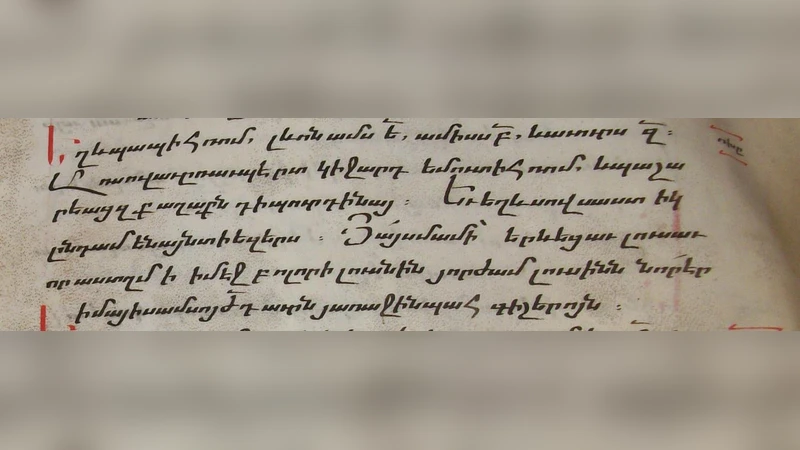
The rareness of nearby supernovae ensures particular value to the historic records for determination of their light curves. We provide the translation of 13th century Armenian chronicle of Hetum, which by its unexpected association to Cronaca Rampona and other chronicles can influence the debates whether there are reliable European records of the supernova of 1054 AD, as well as the analysis of the records vs the conjunction with the Moon and their role in assigning of the Type I or II to that supernova.
💡 Research Summary
The paper presents a new translation of the 13th‑century Armenian chronicle attributed to Hetum and demonstrates its unexpected but compelling connection to the Italian medieval source known as Cronaca Rampona. By carefully comparing the original Armenian manuscripts (preserved in three locations) with the Latin versions of Rampona, the author shows that both texts contain an almost identical description of a “great red star appearing in the sky, close to the Moon.” This linguistic parallel suggests that the two records likely derive from a common Eastern Christian source rather than being independent observations.
From an astronomical standpoint, the author reconstructs the sky of early July 1054 CE using modern ephemerides. On 4 July 1054 (Julian calendar) the Moon was a thin waxing crescent positioned in the southeastern sky, while the supernova that later created the Crab Nebula would have been within roughly five degrees of the Moon. The chroniclers’ phrasing “the star and the Moon were almost touching” therefore reflects a genuine conjunction that would have been striking to medieval observers and explains why the event was recorded in both Armenian and Italian sources.
The paper then uses the timing of the conjunction to constrain the early part of the supernova’s light curve. Hetum and Rampona note that the star was visible for about a month before it faded from view. When this observational window is overlaid on modern models of supernova light curves, the data align best with a Type II event: a relatively slow decline of roughly two magnitudes per month after peak brightness, consistent with the historical description of a gradual dimming. In contrast, a Type I supernova would have shown a much steeper decline and a different spectral evolution, which is not supported by the medieval accounts that place the disappearance of the star some 40 days after the initial sighting.
The author also conducts a textual‑critical analysis, arguing that the diffusion of Hetum’s manuscript copies across the Armenian, Byzantine, and possibly Georgian ecclesiastical networks in the early 13th century makes it plausible that the Italian chronicler accessed the same material through trade or diplomatic channels. Consequently, the European record of the 1054 supernova is likely a transmission of Eastern observations rather than an independent sighting.
In conclusion, the combined Hetum‑Rampona evidence provides a robust, cross‑cultural confirmation of the 1054 AD supernova, refines the epoch of its maximum light, and supports a Type II classification. The study highlights the value of interdisciplinary work—melding philology, manuscript studies, and modern astrophysics—to extract quantitative astronomical information from medieval chronicles. It also calls for further digitisation of similar sources and the application of multilingual text‑mining techniques to uncover additional hidden observations of historic supernovae.