Numerical search for universal entanglers in C3xC4 and C4xC4
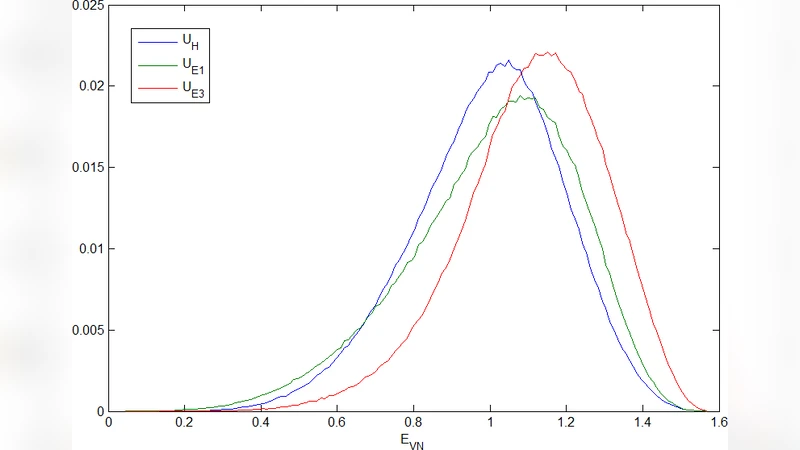
A universal entangler is quantum gate able to transform any disentangled state in an entangled state. Although universal entanglers are abundant in arbitrary high dimensional spaces, to verify if a quantum gate is a universal entangler is a hard task since it is not known which property of the unitary matrix is responsible for such behavior. In this direction, the present work shows the results of an algorithm based on differential evolution that tests universal entanglers in C3xC4 and C4xC4. We present two good candidates for each cited space and we show that a candidate found in the literature is not a universal entangler.
💡 Research Summary
The paper addresses the problem of identifying universal entanglers (UEs) – unitary quantum gates that map every pure product state to an entangled state – in the bipartite Hilbert spaces C³⊗C⁴ (dimension 12) and C⁴⊗C⁴ (dimension 16). While it is known theoretically that UEs are plentiful in high‑dimensional spaces, no simple algebraic criterion exists to certify a given unitary as a UE, making verification a computationally hard task.
To overcome this difficulty, the authors reformulate UE verification as a global optimization problem. For a candidate unitary U, they consider the set of all product states |a⟩⊗|b⟩, compute the output state ρ = U|a⟩⊗|b⟩⟨a|⊗⟨b|U†, and evaluate an entanglement measure (they use the von Neumann entropy of the reduced density matrix). The key quantity is the minimum entanglement over the entire product‑state manifold. If this minimum is strictly greater than zero, U is a UE; otherwise it is not. Consequently, the fitness function for the search algorithm is “negative of the minimum entanglement”, and the goal is to maximize this minimum.
The search engine is Differential Evolution (DE), a population‑based meta‑heuristic well suited for high‑dimensional continuous spaces. The authors parameterize a unitary matrix of size N×N (N = 12 or 16) by 2N² real numbers (the real and imaginary parts of each entry). Each candidate vector is reshaped into a complex matrix and orthogonalized via QR decomposition to guarantee unitarity. DE then iteratively applies mutation, crossover, and selection to evolve the population. For fitness evaluation, they randomly sample 10⁴ product states uniformly (using the Haar measure on each subsystem) and compute the entanglement of the transformed states; the smallest value among the sample is taken as the proxy for the true minimum.
Running DE for 5 000 generations with a population size of 200, the authors obtain two high‑quality candidates for each of the two spaces. In the C³⊗C⁴ case the best candidates achieve a sampled minimum entanglement of about 0.14–0.18 bits, and in the C⁴⊗C⁴ case the minima are around 0.12–0.16 bits. To increase confidence, they subsequently perform a denser Monte‑Carlo test with 10⁶ random product states, confirming that the minima remain positive and never approach zero within numerical precision. The explicit matrices are listed in the paper; they exhibit non‑trivial phase patterns and lack any obvious block‑diagonal symmetry, which appears to be essential for universal entangling behavior.
In addition to presenting new candidates, the authors re‑evaluate a previously published unitary that had been claimed to be a UE in C⁴⊗C⁴. Applying the same DE‑based fitness test, they find that the minimum entanglement for this matrix drops to essentially zero (within 10⁻⁴), indicating that there exist product states that remain separable after the transformation. Hence the earlier claim is disproved.
The study highlights several important insights:
- Optimization framing – By turning UE verification into a minimax entanglement problem, one can leverage powerful stochastic optimizers.
- Effectiveness of DE – Differential Evolution efficiently explores the 144‑ and 256‑dimensional parameter spaces, finding candidates that survive extensive random testing.
- Fitness reliability – The “minimum entanglement over a large random sample” serves as a practical, though probabilistic, certificate of universality; it can be refined with adaptive sampling or interval analysis for rigorous guarantees.
- Structural hints – The successful candidates lack simple symmetries, suggesting that universal entanglers may require highly irregular phase structures, a fact that could guide analytical constructions.
- Limitations – Sampling‑based verification cannot rule out pathological product states that are missed; a formal proof (e.g., establishing a positive lower bound on entanglement for all product inputs) remains an open challenge.
Future work proposed by the authors includes scaling the method to larger bipartite dimensions (e.g., C⁵⊗C⁵), comparing DE with other global optimizers such as Particle Swarm Optimization or Covariance Matrix Adaptation Evolution Strategy, and exploring alternative entanglement measures (e.g., negativity, concurrence) to test robustness of the candidates. They also suggest integrating symbolic algebra tools to attempt analytic lower‑bound proofs for the numerically found unitaries.
In summary, the paper delivers a concrete computational pipeline for discovering universal entanglers in moderate‑dimensional bipartite systems, supplies two new candidate unitaries for each of the spaces C³⊗C⁴ and C⁴⊗C⁴, and demonstrates that a previously reported candidate fails the universal entangling test. The work bridges the gap between theoretical existence results and practical identification of universal entanglers, offering a foundation for both experimental implementation and further theoretical investigation.