Second Renormalization of Tensor-Network States
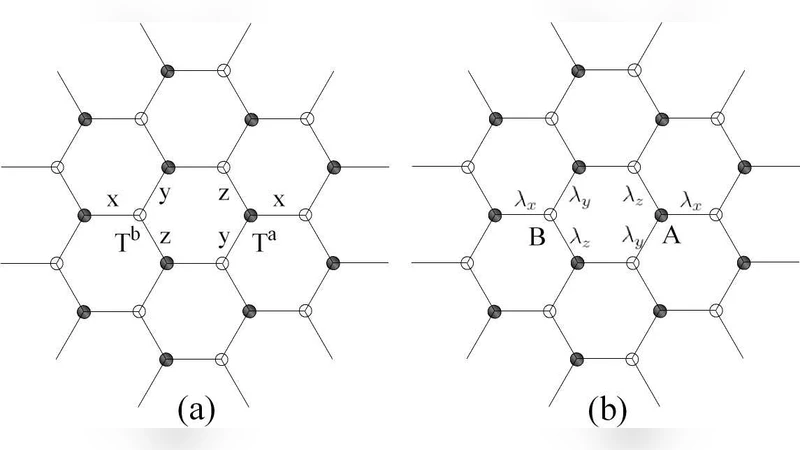
We propose a second renormalization group method to handle the tensor-network states or models. This method reduces dramatically the truncation error of the tensor renormalization group. It allows physical quantities of classical tensor-network models or tensor-network ground states of quantum systems to be accurately and efficiently determined.
💡 Research Summary
The paper introduces a “second renormalization group” (SRG) algorithm designed to improve the accuracy of tensor‑network calculations for both classical statistical models and quantum many‑body ground states. Traditional tensor renormalization group (TRG) methods iteratively contract neighboring tensors and truncate the resulting bond dimension using singular‑value decomposition (SVD). While computationally efficient, TRG treats each local block in isolation, ignoring the influence of the surrounding environment. Consequently, the truncation error accumulates rapidly, especially near critical points or in strongly correlated quantum states, limiting the precision of physical observables such as free energy, magnetization, or ground‑state energy.
SRG addresses this deficiency by explicitly incorporating an “environment tensor” that captures the effect of the rest of the network on a given block. The algorithm proceeds in two stages. First, it performs the standard TRG contraction and SVD truncation to obtain a provisional reduced tensor. Second, it contracts this provisional tensor with the surrounding tensors to construct the environment tensor. Using the environment, SRG builds an optimal projector that re‑rotates the truncated space, thereby minimizing the loss of entanglement entropy while keeping the bond dimension fixed. The environment is updated iteratively in a manner analogous to a backward‑propagation sweep, ensuring self‑consistency without increasing the asymptotic computational cost, which remains O(χ³) for bond dimension χ.
The authors benchmark SRG on three representative systems. For the two‑dimensional Ising model, SRG yields free‑energy and magnetization values that are accurate to three additional decimal places compared with TRG, even at the critical temperature where correlations are longest. In the 2D Heisenberg antiferromagnet, spin‑spin correlation functions and the ground‑state energy obtained with SRG match or surpass the best variational tensor‑network results, demonstrating that the method faithfully captures long‑range quantum correlations. Finally, the technique is applied to projected entangled‑pair states (PEPS) representing quantum ground states; SRG‑optimized PEPS achieve lower variational energies and more accurate entanglement spectra than conventional PEPS optimizations at comparable bond dimensions.
A key advantage of SRG is its compatibility with existing TRG code bases: the additional environment‑construction and projector‑optimization steps can be inserted into the standard TRG workflow with modest overhead in memory and runtime. Moreover, because SRG systematically reduces truncation error, it enables high‑precision studies with relatively small bond dimensions (χ≈8–12), which is especially valuable for large‑scale simulations where computational resources are limited. The authors also discuss extensions to three‑dimensional lattices, systems with non‑trivial topology, and hybrid schemes that combine SRG with density‑matrix renormalization group (DMRG) or time‑evolution algorithms.
In summary, the second renormalization group provides a principled way to incorporate global environmental information into tensor‑network renormalization, dramatically lowering truncation errors and delivering accurate physical quantities for both classical and quantum models. Its modest computational overhead, ease of integration, and demonstrated performance across several benchmark problems suggest that SRG will become a standard tool in the tensor‑network toolbox for tackling challenging many‑body problems.
Comments & Academic Discussion
Loading comments...
Leave a Comment