The PORTSEA (Portuguese School of Extremes and Applications) and a few personal scientific achievements
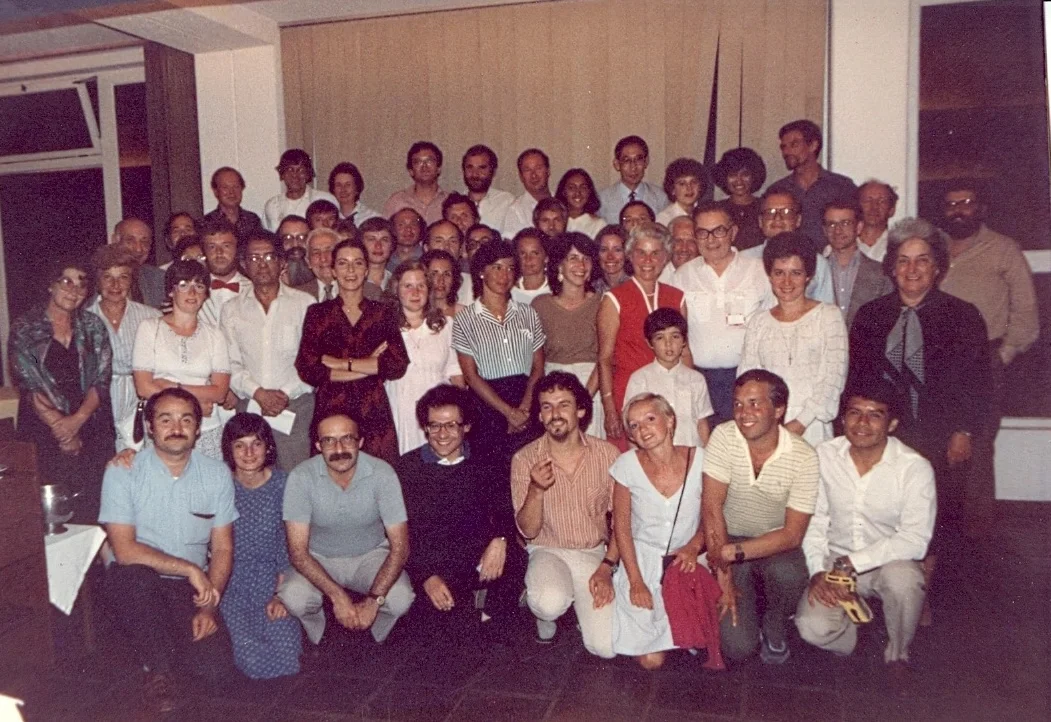
The Portuguese School of Extremes and Applications is nowadays well recognised by the international scientific community, and in my opinion, the organisation of a NATO Advanced Study Institute on Statistical Extremes and Applications, which took place at Vimeiro in the summer of 1983, was a landmark for the international recognition of the group. The dynamic of publication has been very high and the topics under investigation in the area of Extremes have been quite diverse. In this article, attention will be paid essentially to some of the scientific achievements of the author in this field.
💡 Research Summary
The paper provides a comprehensive historical and technical overview of the Portuguese School of Extremes and Applications (PORTSEA), a research community that has become a prominent player in extreme value theory (EVT) and its applications. The author, Maria Ivette Gomes, frames the narrative around two central themes: the institutional development of PORTSEA and her own scientific contributions within the field.
The introductory section briefly situates PORTSEA within the international statistical community, emphasizing the pivotal role of the NATO Advanced Study Institute on Statistical Extremes and Applications (SEA) held in Vimeiro in the summer of 1983. This event is portrayed as a watershed moment that propelled the Portuguese group onto the global stage.
The second part of the paper traces the formation of PORTSEA from the early 1970s onward. After obtaining a degree in pure mathematics at the University of Lisbon (FCUL), the author joined the statistics group under the mentorship of Professor Tiago de Oliveira, a leading figure in extreme value statistics. The narrative follows the establishment of several key institutions: the Centre of Applied Mathematics (1975), the Sociedade Portuguesa de Estatística e Investigação Operacional (SPEIO, 1980), and later the Departamento de Estatística, Investigação Operacional e Computação (DEIOC, 1981). These bodies provided the organizational backbone for the emerging school. The author highlights the contributions of other senior researchers—Feridun Turkman, Dinis Pestana, Antónia Amaral‑Turkman—and the collaborative effort that led to the organization of SEA 1983, which attracted eminent scholars such as Clive Anderson, Paul Deheuvels, Janos Galambos, and Laurens de Haan.
The third and most extensive section details the author’s scientific work. It is subdivided into several thematic clusters:
-
Probabilistic behavior of upper order statistics (USS) – The paper discusses limit distributions for USS, rates of convergence, and the impact of dependence structures on extreme order statistics.
-
Asymptotic and pre‑asymptotic behavior in EVT – Emphasis is placed on second‑order parameters, convergence rates, and the development of optimal sample fraction (OSF) selection criteria.
-
Univariate parametric frameworks – The author reviews the classical GEV family, the “old trilemma” of model selection (Gumbel, Fréchet, Weibull), and extensions to multivariate and multidimensional settings, as well as non‑classical models.
-
Bias‑reduced semi‑parametric and non‑parametric estimation – This includes novel estimators for the extreme value index (EVI) and the excess index (EI), adaptive procedures for censored and truncated data, and the use of generalized means to improve efficiency.
-
Resampling methodologies (RMs) – The paper presents a systematic treatment of jackknife, bootstrap, and hybrid jackknife‑bootstrap techniques for bias correction and variance estimation, particularly focusing on second‑order parameter inference.
-
The “PORT” methodology – A unified framework that integrates parametric, semi‑parametric, and non‑parametric approaches, designed to be robust under non‑regular conditions.
-
Extremes under non‑regular frameworks – Discussion of extreme value modeling when standard regularity assumptions fail, with illustrative examples.
-
Applications – A broad spectrum of domains is covered: environmental extremes (floods, droughts), finance and insurance (Value‑at‑Risk, Expected Shortfall), telecommunications (signal loss), athletics (record breaking), biometry (extreme biological measurements), and statistical quality control (process monitoring). For each area, the paper outlines model selection, parameter estimation, and risk measure computation.
The final section offers concluding remarks and future perspectives. It stresses the importance of sustained international collaboration, the need for methodological advances in high‑dimensional and dynamic extreme value modeling, and the potential of real‑time risk monitoring using resampling‑based techniques.
Overall, the paper succeeds in weaving together a rich historical narrative with a detailed technical exposition of the author’s contributions. It demonstrates how PORTSEA evolved from a modest national initiative into a vibrant, internationally recognized hub for extreme value research, while also showcasing innovative statistical tools—bias reduction, optimal sample fraction selection, and advanced resampling—that have practical relevance across a wide array of scientific and engineering disciplines.
Comments & Academic Discussion
Loading comments...
Leave a Comment