The unsustainable legacy of the Nuclear Age
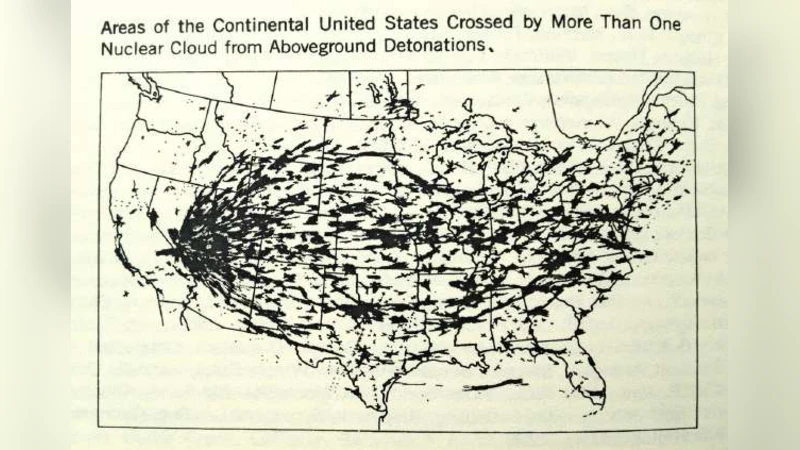
It is seldom acknowledged the tremendous burden that the Nuclear Age leaves on future generations, and the environment, for an extremely long time. Nuclear processes, and products, are activated at energies millions of times higher than the energies of chemical processes, and consequently they cannot be eliminated by the natural environment on Earth. So it turns out that hundreds of nuclear tests performed in the atmosphere left a huge radioactive contamination; Rosalie Bertell estimated 1,300 millions victims of the Nuclear Age; civil nuclear programs have produced enormous quantities of radioactive waste, whose final disposal has not been solved by any country; decommissioning of tens of shut down nuclear plants shall involve costs which were underestimated in the past; spent nuclear fuel accumulates in decontamination pools, or in dry cask storage, but no final storage has been carried out yet; radioactivity of spent fuel will last for tens of thousand years; military nuclear programs leave, besides almost 15,000 nuclear warheads, approximately 1,300 metric tons of plutonium; even mining of natural uranium was, and is, carried out mainly by poor and exploited populations, which suffer serious health consequences; paradoxically enough (or maybe not), French territory itself is widely contaminated. All these facts have been downplayed during the whole history of the Nuclear Age. Future generations shall not be grateful.
💡 Research Summary
The paper “The unsustainable legacy of the Nuclear Age” presents a comprehensive, data‑driven indictment of every major facet of humanity’s nuclear activities—from atmospheric weapons testing to civilian power generation, from uranium mining to the decommissioning of reactors and the stockpiling of military fissile material. It begins by quantifying the scale of atmospheric nuclear tests conducted between 1945 and 1962, noting that roughly 500 detonations released millions of curies of short‑lived radionuclides such as I‑131, Sr‑90 and Cs‑137. These isotopes were dispersed globally, contaminating air, water, soil and food chains. Citing Rosalie Bertell’s estimate of 1.3 billion victims, the author argues that the health burden extends far beyond immediate fatalities, manifesting as elevated cancer rates, genetic defects and chronic illnesses that will persist for generations.
Turning to civilian nuclear power, the paper documents that worldwide operating reactors have generated approximately three million metric tons of high‑level waste (HLW). The majority of this waste—spent fuel assemblies—remains in cooling pools or dry casks awaiting a final repository that does not yet exist. The author stresses that spent fuel continues to emit heat and radiation for tens of thousands of years; plutonium‑239, with a half‑life of 24,000 years, exemplifies the geological‑time‑scale challenge of safe isolation. Only a handful of deep‑geologic projects (e.g., France’s Bure, Finland’s Onkalo) have moved beyond the conceptual stage, leaving most nations dependent on interim storage that was never intended to be permanent.
The economic dimension is explored through the under‑estimation of decommissioning costs. Early reactor designs often omitted realistic end‑of‑life budgets, resulting in current decommissioning projects that exceed original capital costs by factors of two to three. The paper provides case studies where the removal of contaminated concrete, steel, and soil has required billions of dollars, costs that are ultimately passed to electricity consumers and taxpayers. Moreover, the process generates additional radioactive waste streams that strain existing disposal capacities.
Military nuclear programs are presented as a parallel, yet distinct, source of long‑term risk. The world possesses roughly 15,000 nuclear warheads and about 1,300 tons of weapons‑grade plutonium. The author highlights that plutonium’s chemical inertness makes it difficult to detect and secure, raising proliferation and terrorism concerns. Test sites in the United States, Kazakhstan, and elsewhere retain contaminated soils and groundwater that are effectively irreversible, underscoring the environmental legacy of weapons development.
Uranium mining is examined as the often‑overlooked front line of the nuclear supply chain. The paper details how extraction is concentrated in low‑income regions—such as Niger, Namibia, Kazakhstan, and the Democratic Republic of Congo—where workers and surrounding communities suffer from radon exposure, heavy‑metal contamination, and elevated incidences of respiratory and renal disease. Tailings, the waste rock left after ore processing, contain long‑lived radionuclides that leach into water tables, creating persistent ecological damage.
A specific focus on France illustrates that a nation with a substantial domestic nuclear industry is not immune to widespread contamination. The La Hague re‑processing plant and numerous power stations have led to elevated levels of Cs‑137 and Sr‑90 in soils and groundwater, occasionally exceeding European safety thresholds. This domestic case demonstrates that even highly regulated environments can experience significant radiological footprints, challenging the narrative that “nuclear safety” is an all‑or‑nothing proposition.
Throughout, the author argues that the magnitude of these risks has been systematically down‑played for political and economic reasons, resulting in a collective failure to implement robust, intergenerationally equitable policies. The paper concludes with a set of recommendations: (1) accelerate the development of deep‑geologic repositories with international oversight; (2) mandate transparent, fully funded decommissioning plans at the licensing stage; (3) establish a global fund for remediation of mining‑related contamination and for health compensation of affected populations; (4) enforce stringent controls on plutonium stockpiles to reduce proliferation risk; and (5) promote a transition toward renewable energy sources that do not generate long‑lived hazardous waste. In sum, the legacy of the Nuclear Age is portrayed as a multi‑century, multi‑disciplinary challenge that demands urgent, coordinated action to prevent the burden from being unfairly passed to future generations.
Comments & Academic Discussion
Loading comments...
Leave a Comment