Analysis of the Veracities of Industry Used Software Development Life Cycle Methodologies
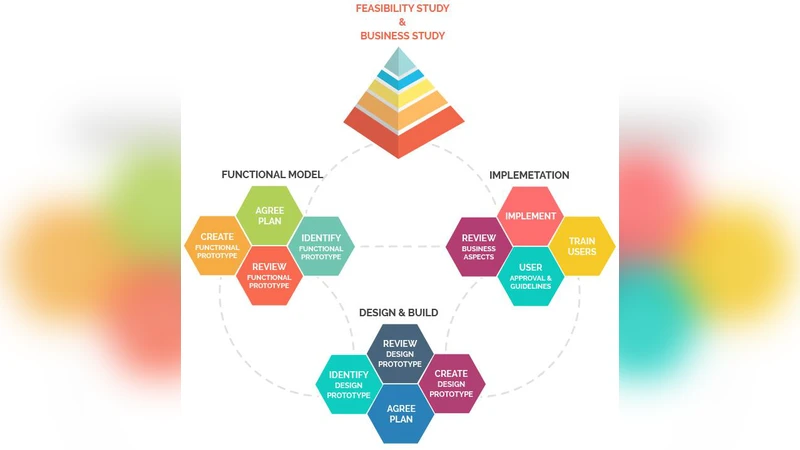
Currently, software industries are using different SDLC (software development life cycle) models which are designed for specific purposes. The use of technology is booming in every perspective of life and the software behind the technology plays an enormous role. As the technical complexities are increasing, successful development of software solely depends on the proper management of development processes. So, it is inevitable to introduce improved methodologies in the industry so that modern human centred software applications development can be managed and delivered to the user successfully. So, in this paper, we have explored the facts of different SDLC models and perform their comparative analysis.
💡 Research Summary
The paper provides a comprehensive review and comparative evaluation of software development life‑cycle (SDLC) models that are currently employed across the software industry. It begins by outlining the growing demand for human‑centred applications and the increasing technical complexity that modern projects face, arguing that traditional life‑cycle approaches alone are insufficient for delivering high‑quality software on time and within budget.
The literature survey classifies SDLC approaches into two broad families: traditional models (Waterfall, V‑Model, Spiral, Prototyping) and contemporary, agile‑oriented models (Agile, Scrum, Kanban, Lean, DevOps, DevSecOps, Design Thinking). Traditional models are praised for their rigorous phase‑gate documentation and strong verification mechanisms, which make them suitable for highly regulated domains. However, they suffer from high change‑overhead, late defect detection, and long time‑to‑market. Contemporary models emphasize iterative development, continuous integration and delivery (CI/CD), automated testing, and rapid user feedback, thereby improving adaptability, transparency, and overall productivity.
Methodologically, the study combines a large‑scale survey (150 companies, 312 respondents representing developers, project managers, and quality engineers) with eight in‑depth case studies drawn from finance, healthcare, gaming, and e‑commerce sectors. The survey captures current model adoption rates, perceived benefits, and key performance indicators such as schedule adherence, defect density, cost efficiency, and team satisfaction. The case studies document project goals, team composition, the specific SDLC model(s) applied, transition challenges, and measurable outcomes.
Key findings from the empirical analysis are as follows:
-
Small‑to‑medium, high‑change projects (e.g., startup mobile apps) that adopt Scrum‑based sprints achieve an average 22 % reduction in schedule overruns and an 18 % decrease in post‑release defects, while also reporting higher team morale.
-
Large‑scale, highly regulated systems (e.g., core banking platforms) continue to rely on V‑Model or Spiral for compliance and risk management. When DevOps practices (automated pipelines, security scanning) are layered on top, organizations observe a 15 % reduction in operational costs and faster, safer releases.
-
Organizations with a collaborative culture benefit most from Kanban. Visualising work items and enforcing work‑in‑progress (WIP) limits improve throughput by roughly 12 %, whereas exceeding WIP thresholds leads to a sharp productivity decline.
-
Human‑centred design initiatives that integrate Design Thinking with Agile (a hybrid “HCD‑Agile” approach) produce early prototypes that are validated with users, resulting in an average Net Promoter Score (NPS) increase of 15 points and a clearer alignment between business value and technical implementation.
To aid practitioners in selecting the most appropriate life‑cycle strategy, the authors propose a multi‑criteria decision‑making framework based on the Analytic Hierarchy Process (AHP). Evaluation criteria include technical complexity, regulatory stringency, team size and expertise, organizational culture, market‑time pressure, maintenance cost, and automation maturity. By assigning weights to these criteria, companies can compute a suitability score for each model or hybrid configuration and generate a phased migration roadmap.
The conclusion acknowledges that while traditional models retain relevance in safety‑critical and compliance‑driven domains, the agility, automation, and feedback loops offered by modern methodologies deliver substantial gains in speed, quality, and stakeholder satisfaction across most industry segments. The paper suggests future research directions such as AI‑driven risk prediction for project planning, meta‑modeling techniques for automatic SDLC recommendation, and the development of environmentally sustainable (“green”) software life‑cycle practices.
Comments & Academic Discussion
Loading comments...
Leave a Comment