Göran Lindblad in memoriam
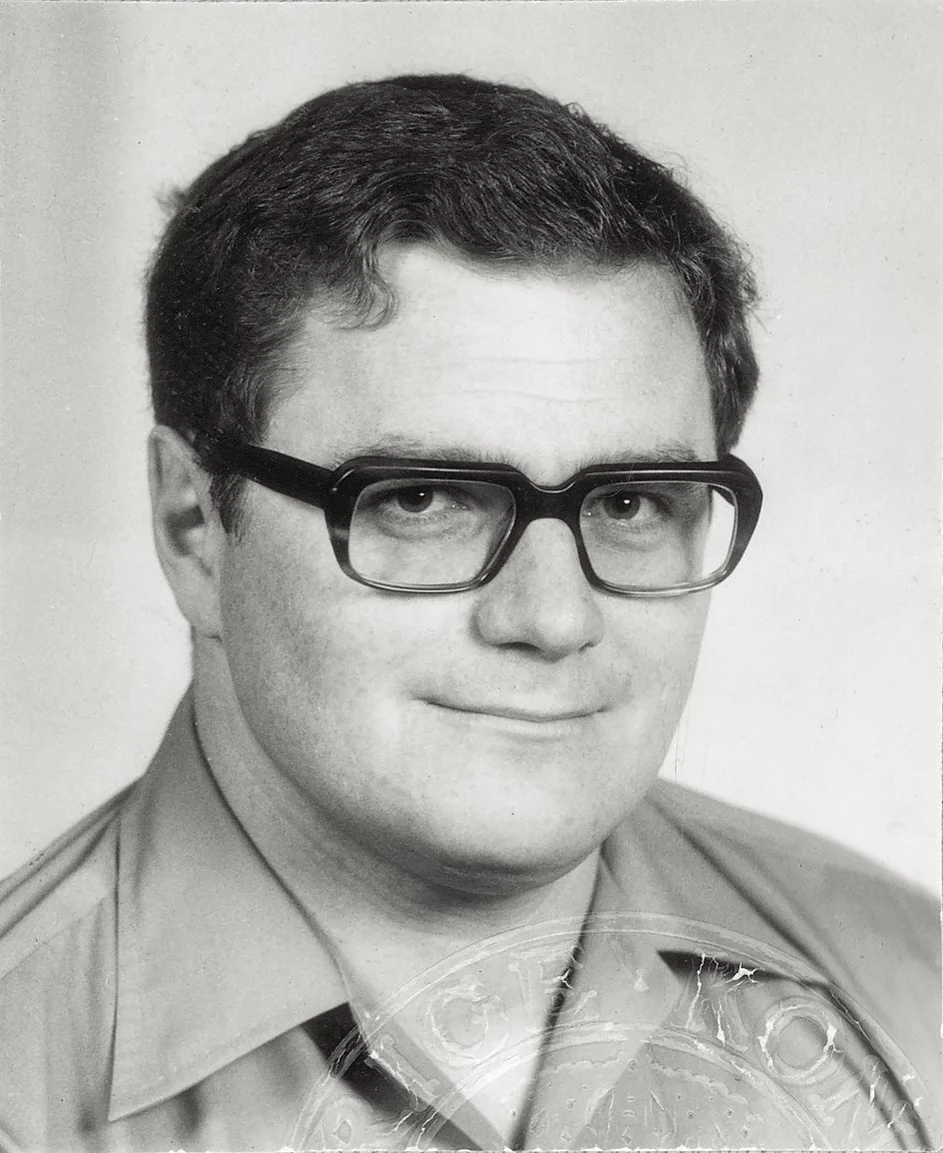
This is a brief account of the life and work of Göran Lindblad.
💡 Research Summary
Göran Lindblad (1940‑2020) was a Swedish mathematical physicist whose work laid the modern foundations of quantum open‑system dynamics, quantum information theory, and quantum thermodynamics. After an early career in representation theory of non‑compact groups, Lindblad turned to quantum measurement and information in the early 1970s, motivated by the recent developments of Kolmogorov’s probability theory, Shannon’s information theory, and the operator‑algebraic work of Stinespring and Umegaki. His first notable result proved an “entropy inequality” for quantum measurements, showing that the von‑Neumann entropy never decreases under a projective measurement and that the average post‑measurement entropy is bounded by the pre‑measurement entropy. This work introduced the physical relevance of completely positive (CP) maps: using Stinespring’s dilation theorem, Lindblad recognized that any physically admissible operation on a system can be modelled as a unitary interaction with an auxiliary environment followed by a partial trace, which precisely yields a CP map.
Building on this insight, Lindblad proved the monotonicity of the quantum relative entropy under CP maps by invoking the strong subadditivity of von‑Neumann entropy (originally proved by Lieb and Ruskai). This result paralleled, and was later recognized as equivalent to, Holevo’s and Kraus’s independent findings, establishing a cornerstone of quantum information theory: the data‑processing inequality.
The most celebrated contribution of Lindblad came in 1976, when he derived the general form of the generator of a quantum dynamical semigroup of CP maps. Assuming bounded operators and a Markovian (memory‑less) evolution, he showed that the generator must be of the Gorini‑Kossakowski‑Sudarshan‑Lindblad (GKSL) form:
\
Comments & Academic Discussion
Loading comments...
Leave a Comment