Cooperation in the spatial prisoners dilemma game with probabilistic abstention
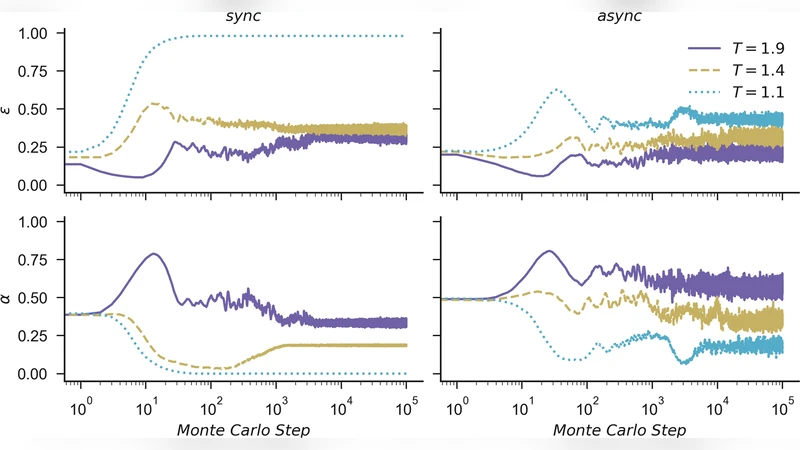
Research has shown that the addition of abstention as an option transforms social dilemmas to rock-paper-scissor type games, where defectors dominate cooperators, cooperators dominate abstainers (loners), and abstainers (loners), in turn, dominate defectors. In this way, abstention can sustain cooperation even under adverse conditions, although defection also persists due to cyclic dominance. However, to abstain or to act as a loner has, to date, always been considered as an independent, third strategy to complement traditional cooperation and defection. Here we consider probabilistic abstention, where each player is assigned a probability to abstain in a particular instance of the game. In the two limiting cases, the studied game reverts to the prisoner’s dilemma game without loners or to the optional prisoner’s dilemma game. For intermediate probabilities, we have a new hybrid game, which turns out to be most favorable for the successful evolution of cooperation. We hope this novel hybrid game provides a more realistic view of the dilemma of optional/voluntary participation.
💡 Research Summary
The paper introduces a novel extension of the classic spatial Prisoner’s Dilemma (PD) by allowing each player to abstain from interaction with a certain probability rather than treating abstention as a fixed third strategy. In the traditional optional PD, three pure strategies coexist—Cooperate (C), Defect (D), and Loner (L). The cyclic dominance C > L > D > C creates a rock‑paper‑scissors‑type dynamic in which cooperation can survive but never dominates because defectors persist in the cycle. The authors argue that in real social settings the decision to “opt out” is rarely deterministic; individuals may sometimes participate and sometimes withdraw depending on context, mood, or external constraints. To capture this, they assign every agent a personal abstention probability p∈
Comments & Academic Discussion
Loading comments...
Leave a Comment