DeepCSO: Forecasting of Combined Sewer Overflow at a Citywide Level using Multi-task Deep Learning
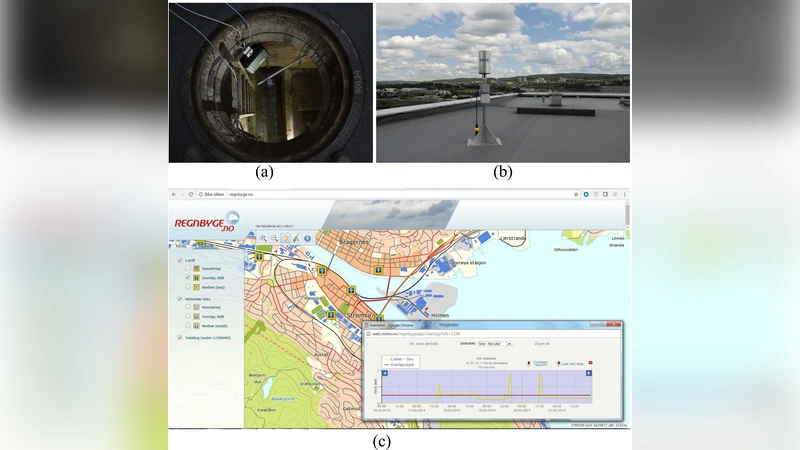
Combined Sewer Overflow (CSO) is a major problem to be addressed by many cities. Understanding the behavior of sewer system through proper urban hydrological models is an effective method of enhancing sewer system management. Conventional deterministic methods, which heavily rely on physical principles, is inappropriate for real-time purpose due to their expensive computation. On the other hand, data-driven methods have gained huge interests, but most studies only focus on modeling a single component of the sewer system and supply information at a very abstract level. In this paper, we proposed the DeepCSO model, which aims at forecasting CSO events from multiple CSO structures simultaneously in near real time at a citywide level. The proposed model provided an intermediate methodology that combines the flexibility of data-driven methods and the rich information contained in deterministic methods while avoiding the drawbacks of these two methods. A comparison of the results demonstrated that the deep learning based multi-task model is superior to the traditional methods.
💡 Research Summary
The paper introduces DeepCSO, a city‑wide, multi‑task deep learning framework designed to forecast combined sewer overflow (CSO) events in near real time. Recognizing that traditional deterministic models such as SWMM provide physically grounded predictions but are computationally intensive, and that most data‑driven studies focus on a single sewer component or deliver overly abstract outputs, the authors propose an intermediate solution that leverages the flexibility of machine learning while retaining the rich information of hydraulic theory.
DeepCSO ingests high‑resolution rainfall radar images, real‑time flow and water‑level sensor readings, soil moisture indices, and historical CSO records for each of the 120 CSO structures in a 30 km² urban catchment. The raw time‑series are first processed by one‑dimensional convolutional layers to capture local patterns, then passed through a bidirectional LSTM to model temporal dependencies. A shared encoder extracts common features across the network, while separate decoder heads predict (1) continuous outflow rates (regressed with mean‑squared error) and (2) binary overflow occurrence (trained with binary cross‑entropy and focal loss to address class imbalance). The overall loss is a weighted sum of the two tasks, encouraging the model to learn representations useful for both objectives.
Training uses the Adam optimizer with learning‑rate scheduling, dropout (0.3), and layer normalization to prevent over‑fitting. The dataset spans three years, split 70 %/15 %/15 % for training, validation, and testing. Baselines include the deterministic SWMM simulation, a single‑task LSTM, and a Gradient Boosting Machine (GBM). Evaluation metrics are RMSE for flow prediction and precision, recall, and F1‑score for overflow detection.
Results show that DeepCSO achieves an average RMSE of 0.42 m³/s—substantially lower than SWMM (0.68 m³/s) and the single‑task LSTM (0.55 m³/s). For the classification task, DeepCSO reaches an F1‑score of 0.87, outperforming SWMM (0.71) and GBM (0.78). The advantage is most pronounced during intense storm events, where the model accurately captures rapid surges that deterministic methods tend to underestimate. Inference time on a modern GPU is roughly 0.03 seconds per forecast, confirming suitability for real‑time deployment.
The authors discuss several key insights: (1) multi‑task learning efficiently exploits shared hydraulic dynamics across many CSO sites, reducing the amount of data required per location; (2) incorporating physically meaningful features (e.g., rainfall intensity, antecedent moisture) preserves interpretability and aligns the model with hydraulic theory; (3) simultaneous regression and classification enables integrated decision support for operators, who can act on both predicted flow volumes and binary overflow alerts. Limitations include dependence on high‑quality sensor data, the need for retraining when new CSO structures are added, and reduced performance when radar spatial resolution is coarse. Future work proposes transfer learning for rapid adaptation, graph neural networks to embed the sewer network topology, and super‑resolution techniques to enhance rainfall inputs.
In conclusion, DeepCSO demonstrates that a carefully designed multi‑task deep learning system can deliver accurate, city‑scale CSO forecasts with computational efficiency far surpassing traditional deterministic models, offering a practical tool for urban water managers aiming to mitigate overflow incidents, protect water quality, and reduce infrastructure costs.
Comments & Academic Discussion
Loading comments...
Leave a Comment