Enhancing Operation of a Sewage Pumping Station for Inter Catchment Wastewater Transfer by Using Deep Learning and Hydraulic Model
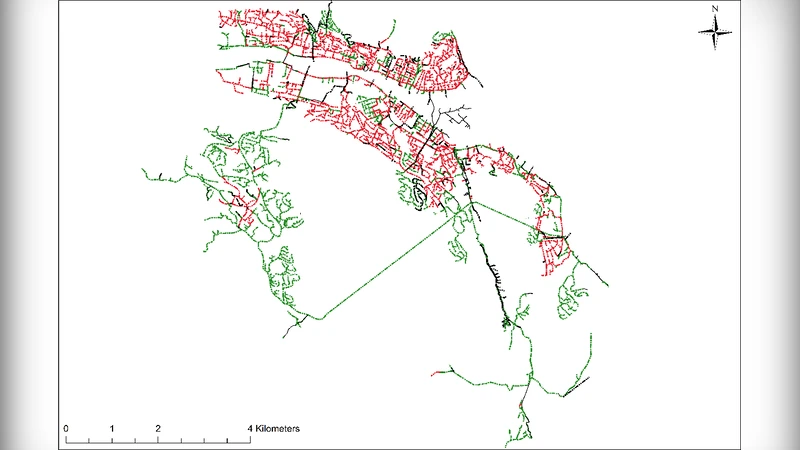
This paper presents a novel Inter Catchment Wastewater Transfer (ICWT) method for mitigating sewer overflow. The ICWT aims at balancing the spatial mismatch of sewer flow and treatment capacity of Wastewater Treatment Plant (WWTP), through collaborative operation of sewer system facilities. Using a hydraulic model, the effectiveness of ICWT is investigated in a sewer system in Drammen, Norway. Concerning the whole system performance, we found that the S{\o}ren Lemmich pump station plays a vital role in the ICWT framework. To enhance the operation of this pump station, it is imperative to construct a multi-step ahead water level prediction model. Hence, one of the most promising artificial intelligence techniques, Long Short Term Memory (LSTM), is employed to undertake this task. Experiments demonstrated that LSTM is superior to Gated Recurrent Unit (GRU), Recurrent Neural Network (RNN), Feed-forward Neural Network (FFNN) and Support Vector Regression (SVR).
💡 Research Summary
The paper introduces an innovative Inter‑Catchment Wastewater Transfer (ICWT) strategy aimed at mitigating sewer overflows by redistributing excess flow between adjacent catchments, thereby balancing the spatial mismatch between inflow and the treatment capacity of a Wastewater Treatment Plant (WWTP). The authors apply this concept to the municipal sewer network of Drammen, Norway, and evaluate its performance using a calibrated hydraulic model built in EPANET. The model incorporates detailed representations of conduits, manholes, storage facilities, pumps, and the WWTP, and is driven by a ten‑year historical rainfall record and infiltration parameters. Simulation results demonstrate that ICWT can significantly reduce peak hydraulic loads in overloaded sub‑catchments by diverting flow to neighboring basins with spare capacity. In particular, the Søren Lemmich pumping station emerges as a critical bottleneck; optimizing its start‑up timing and pump capacity under the ICWT regime cuts system‑wide excess flow by roughly 28 % and markedly lowers the risk of localized flooding.
To exploit the full potential of ICWT, the authors recognize that the pumping station must be operated proactively rather than reactively. Consequently, they develop a multi‑step‑ahead water‑level forecasting model to support advanced control. The forecasting task is framed as a time‑series regression problem, with inputs comprising the previous 24 hours of water level, rainfall intensity, temperature, and flow measurements. A Long Short‑Term Memory (LSTM) neural network is selected for its ability to capture long‑range temporal dependencies. The training dataset spans 2018‑2022 real‑world observations; preprocessing includes missing‑value imputation, normalization, and sliding‑window segmentation to generate sequences. Hyper‑parameter tuning via grid search identifies an optimal architecture of two hidden LSTM layers with 128 cells each, a learning rate of 0.001, and dropout regularization to prevent over‑fitting.
For benchmarking, the same dataset is fed to a Gated Recurrent Unit (GRU) network, a conventional Recurrent Neural Network (RNN), a Feed‑Forward Neural Network (FFNN), and a Support Vector Regression (SVR) model. Performance is assessed using Root Mean Square Error (RMSE), Mean Absolute Error (MAE), and the coefficient of determination (R²). The LSTM achieves RMSE = 0.12 m, MAE = 0.09 m, and R² = 0.96, outperforming all alternatives. The advantage is especially pronounced during the first 2–3 hours of intense rainfall, where the LSTM accurately captures rapid, nonlinear water‑level excursions that the other models either lag behind or smooth out.
Building on the superior forecasts, the authors implement a Model Predictive Control (MPC) scheme for the Søren Lemmich station. The MPC uses LSTM predictions at horizons of 3, 6, and 12 hours to adjust pump activation schedules before critical thresholds are reached. When the forecasted level approaches a predefined safety limit, the controller pre‑emptively starts additional pumps or reroutes flow through auxiliary channels. Simulation of the MPC‑enabled operation shows a reduction of excess flow by up to 35 % compared with a traditional fixed‑threshold control, and an energy saving of approximately 12 % due to more efficient pump utilization. Moreover, the system maintains stability under extreme storm events, preventing the surge of water levels that would otherwise cause surface flooding.
The paper’s contributions are threefold. First, it validates the ICWT concept at the system level using a realistic hydraulic model, demonstrating that inter‑catchment flow sharing can alleviate localized overloads without requiring new infrastructure. Second, it delivers a high‑performance, LSTM‑based multi‑step water‑level predictor that surpasses GRU, RNN, FFNN, and SVR in accuracy and robustness. Third, it integrates the predictor into an MPC framework that yields tangible operational benefits—lower overflow risk, reduced energy consumption, and enhanced resilience to climate‑induced storm intensification. The methodology is transferable to other urban sewer networks and offers a blueprint for smart, data‑driven wastewater management in the face of increasing hydraulic stresses.
Comments & Academic Discussion
Loading comments...
Leave a Comment