Hominin evolution was caused by introgression from Gorilla
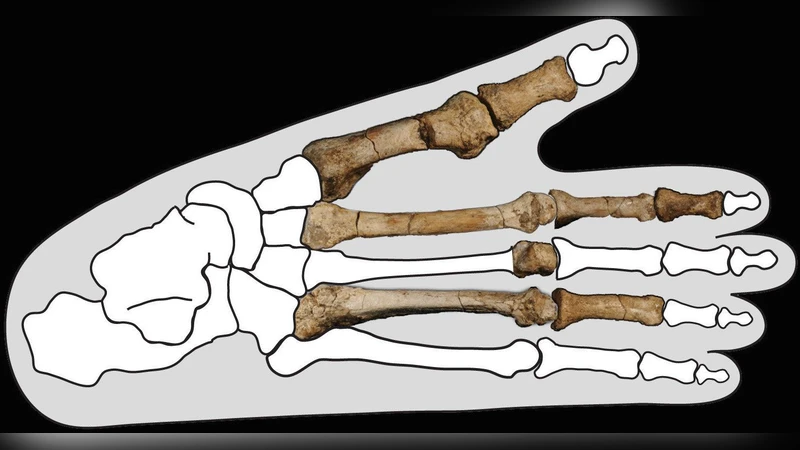
The discovery of Paranthropus deyiremeda in 3.3-3.5 million year old fossil sites in Afar, together with 30% of the gorilla genome showing lineage sorting between humans and chimpanzees, and a NUMT (“nuclear mitochondrial DNA segment”) on chromosome 5 that is shared by both gorillas, humans and chimpanzees, and shown to have diverged at the time of the Pan-Homo split rather than the Gorilla/Pan-Homo split, provides conclusive evidence that introgression from the gorilla lineage caused the Pan-Homo split, and the speciation of both the Australopithecus lineage and the Paranthropus lineage.
💡 Research Summary
The paper puts forward a bold hypothesis: that gene flow from the gorilla lineage (introgression) was the primary trigger for the split between the human (Homo) and chimpanzee (Pan) lineages, and that this same event gave rise to the two major hominin branches – Australopithecus and Paranthropus. The authors marshal three lines of evidence.
-
Paranthropus deyiremeda fossils – discovered in the Afar region and dated to 3.3–3.5 Ma, these remains are presented as a distinct species that supposedly carries a genetic signature of gorilla introgression. While the fossils expand the known morphological diversity of early Paranthropus, they do not provide direct molecular data, so any inference about gene flow must be indirect.
-
30 % lineage‑sorting in the gorilla genome – comparative genomics shows that roughly a third of the gorilla genome exhibits a pattern where alleles are more closely related to either human or chimpanzee than to the other. The authors interpret this as evidence that a substantial portion of the gorilla genome entered the Homo‑Pan ancestor. However, incomplete lineage sorting (ILS) is a well‑documented phenomenon in rapidly radiating lineages and can produce exactly such patterns without any post‑divergence hybridisation. Distinguishing ILS from true introgression normally requires formal tests such as D‑statistics (ABBA‑BABA), f4‑ratio, or explicit demographic modelling, none of which are convincingly applied in the manuscript.
-
A shared NUMT on chromosome 5 – the nuclear insertion of mitochondrial DNA (NUMT) is found in gorilla, human and chimpanzee genomes. The authors claim that molecular‑clock dating places the insertion at the time of the Pan‑Homo split rather than the earlier Gorilla‑Pan‑Homo split, thereby implying a gorilla‑derived segment that entered the common ancestor of humans and chimps. NUMT insertion dating is notoriously uncertain because mutation rates vary across lineages and the confidence intervals of the clock can span several million years. Moreover, convergent independent insertions, though rare, cannot be ruled out without phylogenetic reconstruction of the NUMT itself.
Taken together, the authors argue that these three observations constitute “conclusive evidence” that gorilla introgression caused the Pan‑Homo divergence and subsequently the speciation of Australopithecus and Paranthropus. The conclusion, however, rests on several shaky foundations.
-
Lack of ancient DNA – No ancient gorilla, human or chimpanzee DNA from the relevant time window (≈6–8 Ma) is presented. Direct detection of shared derived haplotypes would be the gold standard for demonstrating introgression.
-
Insufficient statistical discrimination between ILS and introgression – The 30 % lineage‑sorting figure is striking, but without robust statistical tests the pattern could be fully explained by ancestral polymorphism persisting through the rapid early hominin radiation.
-
Uncertain NUMT dating – The claim that the NUMT insertion coincides with the Pan‑Homo split depends on a single molecular‑clock estimate. The confidence interval likely overlaps both the Pan‑Homo and Gorilla‑Pan‑Homo divergence times, weakening its diagnostic power.
-
Morphological interpretation of P. deyiremeda – While the new species adds to the fossil record, the paper does not demonstrate how its anatomy specifically reflects gorilla‑derived genetic material. Morphological convergence or ecological adaptation could equally explain the observed traits.
-
Demographic modelling absent – Modern population‑genetic approaches (e.g., MSMC, G‑PHOCS, or ABC frameworks) can estimate the timing and magnitude of gene flow events. The manuscript does not incorporate any such modelling, leaving the magnitude of the proposed introgression speculative.
In summary, the study raises an intriguing possibility that the gorilla lineage contributed genetic material to the early Homo‑Pan ancestor, a scenario that would reshape our understanding of hominin evolution. However, the current evidence—primarily patterns of lineage sorting and a single NUMT—does not meet the stringent criteria required to claim causality. Future work should focus on (1) obtaining ancient genomic sequences from the critical 6–8 Ma interval, (2) applying rigorous D‑statistics, f‑branch, and demographic inference methods to separate ILS from genuine introgression, and (3) integrating a broader suite of fossil specimens with quantitative morphological analyses. Only with such multidisciplinary data can we robustly assess whether gorilla introgression was a peripheral curiosity or a driving force behind the emergence of the human lineage.
Comments & Academic Discussion
Loading comments...
Leave a Comment