Alien wavelength technique to enhance garr optical network
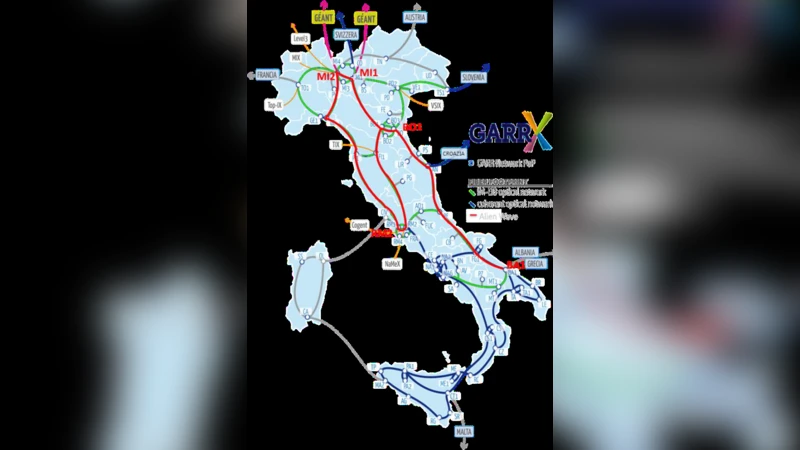
GARR optical network used to be composed of two separate optical network domains on its national infrastructure. With the aim to integrate these two domains and deliver high performance services all over its infrastructure, we implemented the so called alien wavelength technique, thus improving the overall efficiency of the Italian research and education network in a cost-effective way. This paper describes the activity, results, and our experience in the integration of alien wavelengths in a production environment, with a special emphasis on deployment and operational issues.
💡 Research Summary
The paper presents the integration of two previously isolated optical domains of the Italian research and education network, GARR, by adopting the Alien Wavelength (AW) technique. Historically, GARR operated two separate DWDM infrastructures supplied by different vendors, each with its own wavelength plan, management system, and equipment set. Unifying these domains using traditional approaches would have required wholesale replacement of transponders, the deployment of costly optical cross‑connects, and prolonged service interruptions—an economically unattractive proposition. The AW concept allows optical signals generated by an external (alien) system to be injected directly into an existing DWDM line without any modification to the host transport equipment. This enables capacity expansion and service diversification while preserving the physical layer already in place.
The authors first conducted a comprehensive laboratory assessment to define the optimal transmission parameters for the alien channels. They evaluated power levels, OSNR margins, and channel spacing for 100 Gbps QPSK and 200 Gbps DP‑QPSK modulation formats. Experiments demonstrated that with a power margin of at least 3 dB, the alien wavelengths could traverse up to 800 km of the existing fiber plant without degradation, meeting the required bit error rate thresholds. Following the lab phase, a staged rollout was performed on the production network. Integration required the definition of interface specifications between the host DWDM equipment and the alien transponders, as well as the development of a dedicated monitoring agent that feeds alarm and performance data into GARR’s Network Management System (NMS) and OSS/EMS platforms. Because alien signals are not natively recognized by the host equipment, the team created custom alarm‑mapping rules and a fixed‑grid wavelength pool to avoid clashes with legacy channels. A dynamic wavelength re‑allocation algorithm was also implemented to respond to traffic shifts and fault conditions.
Operational benefits were quantified through several key metrics. Fault detection and recovery times were reduced to an average of five minutes, a significant improvement over the previous manual processes. Capital expenditures (CAPEX) were lowered by roughly 40 % compared to a scenario where new optical cross‑connects and transponders would have been installed. Annual operational expenditures (OPEX) fell by about 15 % due to reduced power consumption and higher automation levels. Service quality measurements—including latency, jitter, and packet loss—remained on par with or better than the legacy network, and the newly introduced 200 Gbps channels provided reliable high‑throughput paths for large research data sets.
In conclusion, the deployment of the Alien Wavelength technique enabled GARR to merge its two optical domains into a single, high‑performance backbone without incurring prohibitive costs or service disruptions. The paper outlines practical guidelines for engineers planning similar migrations: thorough laboratory validation of transmission parameters, careful design of management‑system integration, and the establishment of robust alarm‑mapping and wavelength‑allocation policies. The authors also discuss future work, suggesting that wider adoption of AW could facilitate incremental upgrades across national research networks and that standardization efforts would further streamline cross‑vendor interoperability.
Comments & Academic Discussion
Loading comments...
Leave a Comment