Computing equilibrium concentrations for large heterodimerization networks
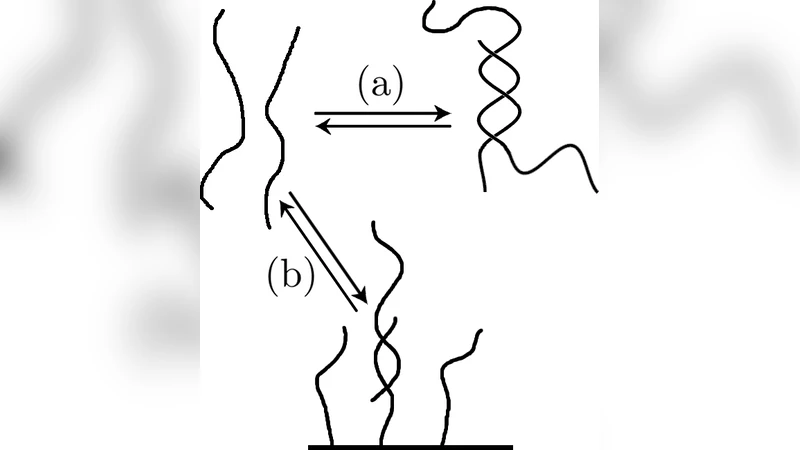
We consider a chemical reaction network governed by mass action kinetics and composed of N different species which can reversibly form heterodimers. A fast iterative algorithm is introduced to compute the equilibrium concentrations of such networks. We show that the convergence is guaranteed by the Banach fixed point theorem. As a practical example, of relevance for a quantitative analysis of microarray data, we consider a reaction network formed by N~10^6 mutually hybridizing different mRNA sequences. We show that, despite the large number of species involved, the convergence to equilibrium is very rapid for most species. The origin of slow convergence for some specific subnetworks is discussed. This provides some insights for improving the performance of the algorithm.
💡 Research Summary
The paper addresses the computational challenge of determining equilibrium concentrations in massive heterodimerization networks governed by mass‑action kinetics. Such networks consist of N distinct molecular species that can reversibly form heterodimers with every other species. The governing equations are nonlinear and involve O(N²) interaction terms, making direct solution infeasible for realistic biological datasets where N can reach one million or more, as in micro‑array analyses of mRNA hybridization.
To overcome this obstacle, the authors derive a fixed‑point iteration that updates the free concentration of each species using only the current estimates of its partners. Starting from the total concentration c_i^tot (the sum of free and bound forms), the update rule is
c_i^{(t+1)} = c_i^{tot} / (1 + Σ_{j≠i} K_{ij} c_j^{(t)}),
where K_{ij}=k⁺{ij}/k⁻{ij} is the equilibrium constant for the i–j dimer. This expression follows directly from the mass‑balance constraints and the detailed‑balance condition c_{ij}=K_{ij}c_i c_j. All species are updated simultaneously, yielding a mapping F: ℝⁿ → ℝⁿ.
The authors prove that F is a contraction on the closed hyper‑rectangle
Comments & Academic Discussion
Loading comments...
Leave a Comment