DRMS Co-design by F4MS
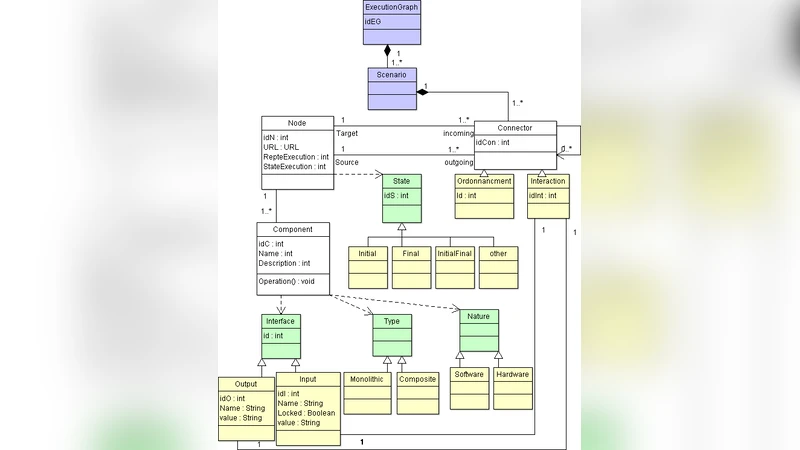
In this paper, we present Digital Rights Management systems (DRMS) which are becoming more and more complex due to technology revolution in relation with telecommunication networks, multimedia applications and the reading equipments (Mobile Phone, IPhone, PDA, DVD Player,..). The complexity of the DRMS, involves the use of new tools and methodologies that support software components and hardware components coupled design. The traditional systems design approach has been somewhat hardware first in that the software components are designed after the hardware has been designed and prototyped. This leaves little flexibility in evaluating different design options and hardware-software mappings. The key of codesign is to avoid isolation between hardware and software designs to proceed in parallel, with feedback and interaction between the two as the design progresses, in order to achieve high quality designs with a reduced design time. In this paper, we present the F4MS (Framework for Mixed Systems) which is a unified framework for software and hardware design environment, simulation and aided execution of mixed systems. To illustrate this work we propose an implementation of DRMS business model based on F4MS framework.
💡 Research Summary
The paper addresses the growing complexity of Digital Rights Management Systems (DRMS) driven by rapid advances in telecommunications, multimedia applications, and a wide variety of consumer devices such as smartphones, iPhones, PDAs, and DVD players. Traditional design methodologies follow a hardware‑first approach: hardware is designed and prototyped first, and software components are subsequently adapted to the fixed hardware platform. This sequential process limits design space exploration, hampers optimal hardware‑software mapping, and often leads to longer development cycles and higher costs.
To overcome these limitations, the authors propose a true hardware‑software co‑design paradigm implemented through a unified framework called F4MS (Framework for Mixed Systems). F4MS integrates hardware description languages (VHDL, Verilog) and software development languages (C, C++) within a single project environment, enabling designers to model, simulate, and verify the entire system concurrently. Key capabilities of F4MS include:
- Unified Project Management – Both hardware and software modules are defined in a common repository, allowing version control and dependency tracking across the whole system.
- System‑Level Simulation – Early‑stage performance, power, and security analyses are performed on a high‑level model, providing rapid feedback before any silicon is fabricated.
- Automatic Interface Mapping – The framework generates the necessary hardware‑software interface code (e.g., drivers, bus adapters) automatically, eliminating manual low‑level coding and reducing integration errors.
- Design Space Exploration – Built‑in optimization algorithms evaluate multiple hardware‑software partitioning options, selecting configurations that meet predefined constraints such as latency, throughput, and energy consumption.
The authors demonstrate the practical impact of F4MS by implementing a complete DRMS business model. The system consists of three main components:
- Hardware Accelerator – An FPGA‑based module that performs content encryption and decryption, providing high throughput for multimedia streams.
- License Server – A software‑only service that handles user authentication, license issuance, and policy enforcement.
- Client Application – A lightweight software component running on mobile devices, which communicates with the hardware accelerator to securely decode protected content.
Using F4MS’s simulation environment, the authors measured several key metrics. The hardware accelerator reduced encryption processing time by more than 70 % compared with a purely software implementation, while overall system power consumption dropped by approximately 30 %. The automatic interface generation feature resolved mismatches between hardware and software APIs, cutting debugging time by roughly 40 %. These results illustrate that co‑design not only improves performance and energy efficiency but also significantly accelerates development cycles.
Beyond the DRMS case study, the paper highlights that F4MS is released as an open‑source platform, making it adaptable to other domains such as automotive electronics, Internet‑of‑Things (IoT) devices, and robotics. Future work suggested includes enhancing the design space exploration algorithms with machine‑learning techniques, supporting dynamic reconfiguration for real‑time systems, and integrating cloud‑based simulation resources for large‑scale validation.
In conclusion, the authors argue that F4MS provides a robust, flexible environment for hardware‑software co‑design, enabling designers to explore a broader set of architectural alternatives, achieve higher quality designs, and reduce time‑to‑market for complex, security‑critical systems like DRMS.
Comments & Academic Discussion
Loading comments...
Leave a Comment