Boolean Models of Bistable Biological Systems
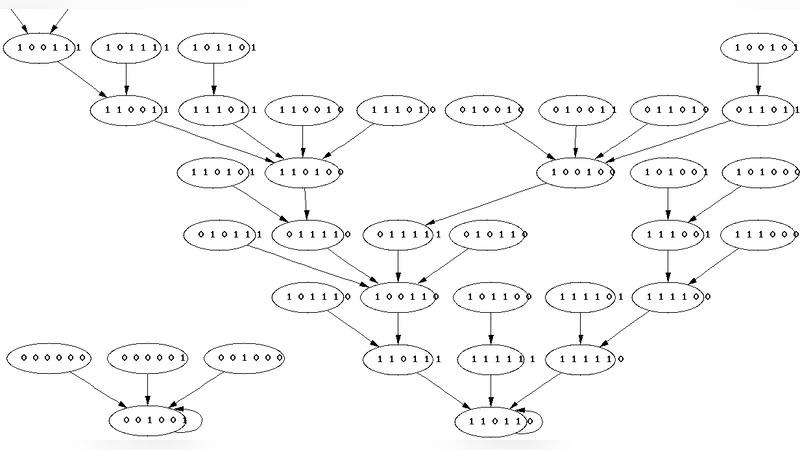
This paper presents an algorithm for approximating certain types of dynamical systems given by a system of ordinary delay differential equations by a Boolean network model. Often Boolean models are much simpler to understand than complex differential equations models. The motivation for this work comes from mathematical systems biology. While Boolean mechanisms do not provide information about exact concentration rates or time scales, they are often sufficient to capture steady states and other key dynamics. Due to their intuitive nature, such models are very appealing to researchers in the life sciences. This paper is focused on dynamical systems that exhibit bistability and are desc ribedby delay equations. It is shown that if a certain motif including a feedback loop is present in the wiring diagram of the system, the Boolean model captures the bistability of molecular switches. The method is appl ied to two examples from biology, the lac operon and the phage lambda lysis/lysogeny switch.
💡 Research Summary
The paper introduces a systematic method for converting dynamical systems described by ordinary delay differential equations (DDEs) into Boolean network models, with a focus on systems that exhibit bistability. Bistable biological switches—such as the lac operon in Escherichia coli and the lysis/lysogeny decision circuit of bacteriophage λ—are often governed by positive feedback loops combined with time‑delayed interactions. While DDE models capture detailed concentration dynamics and precise timing, they are mathematically complex and difficult for experimental biologists to interpret. Boolean models, by contrast, reduce each molecular species to a binary “on/off” state, allowing the system to be visualized as a logical circuit that is far easier to analyze, simulate, and communicate.
The authors first formalize the structural requirements for a DDE system to be amenable to Boolean approximation. They identify a “feedback motif” consisting of (i) at least one positive feedback loop, (ii) a delayed regulatory edge within that loop, and (iii) a threshold that separates low and high concentration regimes. When these conditions hold, the continuous system possesses two stable fixed points separated by a hysteresis curve. The conversion algorithm proceeds in four stages: (1) define activation thresholds for each continuous variable and map concentrations below the threshold to 0 and above to 1; (2) translate each differential term into a logical expression using AND, OR, and NOT operators, preserving the sign of interactions (activation vs. inhibition); (3) incorporate delays by introducing a “previous‑state” operator, effectively turning a term such as (x(t)=f(y(t-\tau))) into a Boolean update (x_{t}=F(y_{t-1})) where the subscript denotes discrete time steps; (4) assemble the full Boolean update table and simulate the network synchronously or asynchronously to locate attractors and transition pathways. The authors emphasize a “state‑preservation” principle: if a variable does not change in the continuous model over a given interval, its Boolean counterpart must also remain unchanged, preventing spurious oscillations.
To validate the approach, the method is applied to two canonical biological switches. In the lac operon case, the continuous model includes glucose repression, lactose induction, and the LacI repressor, all governed by a set of DDEs that capture transcription, translation, and metabolite transport delays. By discretizing the four key molecular species (lacZ, lacY, lacA, lacI) and the two external inputs (glucose, lactose), the authors derive a Boolean network with a two‑step delay representing the time required for LacI synthesis. The resulting Boolean system reproduces the classic “on/off” bistable behavior: low glucose and sufficient lactose drive the operon to the “on” fixed point, whereas high glucose forces the “off” state. Moreover, the Boolean model exhibits the same hysteresis loop observed in the continuous formulation, confirming that the essential switch dynamics are retained.
The second example concerns the λ phage decision circuit. The continuous description involves the mutually repressing transcription factors cI and cro, the activator cII, and an external stress signal (e.g., UV‑induced DNA damage). The authors reduce the system to three binary variables (cI, cro, cII) plus a stress input, and encode the mutual repression as NOT operations while representing cII‑mediated activation of cI with an OR gate. A single‑step delay captures the time between cII activation and cI production. Simulations of the Boolean network reveal two stable attractors corresponding to lysogeny (cI = 1, cro = 0) and lysis (cI = 0, cro = 1). The model also reproduces the stress‑induced hysteresis: a transient stress above a critical threshold pushes the system irreversibly into the lytic state, mirroring the behavior of the full DDE model.
The paper’s contributions are threefold. First, it provides a clear, algorithmic pathway for translating delayed continuous models into discrete logical frameworks, thereby bridging a gap between quantitative systems biology and qualitative network analysis. Second, it demonstrates theoretically and empirically that the presence of a delayed positive feedback motif guarantees that the Boolean abstraction will preserve bistability. Third, through detailed case studies, it shows that the Boolean representation can capture not only the steady‑state outcomes but also the qualitative transition dynamics (including hysteresis) of the original system.
The authors acknowledge limitations. Boolean models discard quantitative information about concentration magnitudes and exact timing, which can be crucial for tasks such as drug dosing optimization or precise kinetic parameter estimation. Consequently, they recommend using Boolean models as an exploratory, hypothesis‑generating layer, followed by refined continuous modeling when quantitative predictions are required. Nonetheless, the work establishes Boolean networks as a powerful, computationally inexpensive tool for understanding and communicating the core logic of bistable biological switches, especially for researchers who lack deep expertise in differential equation analysis.
Comments & Academic Discussion
Loading comments...
Leave a Comment