QIS-XML: A metadata specification for Quantum Information Science
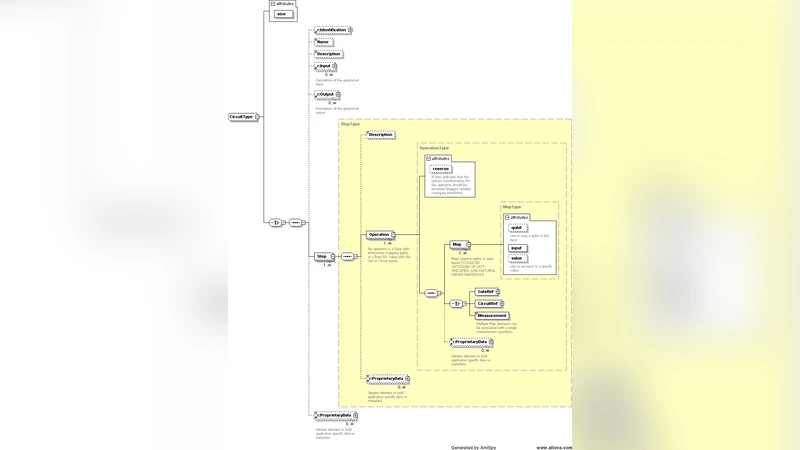
While Quantum Information Science (QIS) is still in its infancy, the ability for quantum based hardware or computers to communicate and integrate with their classical counterparts will be a major requirement towards their success. Little attention however has been paid to this aspect of QIS. To manage and exchange information between systems, today’s classic Information Technology (IT) commonly uses the eXtensible Markup Language (XML) and its related tools. XML is composed of numerous specifications related to various fields of expertise. No such global specification however has been defined for quantum computers. QIS-XML is a proposed XML metadata specification for the description of fundamental components of QIS (gates & circuits) and a platform for the development of a hardware independent low level pseudo-code for quantum algorithms. This paper lays out the general characteristics of the QIS-XML specification and outlines practical applications through prototype use cases.
💡 Research Summary
The paper addresses a critical gap in the emerging field of Quantum Information Science (QIS): the lack of a universal, hardware‑agnostic metadata format for describing quantum resources and enabling seamless interaction with classical IT systems. While classical information technology has long relied on the Extensible Markup Language (XML) and its ecosystem of schemas, validation tools, and transformation languages, quantum computing has no comparable standard. To fill this void, the authors propose QIS‑XML, an XML‑based metadata specification designed to capture the essential components of quantum computation—gates, circuits, and low‑level algorithmic pseudo‑code—while remaining independent of any specific quantum hardware implementation.
The specification is built around three core objectives. First, it must provide a hardware‑neutral representation of quantum gates and circuits so that the same description can be reused across superconducting, trapped‑ion, photonic, or any future platforms. Second, it should expose a pseudo‑code layer that mirrors classical programming constructs (sequential execution, conditionals, loops) but operates on quantum primitives, thereby facilitating automatic translation into platform‑specific instruction sets. Third, it must leverage XML’s mature validation mechanisms to guarantee structural and semantic integrity of quantum metadata.
In practice, QIS‑XML defines a hierarchy of XML elements. The <Gate> element records a gate’s unique identifier, its unitary matrix (expressed as a list of complex numbers), and any tunable parameters such as rotation angles. The <Circuit> element composes gate instances, specifies qubit indices for inputs and outputs, and allows nesting of sub‑circuits to support modular design. The <Algorithm> element strings together circuit calls using a pseudo‑code syntax encoded in XML tags, enabling constructs like “if measurement == 1 then apply X on q
Comments & Academic Discussion
Loading comments...
Leave a Comment