Gravitational Stability of Vortices in Bose-Einstein Condensate Dark Matter
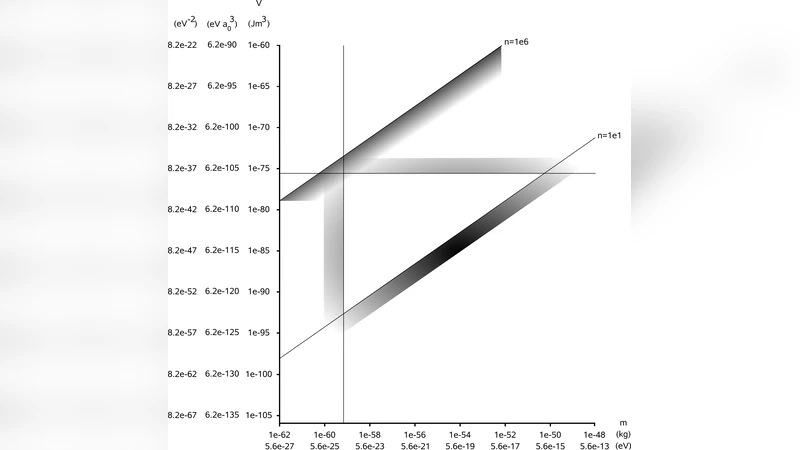
We investigate a simple model for a galactic halo under the assumption that it is dominated by a dark matter component in the form of a Bose-Einstein condensate involving an ultra-light scalar particle. In particular we discuss the possibility if the dark matter is in superfluid state then a rotating galactic halo might contain quantised vortices which would be low-energy analogues of cosmic strings. Using known solutions for the density profiles of such vortices we compute the self-gravitational interactions in such halos and place bounds on the parameters describing such models, such as the mass of the particles involved.
💡 Research Summary
The paper investigates a galactic halo model in which the dominant dark‑matter component is a Bose‑Einstein condensate (BEC) of ultra‑light scalar particles. Assuming that the condensate is in a superfluid state, the authors explore the possibility that a rotating halo can host quantised vortices—line‑like topological defects analogous to cosmic strings. The study proceeds by first formulating the coupled Gross‑Pitaevskii–Poisson (GPP) system that describes a self‑gravitating BEC under cylindrical symmetry. Using known analytic solutions of the Gross‑Pitaevskii equation for a single vortex, they obtain the radial density profile (n(r)) and define the vortex core radius (\xi = \hbar / \sqrt{2 m g n_0}), where (m) is the particle mass, (g) the self‑interaction coupling, and (n_0) the background condensate density. Inside the core the density drops sharply, while outside it follows an approximate (1/r^2) decline, a behaviour markedly different from the Navarro‑Frenk‑White (NFW) profile of standard cold dark matter.
Next, the authors substitute the vortex mass distribution (\rho(r)=m n(r)) into Poisson’s equation (\nabla^2\Phi = 4\pi G\rho) to compute the self‑gravitational potential (\Phi(r)). By comparing the gravitational binding energy per unit length, (U_{\rm grav}\sim G M_{\rm vortex}/L), with the internal energy supplied by quantum pressure (\hbar^2/(2 m^2 \xi^2)) and mean‑field pressure (g n_0), they derive a stability criterion: \
Comments & Academic Discussion
Loading comments...
Leave a Comment