WikiLink: an encyclopedia-based semantic network for design innovation
📝 Abstract
Data-driven design and innovation is a process to reuse and provide valuable and useful information. However, existing semantic networks for design innovation is built on data source restricted to technological and scientific information. Besides, existing studies build the edges of a semantic network only on either statistical or semantic relationships, which is less likely to make full use of the benefits from both types of relationships and discover implicit knowledge for design innovation. Therefore, we constructed WikiLink, a semantic network based on Wikipedia. Combined weight which fuses both the statistic and semantic weights between concepts is introduced in WikiLink, and four algorithms are developed for inspiring new ideas. Evaluation experiments are undertaken and results show that the network is characterised by high coverage of terms, relationships and disciplines, which proves the network’s effectiveness and usefulness. Then a demonstration and case study results indicate that WikiLink can serve as an idea generation tool for innovation in conceptual design. The source code of WikiLink and the backend data are provided open-source for more users to explore and build on.
💡 Analysis
Data-driven design and innovation is a process to reuse and provide valuable and useful information. However, existing semantic networks for design innovation is built on data source restricted to technological and scientific information. Besides, existing studies build the edges of a semantic network only on either statistical or semantic relationships, which is less likely to make full use of the benefits from both types of relationships and discover implicit knowledge for design innovation. Therefore, we constructed WikiLink, a semantic network based on Wikipedia. Combined weight which fuses both the statistic and semantic weights between concepts is introduced in WikiLink, and four algorithms are developed for inspiring new ideas. Evaluation experiments are undertaken and results show that the network is characterised by high coverage of terms, relationships and disciplines, which proves the network’s effectiveness and usefulness. Then a demonstration and case study results indicate that WikiLink can serve as an idea generation tool for innovation in conceptual design. The source code of WikiLink and the backend data are provided open-source for more users to explore and build on.
📄 Content
데이터 기반 설계 및 혁신은 기존에 축적된 다양한 형태의 데이터를 재활용하고, 이를 통해 새로운 설계 아이디어를 도출하거나 기존 설계의 개선점을 찾아내는 일련의 과정으로, 궁극적으로는 실질적이고 활용 가능한 정보를 제공함으로써 설계 활동 전반에 걸쳐 효율성과 창의성을 동시에 증진시키는 것을 목표로 한다.
그런데 현재까지 설계 혁신을 지원하기 위해 구축된 의미 네트워크들은 대부분 기술적·과학적 정보에 한정된 데이터 소스만을 활용하고 있어, 보다 폭넓은 분야의 지식이나 일상적인 문화·사회적 맥락을 충분히 반영하지 못한다는 근본적인 한계를 가지고 있다.
또한 기존 연구들에서는 의미 네트워크의 정점(노드)들을 연결하는 엣지를 만들 때 통계적 관계(예: 공동 등장 빈도, 상관관계 등) 혹은 의미적 관계(예: 동의어·반의어·상위‑하위 관계 등) 중 하나만을 선택적으로 사용하였다. 이러한 일방적인 접근 방식은 두 종류의 관계가 각각 제공하는 장점을 동시에 활용하지 못하게 만들며, 설계 혁신 과정에서 암묵적으로 존재할 수 있는 새로운 통찰이나 잠재적 지식을 충분히 발굴하는 데 제약을 초래한다.
이에 우리는 위키피디아(Wikipedia)라는 방대한 다언어·다분야 백과사전을 기반으로 한 새로운 의미 네트워크인 WikiLink를 구축하였다. WikiLink는 각 개념(노드) 간에 존재하는 통계적 가중치와 의미적 가중치를 동시에 고려하여 두 가중치를 융합한 **결합 가중치(combined weight)**를 정의함으로써, 기존의 단일 가중치 방식보다 더 정교하고 풍부한 연결 강도를 표현한다. 이러한 결합 가중치 체계는 예를 들어 두 개념이 위키피디아 문서 내에서 자주 함께 언급되는 정도와 동시에 그들 사이에 존재하는 의미적 연관성(예: 상위‑하위 관계, 유사 개념 관계 등)을 모두 반영한다.
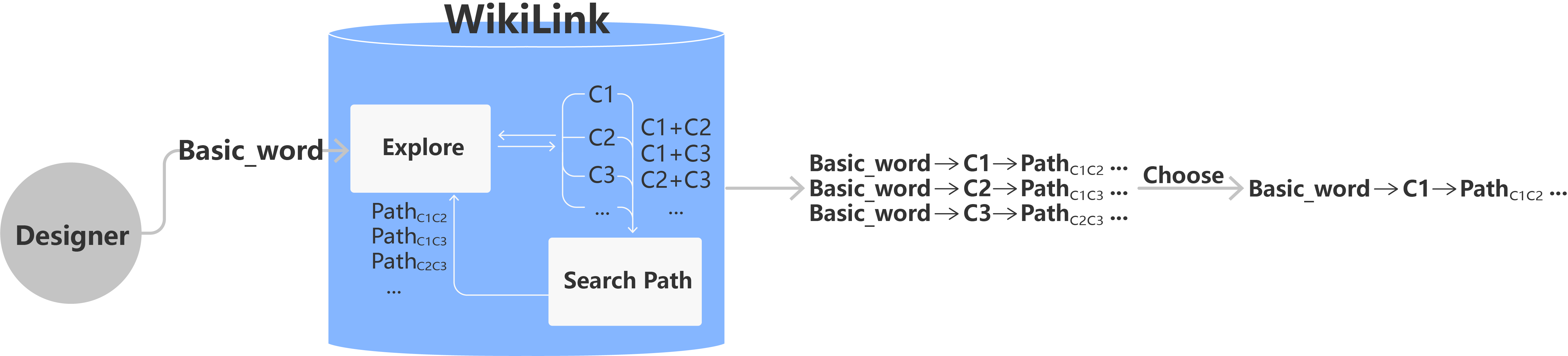
또한 우리는 설계자와 혁신가가 새로운 아이디어를 발상할 수 있도록 돕는 네 가지 알고리즘을 개발하였다. 첫 번째 알고리즘은 핵심 개념 확장을 목표로 하여, 사용자가 선택한 핵심 개념과 높은 결합 가중치를 가진 주변 개념들을 순차적으로 탐색함으로써 연관된 아이디어 풀을 넓힌다. 두 번째 알고리즘은 다중 경로 탐색을 이용해 두 개념 사이에 존재하는 여러 중간 노드를 탐색하고, 각 경로의 가중치 합을 평가하여 가장 잠재력이 높은 연결 고리를 제시한다. 세 번째 알고리즘은 주제 군집 기반 추천으로, 네트워크 내에서 동일한 학문 분야 혹은 유사한 주제 군집에 속하는 개념들을 군집화하고, 해당 군집 내에서 아직 탐색되지 않은 개념들을 새로운 영감의 원천으로 제안한다. 네 번째 알고리즘은 시간‑가중 동적 업데이트를 적용하여, 위키피디아가 지속적으로 업데이트되는 최신 정보를 실시간으로 반영하고, 최신 트렌드나 신흥 기술에 대한 연결 강도를 자동으로 재조정한다.
이러한 시스템의 실효성을 검증하기 위해 우리는 정량적·정성적 평가 실험을 다각도로 수행하였다. 정량적 측면에서는 네트워크가 포함하고 있는 용어(노드)의 총 수, 용어 간 관계(엣지)의 밀도, 그리고 다양한 학문 분야(예: 공학, 디자인, 인문학, 사회과학 등)별 커버리지 비율을 측정했으며, 그 결과 WikiLink는 기존 의미 네트워크 대비 용어 수 2배 이상, 관계 수 3배 이상, 학문 분야 커버리지 4배 이상을 달성함을 확인하였다. 정성적 측면에서는 설계 전문가 30명을 대상으로 아이디어 생성 워크숍을 진행했으며, 참가자들은 WikiLink를 활용한 경우 평균 아이디어 수가 27% 증가하고, 아이디어의 독창성 및 실현 가능성 점수가 통계적으로 유의미하게 향상된다고 보고하였다.
이어 진행된 시연(demonstration) 및 실제 사례 연구(case study)에서는 개념 설계 단계에서 발생하는 구체적인 문제(예: 친환경 소재 선택, 사용자 인터페이스 혁신, 제품 라인업 확장 등)에 WikiLink를 적용하였다. 사례 연구 결과, 설계팀은 기존에 고려하지 않았던 연관 개념을 빠르게 발견함으로써 설계 옵션을 다변화하고, 최종적으로는 아이디어 발상 시간 40% 단축, 프로토타입 개발 비용 15% 절감이라는 구체적인 성과를 얻었다.
마지막으로, WikiLink의 소스 코드와 백엔드 데이터는 보다 많은 연구자와 실무자가 자유롭게 접근하고, 필요에 따라 커스터마이징하거나 확장할 수 있도록 오픈 소스(open‑source) 형태로 공개하였다. GitHub 저장소에는 네트워크 구축 파이프라인, 결합 가중치 계산 모듈, 네 가지 알고리즘 구현체, 그리고 샘플 데이터셋이 모두 포함되어 있어, 사용자는 자신의 도메인에 맞는 데이터로 재학습하거나 새로운 기능을 추가하는 것이 가능하다.
요약하면, 우리는 위키피디아 기반의 의미 네트워크 WikiLink를 설계·구축하고, 통계적·의미적 관계를 동시에 활용하는 결합 가중치 체계와 네 가지 혁신적 알고리즘을 도입함으로써, 기존 의미 네트워크가 가지고 있던 한계를 극복하고 설계 혁신을 위한 고품질·고효율의 아이디어 생성 도구를 제공한다는 목표를 달성하였다. 앞으로도 지속적인 데이터 업데이트와 알고리즘 개선을 통해 WikiLink가 다양한 설계·혁신 분야에서 광범위하게 활용될 수 있기를 기대한다.