The Computational Complexity of Multi-player Concave Games and Kakutani Fixed Points
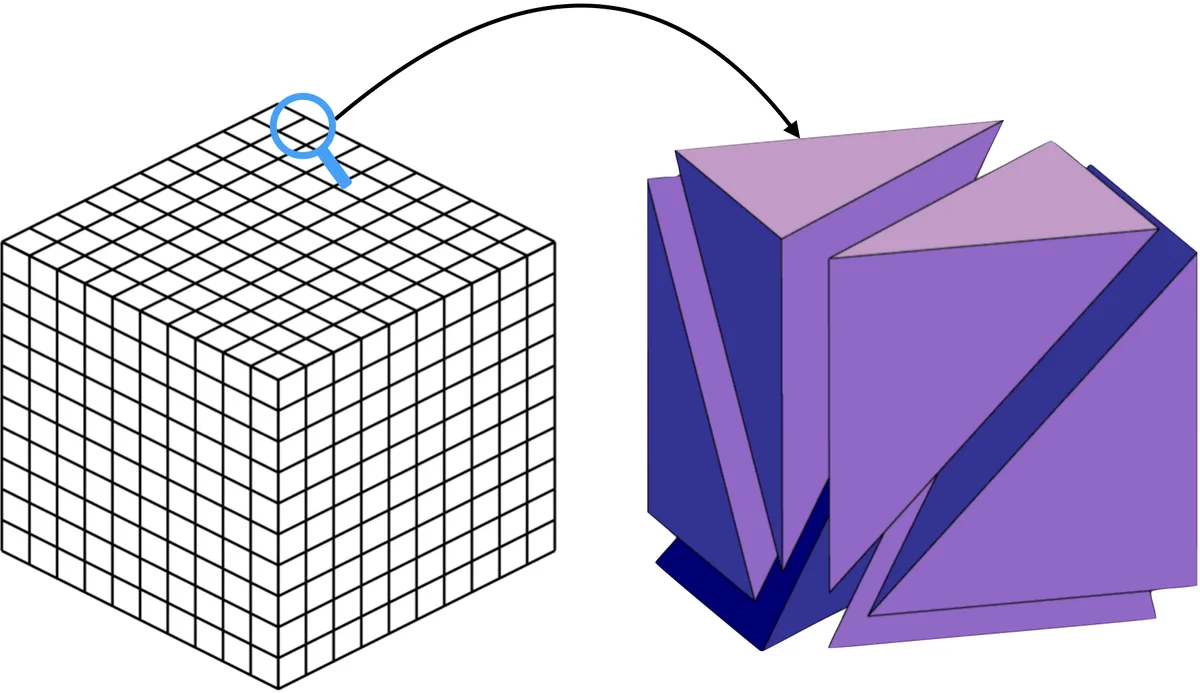
Kakutani’s Fixed Point theorem is a fundamental theorem in topology with numerous applications in game theory and economics. Formally, Kakutani’s theorem states that for any set-valued function mapping F, also known as correspondence, from a compact, convex set to itself in a locally convex topological vector space, if the function is upper hemicontinuous, has a closed graph, and its output at any given point is a non-empty and convex set, then there exists a fixed point x, namely a point in the domain which is mapped to itself by the function x ∈ F(x). Interestingly, computational formulations of Kakutani exist only in special cases and are too restrictive to be useful in reductions.
💡 Research Summary
The paper provides a comprehensive computational treatment of Kakutani’s Fixed Point Theorem and leverages this framework to settle the complexity of two cornerstone problems in economic theory: equilibrium computation in multi‑player concave (convex) games and Walrasian market equilibrium.
First, the authors observe that existing computational formulations of Kakutani are either too restrictive (e.g., explicit polytope representations) or insufficient for reductions. They introduce a general representation of a set‑valued map via a polynomial‑size circuit that implements a weak separation oracle for the convex image. This implicit representation is powerful enough to capture the convex sets that arise in game‑theoretic and market‑equilibrium contexts while remaining amenable to algorithmic manipulation.
Using this representation, they design a PPAD‑algorithm that finds an ε‑approximate Kakutani fixed point. The algorithm builds on the ellipsoid method, but the authors develop a novel error‑analysis that simultaneously controls projection errors and optimization errors arising from the weak oracle. They prove that the accumulated error can be bounded so that the output point satisfies the ε‑approximate fixed‑point condition required by Kakutani’s theorem. Consequently, the approximate Kakutani problem is shown to lie in PPAD, and a reduction from End‑of‑the‑Line establishes PPAD‑hardness, yielding PPAD‑completeness (Theorem 3.17).
With this tool in hand, the paper turns to concave games. A concave game consists of n players, each with a compact strategy set (axis‑aligned box) and a utility function that is concave in the player’s own strategy. The authors first prove that finding an ε‑approximate Nash equilibrium in such games reduces to finding an approximate Kakutani fixed point, thereby placing the problem in PPAD (Theorem 4.9, Membership). For hardness, they construct games where each utility is a low‑degree polynomial that is strongly concave. By embedding a PPAD‑hard Brouwer fixed‑point instance into the best‑response correspondences, they show that even this restricted class remains PPAD‑hard (Theorem 4.9, Hardness; Theorem E.5). This result bridges the gap between known FIXP‑hardness for exact solutions and PPAD‑hardness for approximate solutions, demonstrating that the complexity barrier persists under natural smoothness and degree constraints.
The third major contribution concerns Walrasian equilibrium in exchange economies. Prior work established PPAD‑hardness for general convex utilities but only PPAD‑membership for piecewise‑linear utilities. The authors extend the membership result to arbitrary convex utilities. The key technical ingredient is a robust version of Berge’s Maximum Theorem (Theorem 3.20), which guarantees Lipschitz continuity of the ε‑argmax operator even when the underlying objective is only convex (not necessarily smooth). By applying an ℓ₂‑regularization to the excess‑demand function, they obtain a set‑valued excess‑demand correspondence that satisfies the conditions of their Kakutani formulation. Consequently, computing a Walrasian equilibrium in a general convex economy lies in PPAD (Theorem 5.6).
Beyond these specific applications, the paper proposes a “meta‑approach” for future reductions: (1) construct a compact convex argmax correspondence from the problem’s objective, (2) prove Lipschitz continuity of this correspondence (using either dilation bounds or Hoffmann error bounds), and (3) invoke the robust Berge theorem together with regularization to obtain an ε‑approximate fixed point. This modular pipeline can be reused for a wide range of equilibrium‑type problems.
In summary, the authors (i) formulate a general, oracle‑based version of Kakutani’s Fixed Point Theorem and prove it is PPAD‑complete, (ii) show that equilibrium computation in multi‑player concave games is PPAD‑complete, even under strong concavity and low‑degree polynomial utilities, and (iii) extend PPAD‑membership to Walrasian equilibria with arbitrary convex utilities. These results close longstanding gaps in the computational complexity landscape of economic equilibrium concepts and provide a versatile toolkit for future complexity‑theoretic investigations in algorithmic game theory and market design.
Comments & Academic Discussion
Loading comments...
Leave a Comment