The Price of Anarchy in Routing Games as a Function of the Demand
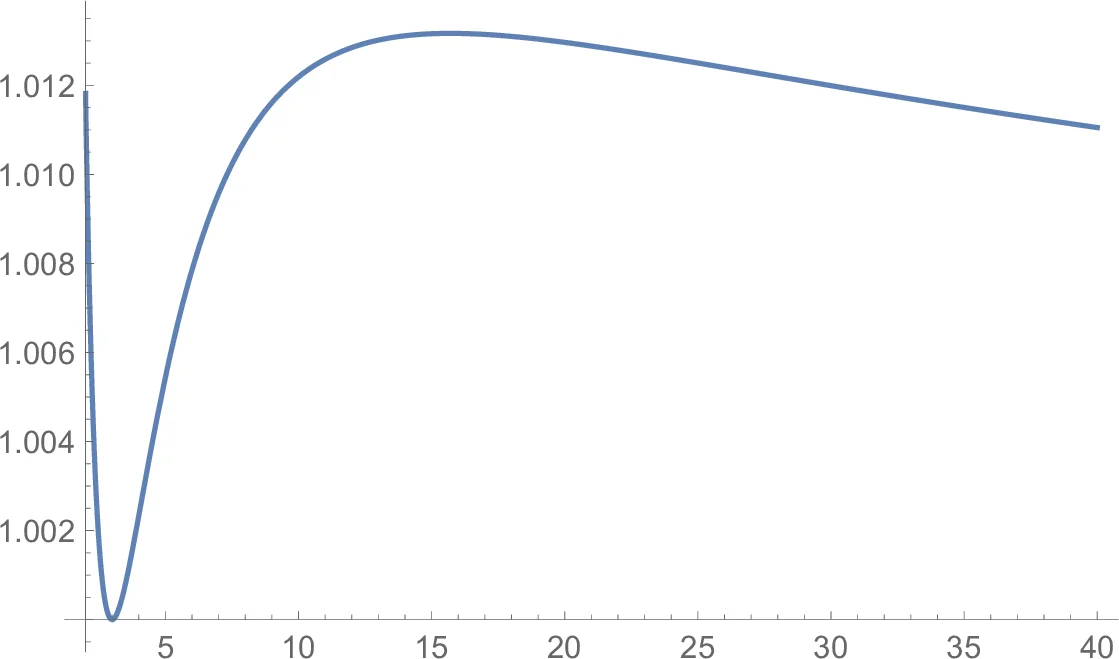
The price of anarchy has become a standard measure of the efficiency of equilibria in games. Most of the literature in this area has focused on establishing worst-case bounds for specific classes of games, such as routing games or more general congestion games. Recently, the price of anarchy in routing games has been studied as a function of the traffic demand, providing asymptotic results in light and heavy traffic. The aim of this paper is to study the price of anarchy in nonatomic routing games in the intermediate region of the demand. To achieve this goal, we begin by establishing some smoothness properties of Wardrop equilibria and social optima for general smooth costs. In the case of affine costs we show that the equilibrium is piecewise linear, with break points at the demand levels at which the set of active paths changes. We prove that the number of such break points is finite, although it can be exponential in the size of the network. Exploiting a scaling law between the equilibrium and the social optimum, we derive a similar behavior for the optimal flows. We then prove that in any interval between break points the price of anarchy is smooth and it is either monotone (decreasing or increasing) over the full interval, or it decreases up to a certain minimum point in the interior of the interval and increases afterwards. We deduce that for affine costs the maximum of the price of anarchy can only occur at the break points. For general costs we provide counterexamples showing that the set of break points is not always finite.
💡 Research Summary
The paper investigates how the inefficiency of equilibria, measured by the Price of Anarchy (PoA), varies with traffic demand in nonatomic routing games. While prior work has focused on worst‑case bounds or asymptotic behavior in light and heavy traffic, this study concentrates on the intermediate demand regime, where empirical observations show oscillations and spikes in PoA.
The authors first formalize the model: a directed multigraph with a single origin‑destination pair, a total demand µ, nondecreasing continuous edge‑cost functions c_e(·), and the standard Wardrop equilibrium concept. They recall that Wardrop equilibria coincide with the solutions of a convex program V(µ) and that the social optimum is given by a related program eV(µ). PoA(µ) is defined as µ·λ(µ)/eV(µ), where λ(µ) is the common equilibrium travel time.
Using parametric convex optimization and duality, they prove that the optimal value function V(µ) is convex and continuously differentiable on (0,∞), with derivative V′(µ)=λ(µ). Consequently, the equilibrium cost λ(µ) is a continuous, non‑decreasing function of demand, and the equilibrium edge costs τ_e(µ)=c_e(x_e^*(µ)) are uniquely defined and continuous.
The core of the paper deals with affine cost functions c_e(x)=a_e x + b_e (a_e>0). In this setting, the set of active (shortest) paths remains unchanged over intervals of demand. Within any such interval, all edge loads scale linearly with µ, leading to piecewise‑linear equilibrium flows and optimal flows. The authors define “b_E‑breakpoints” as demand values where the active path set changes. They prove that the number of breakpoints is finite (though potentially exponential in the size of the network) and that between breakpoints the PoA is a smooth C¹ function.
A detailed derivative analysis shows that on each interval the PoA is either monotone (strictly increasing or decreasing) or exhibits a single interior minimum, decreasing up to that point and increasing thereafter. Therefore, the global maximum of PoA must occur at a breakpoint. This result refines the classic 4/3 worst‑case bound for affine games by pinpointing exactly where the bound can be attained in a given network.
To illustrate the limits of these findings, the authors construct counterexamples with general (non‑affine) cost functions. In those examples the active path set can change infinitely often as demand varies, leading to infinitely many breakpoints, loss of differentiability, and failure of the monotonicity properties established for affine costs.
The paper’s contributions are fourfold: (1) a general proof of convexity and C¹ smoothness of the equilibrium cost and social optimum as functions of demand; (2) a characterization of equilibrium and optimal flows as piecewise‑linear for affine costs, together with a bound on the number of structural breakpoints; (3) a complete description of PoA’s behavior between breakpoints, showing that its maximum is always attained at a breakpoint; (4) explicit counterexamples demonstrating that these structural properties do not extend to arbitrary smooth cost functions.
These insights have practical implications for traffic management and network design. Knowing that PoA peaks only at specific demand thresholds allows planners to target interventions (e.g., tolls, capacity upgrades) precisely where they are most needed. Moreover, the sensitivity analysis clarifies how small demand changes can trigger large shifts in route usage, informing robust design against demand fluctuations. Future work may extend the analysis to multiple origin‑destination pairs, dynamic demand models, or algorithmic computation of breakpoints in large‑scale networks.
Comments & Academic Discussion
Loading comments...
Leave a Comment