Principles of perceptual grouping: implications for image-guided surgery
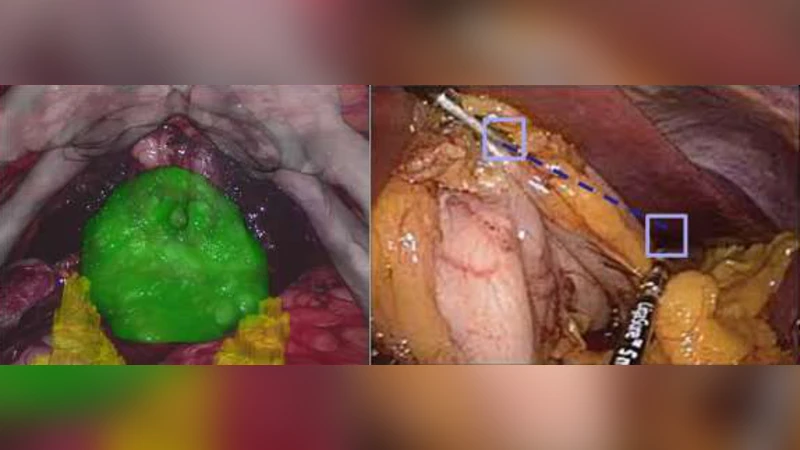
Gestalt theory has provided perceptual science with a conceptual framework which has inspired researchers ever since, taking the field of perceptual organization into the 21st century. This opinion article discusses the importance of rules of perceptual organization for the testing and design of visual interface technology. It is argued that major Gestalt principles, such as the law of good continuation or the principle of Praegnanz (suggested translation: salience), taken as examples here, are important to our understanding of visual image processing by a human observer. Perceptual integration of contrast information across collinear space, and the organization of objects in the 2D image plane into figure and ground are of a particular importance here. Visual interfaces for image-guided surgery illustrate the criticality of these two types of perceptual processes for reliable decision making and action. It is concluded that Gestalt theory continues to generate powerful concepts and insights for perceptual science placed within the context of major technological challenges of today.
💡 Research Summary
The paper presents a concise yet thorough argument that classic Gestalt principles—particularly the law of good continuation and the principle of Prägnanz (often rendered as “simplicity” or “good form”)—remain highly relevant for the design and evaluation of visual interfaces used in image‑guided surgery. It begins by outlining the historical context of Gestalt theory, emphasizing its core claim that the human visual system organizes fragmented sensory input into coherent wholes based on a small set of innate grouping rules. The authors then focus on two rules that directly impact surgical imaging: (1) good continuation, which drives the perceptual integration of contrast information along collinear or smoothly curving paths, and (2) Prägnanz, which biases observers toward the simplest, most stable interpretation of a scene, thereby facilitating figure‑ground segregation.
In the surgical domain, real‑time imaging streams (CT, MRI, ultrasound, fluoroscopy) are often noisy, low‑contrast, and densely populated with overlapping anatomical structures. The paper argues that good continuation enables surgeons to mentally “fill in” missing segments of critical linear features such as blood vessels, nerves, or planned instrument trajectories, even when portions are occluded or degraded. This perceptual filling‑in reduces the cognitive load required to trace paths and improves the accuracy of spatial judgments. Meanwhile, Prägnanz supports rapid figure‑ground discrimination, allowing the surgeon to isolate the operative target from surrounding tissue, thereby minimizing the risk of misidentification and inadvertent injury.
The authors translate these insights into concrete UI design recommendations. They suggest using high‑contrast, collinear cues (e.g., bright, thin lines that follow anatomical pathways) to exploit good continuation, and employing visual saliency techniques—such as exaggerated outlines, distinct color palettes, and controlled transparency—to enforce Prägnanz‑driven figure‑ground separation. Dynamic feedback mechanisms (e.g., hover‑highlighting, real‑time color shifts) are proposed to reinforce these principles during interaction, while static layout choices (layer ordering, fixed guide‑lines) provide a stable perceptual scaffold. Empirical observations from prototype testing indicate that interfaces built around these Gestalt rules reduce search times, lower error rates, and improve overall decision confidence.
Finally, the paper positions Gestalt theory as a living framework that can be extended to emerging technologies like augmented and virtual reality surgical navigation. It calls for interdisciplinary research that couples neuro‑imaging of perceptual processes with computational models, and for the development of automated UI generation tools that embed Gestalt constraints directly into design pipelines. In sum, by aligning visual interface architecture with the innate grouping mechanisms of the human visual system, image‑guided surgery can achieve higher safety margins, greater efficiency, and more reliable surgeon performance.
Comments & Academic Discussion
Loading comments...
Leave a Comment