Probing the central engine of long gamma-ray bursts and hypernovae with gravitational waves and neutrinos
There are the two common candidates as the viable energy source for the central engine of long gamma-ray bursts (GRBs) and hypernovae (HNe), neutrino annihilation and magnetic fields. We investigate gravitational wave (GW) emission accompanied by these two mechanisms. Especially, we focus on GW signals produced by neutrinos from a hyper-accreting disk around a massive black hole. We show that neutrino-induced GWs are detectable for $\sim$1 Mpc events by LISA and $\sim$ 100 Mpc by DECIGO/BBO, if the central engine is powered by neutrinos. The GW signals depend on the viewing angle and they are anti-correlated with neutrino ones. But, simultaneous neutrino detections are also expected, and helpful for diagnosing the explosion mechanism when later electromagnetic observations enable us to identify the source. GW and neutrino observations are potentially useful for probing choked jets that do not produce prompt emission, as well as successful jets. Even in non-detection cases, observations of GWs and neutrinos could lead to profitable implications for the central engine of GRBs and HNe.
💡 Research Summary
The paper tackles one of the most persistent puzzles in high‑energy astrophysics: what powers the central engine of long gamma‑ray bursts (GRBs) and their associated hypernovae (HNe). Two leading candidates are examined: (1) neutrino‑annihilation heating in a hyper‑accreting disk around a stellar‑mass black hole, and (2) magnetic extraction of rotational energy via the Blandford‑Znajek mechanism. While both can in principle launch relativistic jets and account for the observed electromagnetic output, they differ fundamentally in how they convert gravitational binding energy into outflows, and thus they should leave distinct multimessenger signatures.
The authors focus on a relatively unexplored channel: gravitational waves (GWs) generated by the anisotropic emission of neutrinos from the dense accretion flow. In a hyper‑accreting disk with mass‑accretion rates of 0.1–1 M⊙ s⁻¹ and a black‑hole mass of 3–10 M⊙, the neutrino luminosity can reach ≳10⁵³ erg s⁻¹. Because neutrinos escape preferentially along the disk’s rotation axis, the resulting momentum flux is not spherically symmetric. The time‑varying quadrupole moment of this anisotropic neutrino wind acts as a source term in the linearized Einstein equations, producing a low‑frequency GW signal.
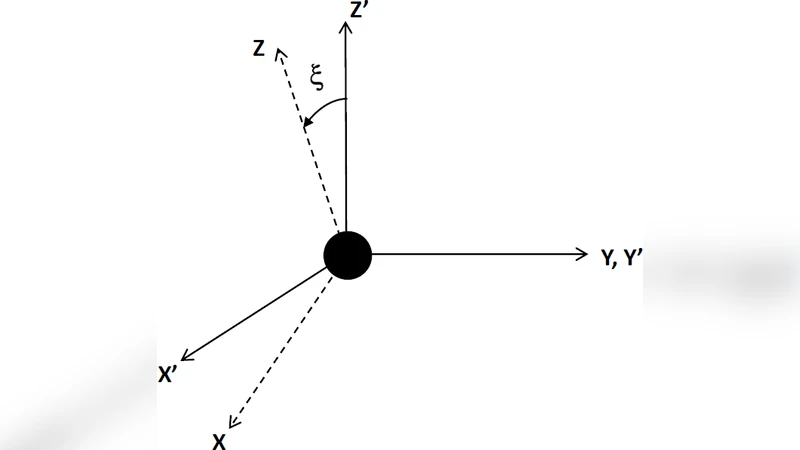
Using a Newtonian‑potential approximation combined with a post‑Newtonian expansion of the stress‑energy tensor, the authors derive analytic expressions for the GW strain h(t) and its spectral density. The characteristic strain lies in the range h≈10⁻²²–10⁻²⁴, with most power concentrated between 0.1 Hz and 10 Hz. The signal’s amplitude depends on the observer’s viewing angle θ relative to the disk axis as h∝sinθ cosθ; it is maximal for edge‑on views (θ≈90°) and vanishes for a pole‑on view (θ≈0°). Conversely, the neutrino flux is strongly beamed toward the pole, so the GW and neutrino signals are anti‑correlated. This angular dependence provides a natural way to infer the geometry of the engine from simultaneous GW and neutrino detections.
Detectability is assessed for three planned space‑based GW observatories. LISA, operating in the millihertz band, could detect such a signal out to ∼1 Mpc, essentially limiting observations to the Local Group. DECIGO and BBO, with peak sensitivity around 0.1–1 Hz, extend the horizon to ∼100 Mpc, encompassing a substantial volume of the nearby universe and making detection plausible for a modest rate of nearby GRBs/HNe. The paper also discusses the expected neutrino signal: a burst of ∼10–100 MeV neutrinos lasting a few seconds, potentially observable by next‑generation detectors such as Hyper‑Kamiokande, JUNO, or IceCube‑Gen2 for events within a few tens of megaparsecs.
A key implication is the ability to probe “choked” jets—cases where the relativistic outflow fails to break out of the progenitor star and thus produces no prompt gamma‑ray emission. Even without electromagnetic counterparts, the neutrino‑induced GW and the neutrino burst would still be emitted, offering a unique window onto otherwise hidden explosions. The authors argue that a joint GW–neutrino detection (or even a non‑detection) can place stringent constraints on the neutrino‑annihilation efficiency η_ν and on the accretion rate, thereby discriminating between the neutrino‑driven and magnetically‑driven scenarios.
In the absence of a detection, upper limits from LISA or DECIGO combined with neutrino observatory null results would imply η_ν≲10⁻³ for typical disk parameters, favoring magnetic extraction as the dominant engine. Conversely, a positive detection with the predicted angular anti‑correlation would strongly support the neutrino‑annihilation model. The paper concludes by emphasizing the importance of coordinated multimessenger campaigns: rapid localization of GW triggers, prompt neutrino alerts, and follow‑up electromagnetic observations across the spectrum will together enable a definitive test of the central engine physics of long GRBs and hypernovae.
Comments & Academic Discussion
Loading comments...
Leave a Comment