Integrating data science ethics into an undergraduate major: A case study
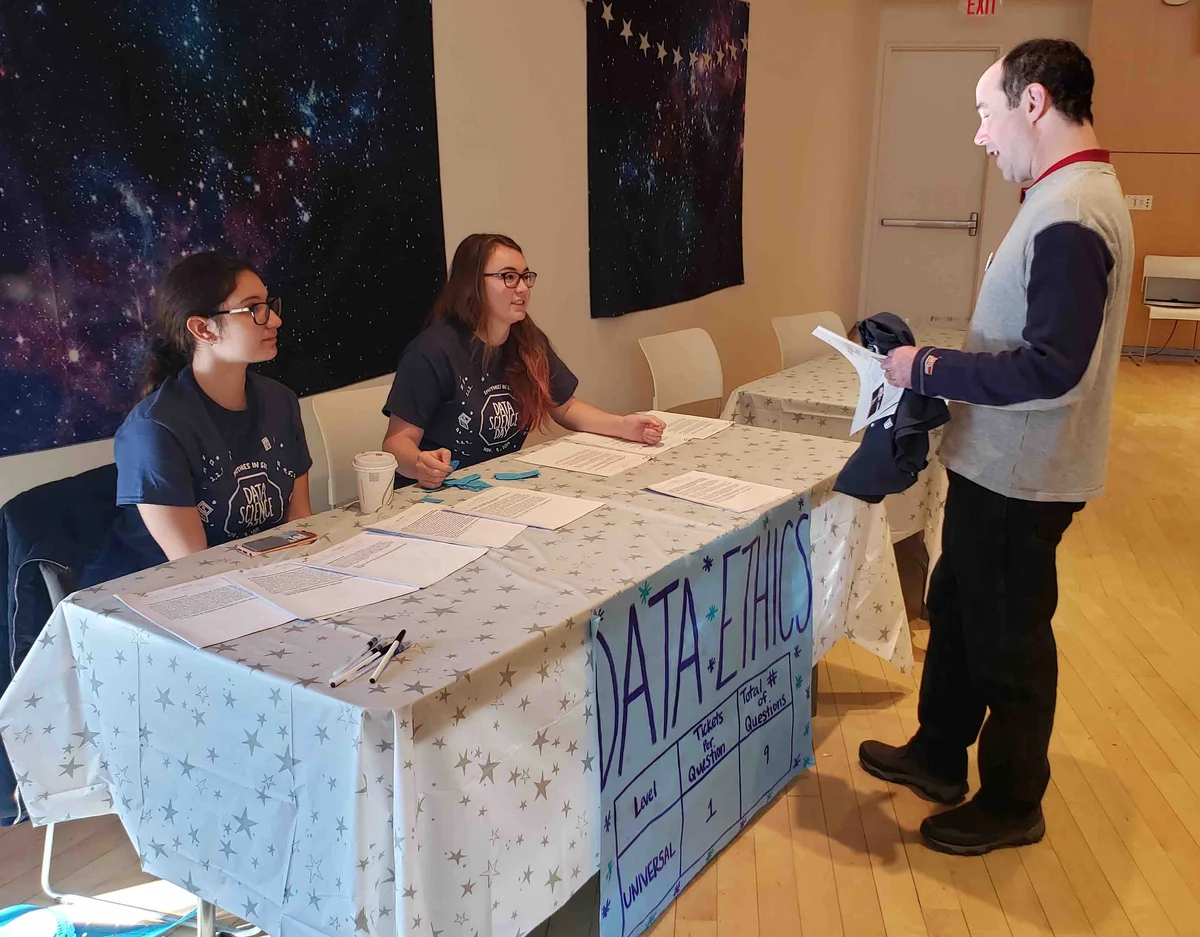
We present a programmatic approach to incorporating ethics into an undergraduate major in statistical and data sciences. We discuss departmental-level initiatives designed to meet the National Academy of Sciences recommendation for integrating ethics into the curriculum from top-to-bottom as our majors progress from our introductory courses to our senior capstone course, as well as from side-to-side through co-curricular programming. We also provide six examples of data science ethics modules used in five different courses at our liberal arts college, each focusing on a different ethical consideration. The modules are designed to be portable such that they can be flexibly incorporated into existing courses at different levels of instruction with minimal disruption to syllabi. We connect our efforts to a growing body of literature on the teaching of data science ethics, present assessments of our effectiveness, and conclude with next steps and final thoughts.
💡 Research Summary
The paper presents a comprehensive programmatic approach for embedding data science ethics throughout an undergraduate major in statistical and data sciences at Smith College. Grounded in the National Academies of Sciences, Engineering, and Medicine (NAS) recommendation to weave ethics into the curriculum from the beginning, the authors adopt a dual‑axis framework: “top‑to‑bottom” (progressively deepening ethical content from introductory courses to the senior capstone) and “side‑to‑side” (supplementary co‑curricular activities such as workshops, seminars, and community projects).
A literature review situates data science ethics within three inter‑related domains defined by Floridi and Taddeo (2016): ethics of data, ethics of algorithms, and ethics of practices. The authors argue that while traditional statistics education has long addressed human‑subjects research ethics, modern data‑driven work raises distinct challenges—privacy under GDPR, algorithmic bias, large‑scale data collection, reproducibility, and environmental impact of AI models.
To operationalize the framework, six modular ethics units are developed and integrated into five existing courses. Each module aligns with a specific ethical domain and is mapped onto Bloom’s taxonomy to ensure cognitive progression from recall to creation. The modules are:
- OkCupid Data – privacy and informed consent using real‑world online dating data.
- StitchFix Algorithms – detection and mitigation of recommendation‑system bias.
- Grey’s Anatomy Practices – responsible handling of medical data and research integrity.
- Copyright Music Practices – legal‑ethical boundaries of data‑driven creative works.
- Coding Race Practices – identification of racial and gender bias in data preprocessing and modeling.
- Weapons of Math Destruction – evaluation of algorithmic transparency and societal impact using a checklist approach.
All modules are deliberately portable: they require only a 1–2 hour insertion into existing syllabi, come with open‑source code, datasets, and instructor guides hosted on a public website, and can be adapted to institutions of varying size and focus.
Assessment of the ethics integration combines pre‑ and post‑course surveys, analysis of student artifacts, and capstone project reviews. Findings indicate statistically significant gains in students’ ethical awareness, especially regarding privacy and algorithmic bias. Capstone teams employed an ethics‑pre‑review checklist to identify and address potential harms before deploying their projects, demonstrating transfer of classroom learning to authentic research contexts.
The authors acknowledge limitations: the evaluation is short‑term, lacking longitudinal data on graduates’ professional ethical behavior; and the model depends on faculty expertise, which may be scarce at smaller programs. To mitigate these issues, they propose partnerships with philosophers, online MOOCs, and student‑led ethics forums.
Future work outlined includes (1) longitudinal studies of ethical decision‑making post‑graduation, (2) scaling the model to larger research universities and community colleges, and (3) developing AI‑driven feedback tools to automate parts of the ethics assessment process.
Overall, the paper offers a concrete, evidence‑based blueprint for integrating data science ethics into undergraduate curricula, demonstrating that modular, portable units coupled with systematic assessment can effectively cultivate ethically aware data scientists across diverse educational settings.
Comments & Academic Discussion
Loading comments...
Leave a Comment