Chatbots and messaging platforms in the classroom: An analysis from the teacher’s perspective
Messaging platforms are applications, generally mediated by an app, desktop program or the web, mainly used for synchronous communication among users. As such, they have been widely adopted officially by higher education establishments, after little or no study of their impact and perception by the teachers. We think that the introduction of these new tools and the opportunities and challenges they have needs to be studied carefully in order to adopt the model, as well as the tool, that is the most adequate for all parties involved. We already studied the perception of these tools by students, in this paper we examine the teachers’ experiences and perceptions through a survey that we validated with peers, and what they think these tools should make or serve so that it enhances students learning and helps them achieve their learning objectives. The survey has been distributed among tertiary education teachers, both in universitary and other kind of tertiary establishments, based in Spain (mainly) and Spanish-speaking countries. We have focused on collecting teachers’ preferences and opinions on the introduction of messaging platforms in their day-to-day work, as well as other services attached to them, such as chatbots. What we intend with this survey is to understand their needs and to gather information about the various educational use cases where these tools could be valuable. In addition, an analysis of how and when teachers’ opinions towards the use of these tools varies across gender, experience, and their discipline of specialization is presented. The key findings of this study highlight the factors that can contribute to the advancement of the adoption of messaging platforms and chatbots in higher education institutions to achieve the desired learning outcomes.
💡 Research Summary
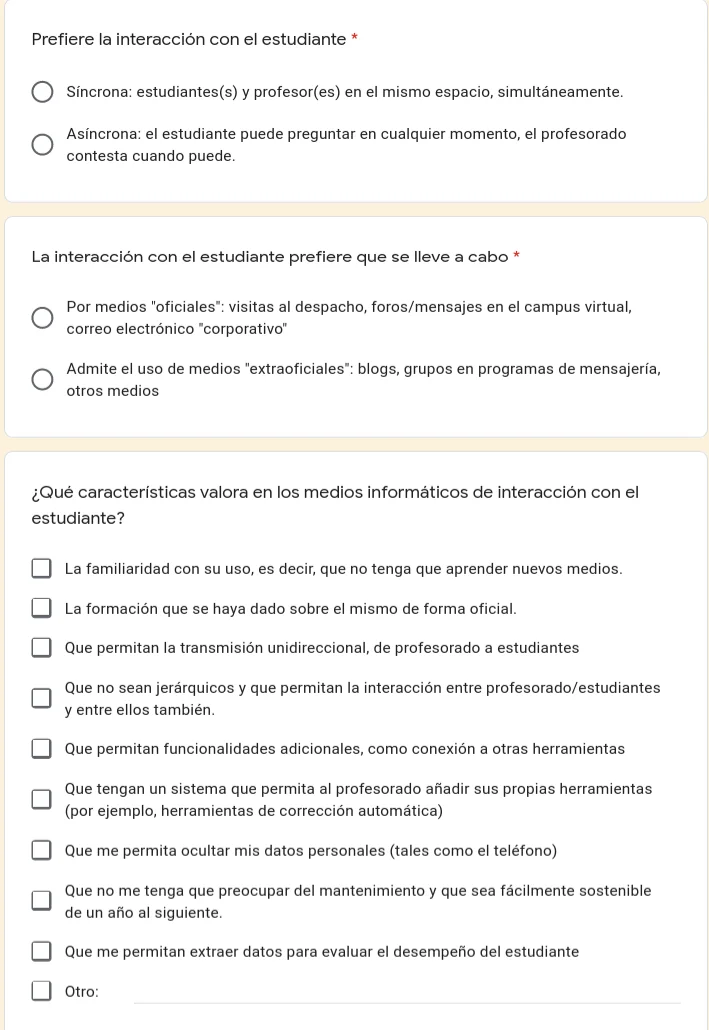
This paper investigates higher‑education teachers’ perceptions, needs, and preferences regarding the use of instant‑messaging platforms and chatbots in classroom settings. Building on a prior student‑focused study, the authors conducted a two‑phase survey among 500 teachers primarily from Spain and other Spanish‑speaking countries. Phase 1 collected student feedback on preferred messaging tools and desired chatbot functionalities, which informed the design of the teacher questionnaire. Phase 2 comprised an initial survey of 300 teachers followed by a refined questionnaire completed by an additional 200 respondents. The study addresses four research questions: (1) current or intended use of messaging apps, (2) useful chatbot features, (3) preferred interaction styles with students, and (4) valued media/platform characteristics.
Key findings reveal that 78 % of teachers already use or intend to use messaging apps, with WhatsApp and Telegram being the most popular. Teachers value chatbot capabilities that automate routine tasks such as assignment reminders, grade and attendance queries, resource search, FAQ answering, and real‑time learning analytics that provide personalized feedback. Interaction preferences lean toward bidirectional, discussion‑oriented communication rather than one‑way lecturing, and multimedia‑rich channels (audio/video) are favored over plain text. Demographic analysis shows notable differences: female teachers, especially in humanities and social sciences, prioritize privacy protection and affective feedback; less‑experienced teachers emphasize the need for training and technical support; while senior faculty focus on integration with existing institutional systems.
The authors discuss how chatbots can reduce teachers’ administrative workload, allowing more time for high‑impact pedagogical activities, and how data collected by chatbots can support early‑warning systems and adaptive instruction. Successful adoption, however, requires institutional policies that address data security, clear boundaries between academic and personal communication, and professional development programs. Limitations include the geographic concentration of the sample in Spanish‑speaking contexts and the reliance on self‑reported survey data without longitudinal performance metrics.
In conclusion, the paper argues that messaging platforms combined with well‑designed, teaching‑oriented chatbots hold significant promise for enhancing instructional efficiency and student engagement in higher education. It recommends a teacher‑centered design approach, robust privacy safeguards, and systematic training to facilitate implementation. Future research should explore cross‑cultural comparisons, conduct controlled pilot studies to measure learning outcomes, and investigate deeper integration of AI‑driven adaptive learning models with messaging‑based chatbots.
Comments & Academic Discussion
Loading comments...
Leave a Comment