The role of network embeddedness on the selection of collaboration partners: An agent-based model with empirical validation
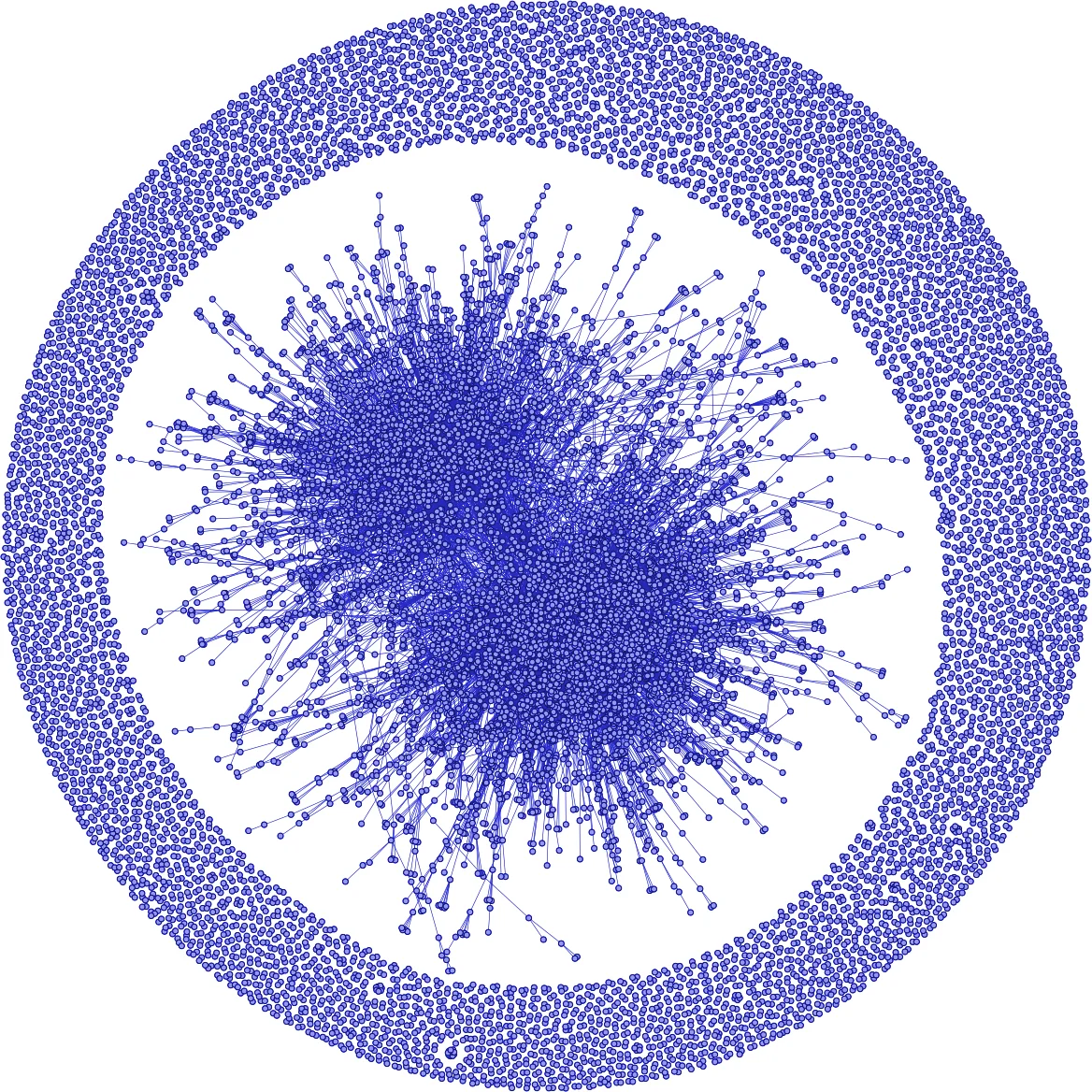
We use a data-driven agent-based model to study the core-periphery structure of two collaboration networks, R&D alliances between firms and co-authorship relations between scientists. To characterize the network embeddedness of agents, we introduce a coreness value, obtained from a weighted $k$-core decomposition. We study the change of these coreness values when collaborations with newcomers or established agents are formed. Our agent-based model is able to reproduce the empirical coreness differences of collaboration partners and to explain why we observe a change in partner selection for agents with high network embeddedness.
💡 Research Summary
This paper investigates how an agent’s position within a collaboration network influences the choice of partners, focusing on two very different domains: inter‑firm R&D alliances and scientific co‑authorships. Both empirical networks display a pronounced core‑periphery structure, where a small, densely connected core coexists with a large, sparsely linked periphery. To quantify an agent’s embeddedness, the authors introduce a “coreness” measure derived from a weighted k‑core decomposition; lower coreness values indicate proximity to the core, while higher values denote peripheral positions.
The authors build a data‑driven agent‑based model (ABM) that reproduces the observed networks. Each agent is assigned an activity level sampled from the empirical activity distribution P(a). At each discrete time step, agents become initiators of collaborations with probability proportional to their activity. The size of each collaboration (the number of partners m) is drawn from the empirical collaboration‑size distribution P(m). Once a collaboration is initiated, the initiator selects m partners, forming a fully connected clique (reflecting R&D consortia or co‑author teams).
A central innovation is the introduction of a static “label” attribute that captures shared practices, club memberships for firms, or scientific specializations for authors. Initially all agents are unlabeled (newcomers). Labels can be acquired in two ways: (i) label propagation, where an established (labeled) initiator transfers its label to a newcomer during a collaboration, and (ii) label generation, where a newcomer that becomes active for the first time receives a unique label.
Partner selection is governed by five probabilities: a newcomer may link to a labeled agent (p_NL_l) or another newcomer (p_NL_nl); an established agent may link to a same‑label agent (p_Ls), a different‑label agent (p_Ld), or an unlabeled agent (p_Ln). After the partner categories are determined, the model applies linear preferential attachment within each category: the probability of choosing a specific node j scales with its degree d_j. This reinforcement mechanism ensures that high‑activity agents, which accrue many collaborations early, also tend to acquire higher degree and propagate their label more widely, thereby reinforcing the core.
The model parameters (the five link‑formation probabilities) are calibrated separately for the firm and scientist datasets using maximum‑likelihood fitting to match observed degree‑coreness correlations. Empirical inputs include the activity distribution, collaboration‑size distribution, and the weighted adjacency matrices constructed from the Thomson Reuters SDC Platinum alliance database (1984‑2009) and the APS publication dataset (also limited to 1984‑2009 for comparability).
Simulation results reproduce several key empirical patterns: (1) newcomers typically remain in the periphery, as they start without labels and are more likely to connect with other newcomers; (2) agents with low coreness (core agents) preferentially form collaborations with same‑label partners, reinforcing their central position; (3) a transition in partner selection is observed as agents move from peripheral to core positions, driven solely by the probabilistic rules and preferential attachment, without invoking explicit strategic utility functions.
The authors argue that the ABM serves as a null model: it captures the observed dynamics of partner selection and core‑periphery emergence using only empirically derived probabilities, showing that strategic decision‑making is not required to explain the data. Instead, the feedback loop between activity‑driven preferential attachment and label propagation naturally generates the observed embeddedness patterns. High‑embeddedness agents do not deliberately seek core partners; rather, their higher activity and accumulated degree make them more attractive under the model’s attachment rule, leading to a self‑reinforcing core.
In conclusion, the paper makes three substantive contributions. First, it demonstrates that weighted k‑core coreness is an effective quantitative proxy for network embeddedness across disparate collaboration systems. Second, it shows that a simple, data‑driven ABM can simultaneously reproduce the structural (core‑periphery) and dynamic (partner‑selection) features of real‑world collaboration networks. Third, it provides evidence that the observed shift in partner selection for highly embedded agents can be explained by stochastic reinforcement mechanisms rather than by explicit strategic behavior. This integrated approach offers valuable insights for scholars of innovation networks, science policy, and complex systems, highlighting how network topology itself can shape, and be shaped by, the micro‑level actions of agents.
Comments & Academic Discussion
Loading comments...
Leave a Comment