Investigating Exit Choice in Built Environment Evacuation combining Immersive Virtual Reality and Discrete Choice Modelling
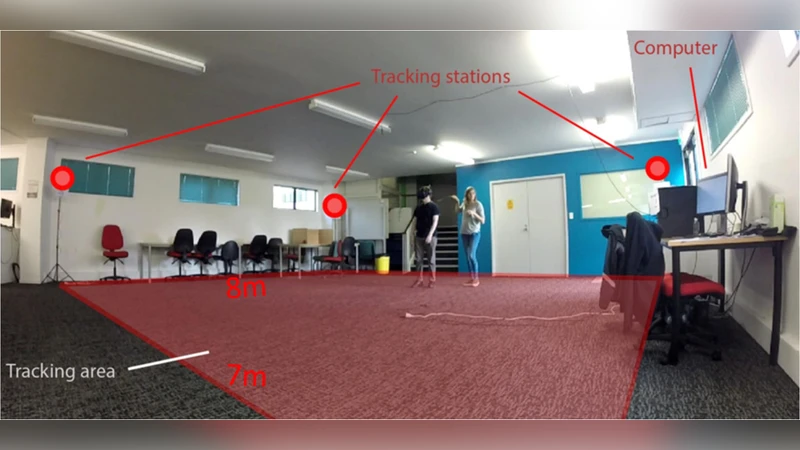
In the event of a fire emergency in the built environment, occupants face a range of evacuation decisions, including the choice of exits. An important question from the standpoint of evacuation safety is how evacuees make these choices and what factors affect their choices. Understanding how humans weigh these (often) competing factors is essential knowledge for evacuation planning and safe design. Here, we use immersive Virtual Reality (VR) experiments to investigate, in controlled settings, how these trade-offs are made using empirical data and econometric choice models. In each VR scenario, participants are confronted with trade-offs between choosing exits that are familiar to them, exits that are less occupied, exits that are nearer to them and exits to which visibility is less affected by fire smoke. The marginal role of these competing factors on their decisions is quantified in a discrete choice model. Post-experiment questionnaires also determine factors such as their perceived realism and emotion evoked by the VR evacuation experience. Results indicate that none of the investigated factors dominated the others in terms of their influence on exit choices. The participants exhibited patterns of multi-attribute conjoint decision-making, consistent with the recent findings in the literature. While lack of familiarity and the presence of smoke both negatively affected the desirability of an exit to evacuees, neither solely determined exit choice. It was also observed that prioritisation of the said factors by participants changed during the repeated scenarios when compared to the first scenario that they experienced. Results have implications for both fire safety designs and future VR evacuation experiment designs. These empirical models can also be employed as input in computer simulations of building evacuation.
💡 Research Summary
**
The paper presents a novel research framework that combines immersive virtual‑reality (VR) experiments with discrete‑choice modelling to investigate how occupants decide which exit to use during a fire emergency. While previous fire‑safety studies have largely focused on physical evacuation routes, crowd dynamics, or deterministic optimisation, this work explicitly addresses the cognitive and behavioural processes underlying exit selection.
Experimental design
A total of 60 participants (balanced gender, mixed student and general‑public sample) were immersed in a Unity‑based 3‑D building model that simulated fire, smoke, and moving virtual agents. Four key attributes were systematically varied across scenarios: (1) familiarity – whether the exit matched a pre‑learned floor plan; (2) congestion – low versus high density of virtual agents near the exit; (3) distance – short versus long walking distance from the participant’s starting point; and (4) visibility – clear line‑of‑sight versus smoke‑obscured view. Each participant experienced 16 attribute combinations (2^4) presented in random order, repeated over four rounds to capture learning or adaptation effects. After each trial participants chose an exit, and the system recorded choice, decision time, gaze data, and post‑experiment questionnaire responses concerning realism, fear, and immersion.
Modelling approach
The choice data were analysed with a multinomial logit model, estimating a coefficient (β) for each attribute. Statistical significance was assessed using Wald tests, and marginal effects were computed to translate coefficient changes into probability shifts. Separate models were estimated for each round to examine dynamic changes in attribute importance. Correlations between questionnaire scores and choice behaviour were explored via linear regression.
Key findings
-
All four attributes significantly influenced exit choice: familiarity (β = 0.42, p < 0.01), visibility (β = 0.38, p < 0.01), distance (β = ‑0.31, p < 0.05), and congestion (β = ‑0.27, p < 0.05).
-
No single attribute dominated; participants exhibited a multi‑attribute conjoint decision process, weighing trade‑offs rather than following a simple rule (e.g., “always take the nearest exit”).
-
Attribute importance shifted across repetitions. In the first round, distance and congestion carried relatively larger weights, whereas by the fourth round the coefficient for visibility increased and the effect of familiarity decreased. This suggests that repeated exposure leads participants to become more sensitive to smoke‑related risk cues.
-
Higher perceived realism and immersion in the VR environment amplified the influence of risk‑related attributes (visibility, unfamiliarity). Fear levels, while elevated, did not directly predict exit choice but interacted with immersion to affect decision consistency.
Implications for fire‑safety design
The results underline the need for exit signage and way‑finding systems that simultaneously enhance familiarity (e.g., regular drills, clear maps) and visibility under smoke (e.g., photoluminescent markings, smoke‑clearing ventilation). Because occupants balance multiple factors, designers should avoid relying on a single cue (such as “shortest distance”) and instead provide redundant, complementary information.
Value of the VR‑choice modelling approach
The study demonstrates that VR can reliably reproduce behavioural patterns observed in real fire incidents (preference for familiar exits, avoidance of smoke‑filled routes) while allowing controlled manipulation of individual attributes. The discrete‑choice model derived from empirical VR data can be fed directly into evacuation simulation tools, enabling more realistic predictions of egress flows that incorporate human decision making rather than assuming purely rational shortest‑path behaviour.
Limitations and future work
The participant pool was relatively young and healthy, limiting generalisability to older or mobility‑impaired populations. Physical stressors present in real fires (heat, toxic inhalation, fatigue) were not modelled. Moreover, social influences such as following a leader or herd behaviour were omitted. Future research should expand the attribute set to include personal characteristics (age, training, risk‑aversion), social dynamics, and physiological stress indicators, and test the approach in larger, more diverse samples.
Conclusion
By integrating immersive VR experiments with econometric discrete‑choice analysis, the paper provides a robust, data‑driven insight into how occupants trade off familiarity, congestion, distance, and smoke visibility when selecting an exit during a fire. The findings reveal a nuanced, dynamic decision‑making process that has direct relevance for building design, emergency‑egress planning, and the development of more human‑centred evacuation simulations.