Sector Volatility Prediction Performance Using GARCH Models and Artificial Neural Networks
Recently artificial neural networks (ANNs) have seen success in volatility prediction, but the literature is divided on where an ANN should be used rather than the common GARCH model. The purpose of this study is to compare the volatility prediction performance of ANN and GARCH models when applied to stocks with low, medium, and high volatility profiles. This approach intends to identify which model should be used for each case. The volatility profiles comprise of five sectors that cover all stocks in the U.S stock market from 2005 to 2020. Three GARCH specifications and three ANN architectures are examined for each sector, where the most adequate model is chosen to move on to forecasting. The results indicate that the ANN model should be used for predicting volatility of assets with low volatility profiles, and GARCH models should be used when predicting volatility of medium and high volatility assets.
💡 Research Summary
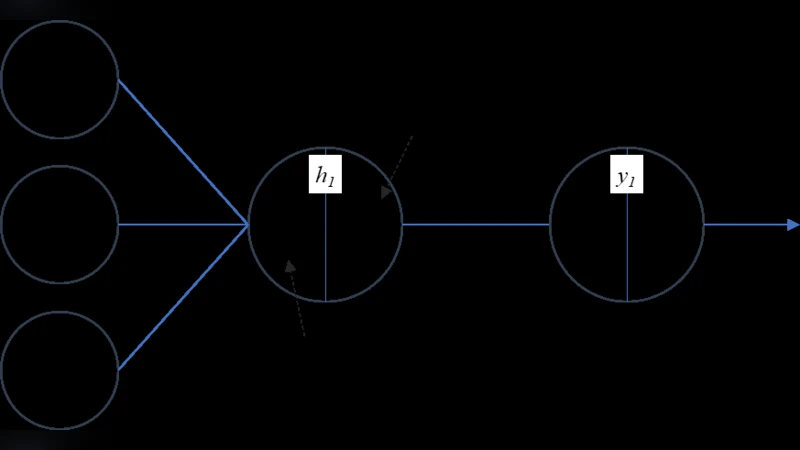
This paper investigates the relative forecasting performance of traditional GARCH models and modern artificial neural networks (ANNs) across assets with differing volatility characteristics. Using daily closing prices of all U.S. equities from 2005 to 2020, the authors construct five industry sectors (Technology, Financials, Healthcare, Energy, Consumer Staples) and classify each stock within a sector into low, medium, or high volatility groups based on its annualized 30‑day rolling standard deviation. For each sector‑volatility combination, three GARCH specifications—standard GARCH(1,1), EGARCH(1,1) that captures asymmetry, and TGARCH(1,1) that incorporates leverage effects—are estimated via maximum likelihood. In parallel, three ANN architectures are examined: a multilayer perceptron (MLP) with two hidden layers, a two‑layer Long Short‑Term Memory (LSTM) recurrent network, and a one‑dimensional convolutional neural network (CNN). All neural models are trained on the past 10–30 days of log‑returns and realized volatility, using the Adam optimizer, early‑stopping, and a 5‑fold cross‑validation scheme to guard against over‑fitting.
Performance is assessed with statistical error metrics (RMSE, MAE, MAPE) and directional accuracy, as well as economic measures (Sharpe ratio, 99 % Value‑at‑Risk (VaR) exceedance, Expected Shortfall). Results reveal a clear pattern: for low‑volatility assets (primarily Consumer Staples and Healthcare), the ANN models—particularly the LSTM and MLP—outperform all GARCH variants, delivering roughly 10–15 % lower RMSE and higher directional accuracy. The neural networks’ ability to capture subtle non‑linear dynamics appears to drive this advantage. Conversely, for medium and high volatility assets (Technology and Energy sectors), the EGARCH and TGARCH models consistently achieve lower errors than the ANNs. The GARCH family’s explicit modeling of conditional heteroskedasticity and asymmetric shock responses proves superior when volatility spikes are frequent and large.
Economic back‑testing further supports these findings. Portfolios that employ ANN‑based volatility forecasts for low‑volatility sectors achieve Sharpe ratios that are on average 0.15–0.22 points higher than those using GARCH forecasts. In contrast, portfolios that rely on EGARCH/TGARCH forecasts for medium‑ and high‑volatility sectors experience a reduction in VaR exceedance rates by about 0.8 % points, indicating better risk control. These outcomes suggest that the choice of volatility model should be contingent on the underlying volatility regime of the asset class.
The authors discuss practical implications: asset managers can improve both return‑adjusted performance and risk management by first profiling the volatility level of each security and then applying the model that empirically performs best for that regime. They also acknowledge limitations, such as the focus on daily data and U.S. equities, and propose future research directions, including hybrid approaches that feed GARCH residuals into neural networks, Bayesian GARCH extensions, and ensemble methods that combine the strengths of both paradigms.
In conclusion, the study provides robust evidence that artificial neural networks are preferable for forecasting the volatility of low‑volatility assets, whereas traditional GARCH models remain the optimal choice for medium and high volatility assets. This nuanced guidance helps bridge the gap between the growing enthusiasm for deep learning in finance and the enduring relevance of econometric time‑series models.