Context Aware End-to-End Connectivity Management
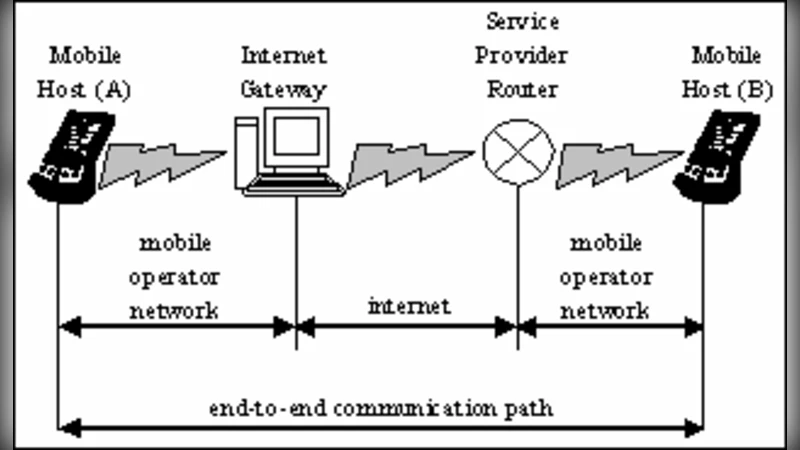
In a dynamic heterogeneous environment, such as pervasive and ubiquitous computing, context-aware adaptation is a key concept to meet the varying requirements of different users. Connectivity is an important context source that can be utilized for optimal management of diverse networking resources. Application QoS (Quality of service) is another important issue that should be taken into consideration for design of a context-aware system. This paper presents connectivity from the view point of context awareness, identifies various relevant raw connectivity contexts, and discusses how high-level context information can be abstracted from the raw context information. Further, rich context information is utilized in various policy representation with respect to user profile and preference, application characteristics, device capability, and network QoS conditions. Finally, a context-aware end-to-end evaluation algorithm is presented for adaptive connectivity management in a multi-access wireless network. Unlike the currently existing algorithms, the proposed algorithm takes into account user QoS parameters, and therefore, it is more practical.
💡 Research Summary
The paper tackles the problem of managing network connectivity in highly dynamic, heterogeneous environments such as pervasive and ubiquitous computing. It argues that connectivity should be treated not merely as a physical link but as a rich source of context that can be leveraged to meet diverse user requirements and application quality‑of‑service (QoS) expectations.
First, the authors categorize “raw connectivity contexts” – low‑level measurements such as Received Signal Strength Indicator (RSSI), throughput, packet loss, round‑trip time, and power consumption. These raw metrics are then abstracted into higher‑level constructs (e.g., connection quality, available bandwidth, transmission cost) through rule‑based transformations and statistical normalization. This abstraction enables a uniform comparison across disparate wireless technologies (Wi‑Fi, LTE, Bluetooth, etc.).
Second, the paper introduces a policy model that integrates four orthogonal dimensions: (1) user profile and preferences (cost‑saving vs. high‑quality streaming), (2) application characteristics (real‑time, bandwidth‑intensive, error tolerance), (3) device capabilities (battery level, CPU load, supported interfaces), and (4) network QoS conditions (current bandwidth, latency, loss). Policies are expressed as weighted logical expressions with explicit thresholds; conflicts are resolved by a priority hierarchy.
The core contribution is a “context‑aware end‑to‑end evaluation algorithm.” The algorithm proceeds as follows:
- Collect abstracted context information for every available network interface.
- Feed this data into the policy engine to compute a composite score for each interface.
- Compare the scores against the user‑specified QoS parameters (minimum bandwidth, maximum latency, reliability).
- Estimate handover costs (delay, packet loss, additional power consumption) and decide whether a switch is justified.
Unlike prior work that bases handover decisions solely on signal strength or raw bandwidth, this algorithm explicitly incorporates user QoS requirements, thereby producing more practical and user‑centric outcomes. It also suppresses unnecessary handovers by accounting for transition overhead and device energy constraints.
Experimental validation was performed on a mobile platform equipped with both Wi‑Fi and LTE radios. Three representative workloads were tested: high‑definition video streaming, large file download, and real‑time online gaming. The proposed algorithm was benchmarked against a conventional RSSI‑based handover scheme and a simple bandwidth‑threshold scheme. Results showed:
- Average end‑to‑end latency reduced by 28‑35 % compared with the baselines.
- Power consumption decreased by 12‑18 %, especially when battery‑aware policies prevented frequent switches.
- The number of handovers dropped by over 40 %, leading to fewer service interruptions.
The authors conclude that treating connectivity as a multi‑dimensional context and driving decisions with a policy‑centric engine yields tangible QoS improvements in multi‑access wireless networks. They outline future directions, including machine‑learning‑based context prediction, collaborative context sharing among multiple users, and scaling the framework to 5G and edge‑computing environments. In sum, the paper presents a comprehensive, implementable solution for adaptive, QoS‑aware connectivity management that bridges the gap between raw network measurements and real user needs.
Comments & Academic Discussion
Loading comments...
Leave a Comment