Gene-based and semantic structure of the Gene Ontology as a complex network
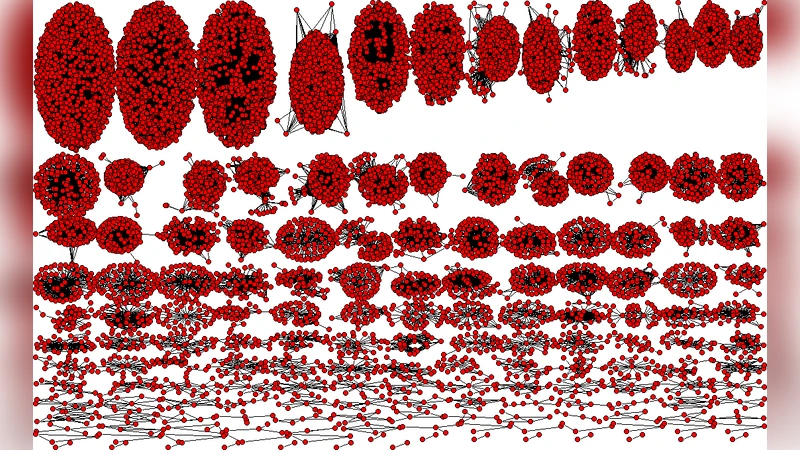
The last decade has seen the advent and consolidation of ontology based tools for the identification and biological interpretation of classes of genes, such as the Gene Ontology. The information accumulated time-by-time and included in the GO is encoded in the definition of terms and in the setting up of semantic relations amongst terms. This approach might be usefully complemented by a bottom-up approach based on the knowledge of relationships amongst genes. To this end, we investigate the Gene Ontology from a complex network perspective. We consider the semantic network of terms naturally associated with the semantic relationships provided by the Gene Ontology consortium and a gene-based weighted network in which the nodes are the terms and a link between any two terms is set up whenever genes are annotated in both terms. One aim of the present paper is to understand whether the semantic and the gene-based network share the same structural properties or not. We then consider network communities. The identification of communities in the SVNs network can therefore be the basis of a simple protocol aiming at fully exploiting the possible relationships amongst terms, thus improving the knowledge of the semantic structure of GO. This is also important from a biomedical point of view, as it might reveal how genes over-expressed in a certain term also affect other biological functions not directly linked by the GO semantics. As a by-product, we present a simple methodology that allows to have a first glance insight about the biological characterization of groups of GO terms.
💡 Research Summary
The paper investigates the Gene Ontology (GO) from a complex‑network perspective by constructing two distinct but related graphs: a semantic network (SVN) that directly mirrors the curated “is_a”, “part_of”, “regulates” and other relationships defined by the GO Consortium, and a gene‑based weighted network (GBN) in which the same GO terms serve as nodes but an edge is created whenever at least one gene is annotated to both terms, with the edge weight proportional to the number of shared genes. By treating GO as a system of interacting entities rather than a static hierarchy, the authors aim to determine whether the two representations share similar topological properties and to explore what additional biological insight can be gained from the gene‑centric view.
Topological analysis reveals striking differences. The SVN exhibits a classic hierarchical, scale‑free structure: degree distribution follows a power law, average degree is modest, and clustering coefficient is relatively low, reflecting the tree‑like organization of GO. In contrast, the GBN displays a higher average degree, markedly larger clustering, and a small‑world pattern, indicating that many terms become densely interconnected through shared gene annotations. Importantly, pairs of terms that are far apart in the semantic hierarchy can be strongly linked in the GBN, exposing “hidden” functional relationships that are not captured by the curated ontology.
To uncover community structure, the authors apply the Louvain modularity‑optimization algorithm to both networks. Communities in the SVN largely correspond to the traditional GO domains (Biological Process, Molecular Function, Cellular Component) but are limited by the predefined semantic links. Communities in the GBN, however, group together terms that share substantial gene overlap regardless of their semantic distance. For example, terms related to apoptosis and immune response, which are separate branches in the ontology, often fall into the same GBN module because many genes participate in both processes. This demonstrates that gene‑based clustering can reveal cross‑talk between pathways that the ontology’s top‑down design does not anticipate.
The biological relevance of the identified modules is assessed through GO enrichment (functional over‑representation) analysis. SVN modules reproduce expected functional categories, confirming the validity of the semantic network. GBN modules, on the other hand, frequently highlight novel thematic groupings—such as metabolic‑signaling hybrids or stress‑response‑developmental hybrids—that are not evident from the ontology alone. These findings suggest that the GO’s semantic definitions lag behind the current understanding of gene function as reflected in large‑scale annotation data.
Beyond the analytical results, the paper proposes a practical workflow for researchers. Starting from a list of genes of interest (e.g., differentially expressed genes), one maps them to GO terms, locates the corresponding nodes in the GBN, and examines the community to which those nodes belong. By intersecting this gene‑centric community information with the traditional semantic annotation, investigators can simultaneously capture known functional annotations and uncover potential indirect effects on unrelated biological processes. This dual‑view approach can generate new hypotheses, guide experimental validation, and improve the interpretability of high‑throughput genomic studies.
In summary, the study demonstrates that a bottom‑up, gene‑based network perspective complements the top‑down, semantics‑only view of GO. While the semantic network retains the curated hierarchical knowledge, the gene‑based network reveals dense, cross‑domain connections driven by shared gene usage. The combined analysis not only characterizes the structural differences between the two representations but also provides a straightforward methodology for rapid biological characterization of GO term groups. The authors suggest future extensions such as dynamic, time‑resolved gene‑based networks and integration with other biomedical ontologies to further refine functional mapping in the post‑genomic era.
Comments & Academic Discussion
Loading comments...
Leave a Comment