Compressed sensing of astronomical images:orthogonal wavelets domains
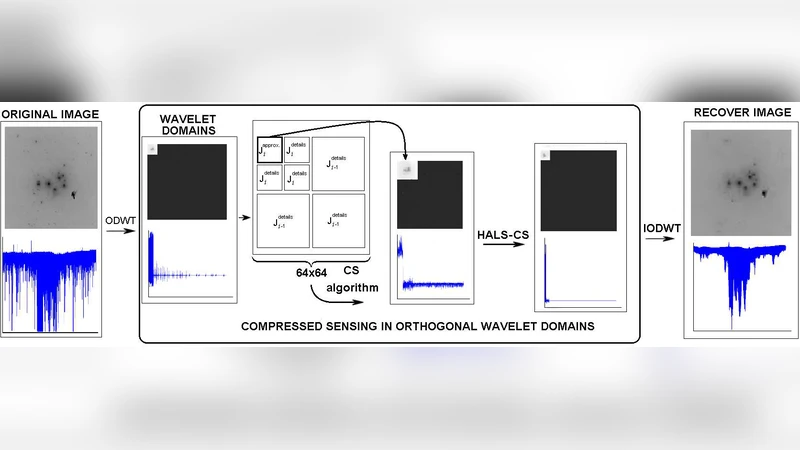
A simple approach for orthogonal wavelets in compressed sensing (CS) applications is presented. We compare efficient algorithm for different orthogonal wavelet measurement matrices in CS for image processing from scanned photographic plates (SPP). Some important characteristics were obtained for astronomical image processing of SPP. The best orthogonal wavelet choice for measurement matrix construction in CS for image compression of images of SPP is given. The image quality measure for linear and nonlinear image compression method is defined.
💡 Research Summary
The paper presents a practical compressed sensing (CS) framework tailored for astronomical images obtained from scanned photographic plates (SPP). After a brief overview of CS theory—highlighting that sparse signals can be reconstructed from far fewer linear measurements than dictated by the Nyquist rate—the authors focus on the design of the measurement matrix. They argue that orthogonal wavelet transforms (Ψ) such as Daubechies, Coiflet, Symmlet, and others provide a natural sparsifying basis for astronomical images because bright stars and other celestial objects generate large wavelet coefficients while smooth background regions produce small ones. Consequently, the measurement matrix A is generated as a random matrix with columns drawn from a uniform spherical ensemble, and the overall sensing model becomes Y = A X, where X = Ψ S represents the wavelet coefficients of the original image S.
Algorithm 1 details the processing pipeline. First, the input image is decomposed by an orthogonal discrete wavelet transform (ODWT) up to level 4 for 512×512 images or level 5 for 1024×1024 images. Approximation coefficients are retained unchanged; detail coefficients are rearranged into a tree‑structured vector X (768 entries for level 4, 3072 for level 5). A random sampling matrix A is then constructed with a compression ratio RR = 0.75, and the compressed measurements Y = A X are obtained. Reconstruction proceeds by applying a non‑linear shrinkage function (Abramovich’s Bayesian thresholding) to estimate X from Y, followed by an inverse wavelet transform to recover the image. The shrinkage parameters λ are iteratively refined using a Hierarchical Alternating Least Squares (HALS) learning rule over ten iterations, with λ decreasing adaptively according to a median‑absolute‑deviation scheme.
The authors introduce the concept of Image Reduction Level (IRL) to compare linear down‑sampling (IRL = 2ⁱ) with the non‑linear CS‑based reduction. They show that CS can achieve IRL values of 4–5 (e.g., reducing a 512×512 image to 64×64) while preserving high visual quality, thanks to the sparsity exploited by the wavelet basis.
Experimental evaluation uses twelve test images, including standard benchmarks (Lena, Mondrian) and several real SPP plates (M10, ADH5269, ROZ200001655a, M45‑556p). For each image, six orthogonal wavelet families are tested: Beylkin‑18, Coiflet‑6, Coiflet‑30, Daubechies‑4, Daubechies‑16, Symmlet‑8, and Vaidyanathan‑24. Performance is quantified by peak signal‑to‑noise ratio (PSNR) and reconstruction error ε. Symmlet‑8 consistently yields the highest PSNR (≈ 31 dB) and the lowest ε (≈ 0.0098), closely followed by Daubechies‑4 and Coiflet‑30. These wavelets have relatively short filter supports, which reduces computational load while maintaining reconstruction fidelity. In contrast, Beylkin‑18 and Vaidyanathan‑24 exhibit larger errors (2–3× higher ε) especially on images where stars are scattered across the field, indicating that filter support and symmetry affect performance on different astronomical scene types.
The paper also demonstrates that the non‑linear CS approach, combined with the Abramovich shrinkage, can effectively suppress noise and enhance detection of celestial objects. Visual examples show that star clusters (e.g., the Pleiades in M45‑556p) and globular clusters (M10) become more discernible after reconstruction, facilitating subsequent photometric measurements and catalog generation.
In conclusion, the study validates that orthogonal wavelet‑based measurement matrices are well‑suited for CS of scanned astronomical plates. Symmlet‑8, Daubechies‑4, and Coiflet‑30 emerge as the most effective bases, offering a good trade‑off between reconstruction quality and computational efficiency. The proposed CS pipeline is particularly advantageous for images with centrally concentrated objects, providing both compression and denoising. Limitations arise for plates with widely scattered objects, where the current linear measurement strategy underperforms. Future work is suggested to explore adaptive or learned measurement matrices, possibly integrating deep neural networks, to further improve reconstruction for diverse astronomical scenes.
Comments & Academic Discussion
Loading comments...
Leave a Comment