Simultaneous inversion of layered velocity and density profiles using Direct Waveform Inversion (DWI): 1D case
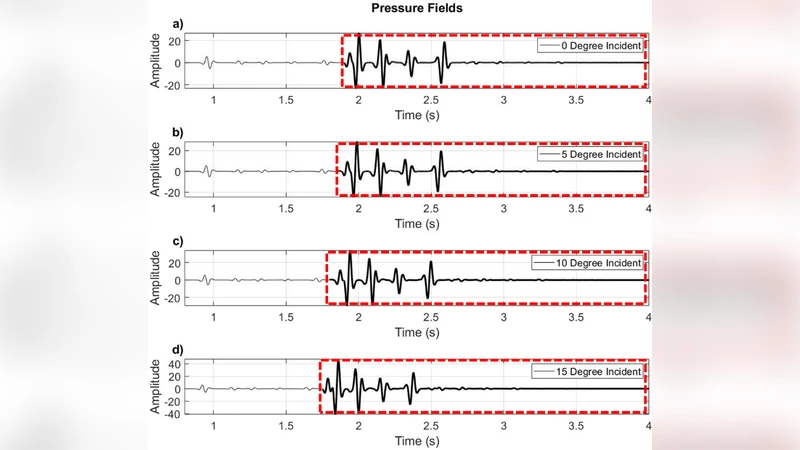
We propose and test the Direct Waveform Inversion (DWI) scheme to simultaneously invert for layered velocity and density profiles, using reflection seismic waveforms recorded on the surface. The recorded data include primary reflections and interbed multiples. DWI is implemented in the time-space domain. By explicitly enforcing the wavefield time-space causality, DWI can recursively determine the subsurface seismic structure in a local fashion for both sharp interfaces as well as the properties of the layers, from shallow to deep depths. DWI is different from the layer stripping methods in the frequency domain. By not requiring a global initial model, DWI avoids many nonlinear optimization problems, such as the local minima and the need for an accurate initial model in most full waveform inversion schemes. Using two numerical tests here, we demonstrate that the DWI scheme for multi-parameter seismic inversion for velocity and density of layered media, using plane waves of different incident angles. This represents a significant step comparing with the previous DWI only inverting for the velocity.
💡 Research Summary
The paper introduces a novel implementation of Direct Waveform Inversion (DWI) for the simultaneous recovery of both P‑wave velocity and density in a one‑dimensional, horizontally layered Earth model. Traditional full‑waveform inversion (FWI) and earlier DWI approaches have relied on global, nonlinear optimization and typically required an accurate initial model; they also usually invert only a single parameter (most often velocity). In contrast, the proposed DWI works entirely in the time‑space domain, enforces causality of the wavefield explicitly, and proceeds layer by layer from the shallowest interface to deeper ones. By treating the recorded surface seismograms—including primary reflections and inter‑bed multiples—as a set of causal impulse responses, the method extracts the reflection coefficients at each interface. These coefficients are then decomposed analytically into velocity and density contrasts using the Zoeppritz equations (or their linearized approximations). Because each step only depends on the previously recovered shallower layers, the algorithm avoids the need for a global initial model and sidesteps the common pitfalls of local minima that plague conventional FWI. The authors validate the approach with two synthetic experiments. In the first test, a three‑layer model with moderate contrast is inverted using plane‑wave sources at several incident angles; the recovered velocity and density profiles match the true model within a few percent. The second test uses a more complex model containing thin high‑impedance layers that generate strong inter‑bed multiples; DWI successfully retrieves both the thin‑layer velocities and densities, demonstrating robustness against multiple‑interference. The results show that DWI can handle sharp interfaces as well as smoothly varying layers, and that the inclusion of density as a second parameter does not degrade convergence because the density information is encoded in the amplitude of the reflected and multiple energy. The paper also discusses computational efficiency: the algorithm operates with O(N) complexity per layer (where N is the number of time samples) and requires only forward modeling of the causal wavefield, not iterative gradient calculations. Limitations are acknowledged: the method assumes 1‑D laterally homogeneous media, plane‑wave illumination, and negligible attenuation; extending to 2‑D/3‑D and incorporating anisotropy or attenuation will require further development. Overall, the study demonstrates that Direct Waveform Inversion can be extended from single‑parameter velocity inversion to a robust, local, multi‑parameter inversion framework, offering a promising alternative to conventional FWI for layered subsurface characterization.
Comments & Academic Discussion
Loading comments...
Leave a Comment