The Mobility Network of Scientists: Analyzing Temporal Correlations in Scientific Careers
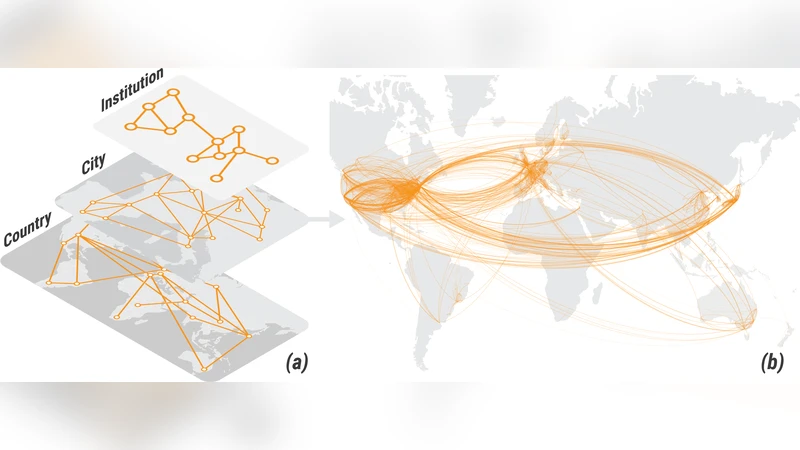
The mobility of scientists between different universities and countries is important to foster knowledge exchange. At the same time, the potential mobility is restricted by geographic and institutional constraints, which leads to temporal correlations in the career trajectories of scientists. To quantify this effect, we extract 3.5 million career trajectories of scientists from two large scale bibliographic data sets and analyze them applying a novel method of higher-order networks. We study the effect of temporal correlations at three different levels of aggregation, universities, cities and countries. We find strong evidence for such correlations for the top 100 universities, i.e. scientists move likely between specific institutions. These correlations also exist at the level of countries, but cannot be found for cities. Our results allow to draw conclusions about the institutional path dependence of scientific careers and the efficiency of mobility programs.
💡 Research Summary
The paper investigates the temporal correlations in scientists’ career moves by extracting 3.5 million individual career trajectories from two large bibliographic databases: MEDLINE and the Microsoft Academic Graph (MAG). The authors focus on three levels of spatial aggregation—universities, cities, and countries—to assess how mobility patterns differ across scales.
Methodologically, the study departs from traditional static network analyses that simply count flows between institutions. Instead, it employs higher‑order network models, which retain the order of visited nodes by representing each state as a sequence of the previous k locations. Specifically, second‑order transition matrices (T^(2)) are constructed, and a multi‑order framework automatically selects the optimal order that best captures the data’s non‑Markovian nature. This approach allows the authors to quantify “temporal correlations” – the extent to which a scientist’s next move depends on the immediate past move(s).
At the university level, the authors restrict the analysis to the top 100 institutions according to the Times Higher Education World Reputation Rankings (2015). Using MAG, they obtain 235 935 disambiguated career paths among these elite universities. The second‑order network reveals that only about 23 % of all possible university‑pair nodes belong to a single giant connected component, whose diameter is 24 and whose average shortest‑path length is roughly 2.6. This indicates that, despite the underlying static network having a small‑world topology (average path length ≈ 2), actual career trajectories are far more constrained. Certain pairs—e.g., MIT ↔ Stanford, Cambridge ↔ Oxford—appear disproportionately often, suggesting strong “path dependence” driven by prestige, research specialization, and existing collaboration ties. When a maximum‑entropy Markovian model (which ignores temporal ordering) is applied, the resulting network becomes fully connected, highlighting that the observed constraints are indeed a product of temporal ordering rather than mere structural connectivity.
At the city level, the authors rely on MEDLINE, which provides affiliation strings that can be geocoded to city and country. The second‑order city network shows almost no temporal correlation: most city pairs are connected, and transition probabilities are largely independent of the preceding city. This suggests that intra‑national or regional mobility is relatively unconstrained, likely because many research institutions are clustered within the same metropolitan areas, reducing geographic barriers.
At the country level, temporal correlations re‑emerge. The second‑order country network exhibits distinct clusters (e.g., North‑American, Western‑European groups) and a higher proportion of disconnected node pairs compared with the city level. This reflects policy‑driven barriers such as visa regulations, funding eligibility, and language differences that shape cross‑border academic flows.
The authors also examine the implications of these findings for mobility programs and science policy. The strong path dependence among elite universities implies that targeted interventions—such as joint postdoctoral fellowships, coordinated hiring pipelines, or strategic funding for inter‑institutional collaborations—could be more effective than blanket mobility incentives. Conversely, the lack of temporal constraints at the city level suggests that regional research clusters can be nurtured with relatively simple infrastructure investments. At the national level, policies that ease immigration procedures and promote bilateral research agreements may help to dissolve the observed country‑level bottlenecks.
Overall, the study demonstrates that higher‑order network analysis provides a more nuanced and accurate representation of scientific mobility than traditional static graphs. By preserving the sequence of moves, the method uncovers hidden constraints and reveals where mobility is truly “free” versus where it is structurally or institutionally limited. The authors recommend extending this framework to include additional dimensions—such as disciplinary fields, funding sources, and individual nationality—to further elucidate the complex drivers of high‑skill labor migration in the global knowledge economy.
Comments & Academic Discussion
Loading comments...
Leave a Comment