Online monitoring of local taxi travel momentum and congestion effects using projections of taxi GPS-based vector fields
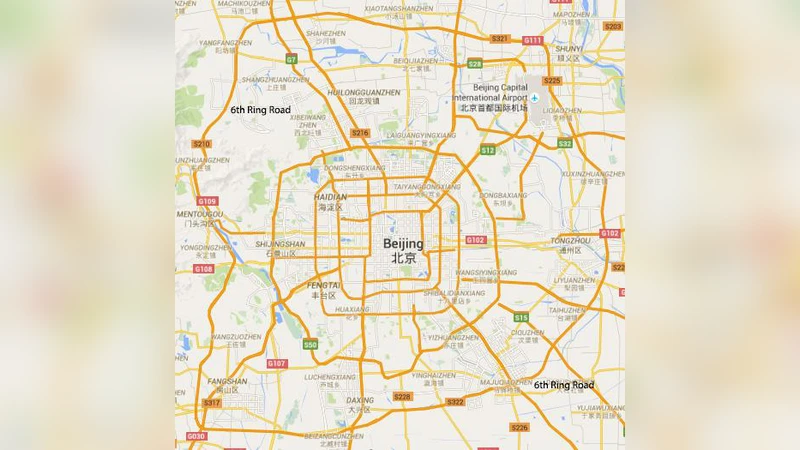
Ubiquitous taxi trajectory data has made it possible to apply it to different types of travel analysis. Of interest is the need to allow someone to monitor travel momentum and associated congestion in any location in space in real time. However, despite an abundant literature in taxi data visualization and its applicability to travel analysis, no easy method exists. To measure taxi travel momentum at a location, current methods require filtering taxi trajectories that stop at a location at a particular time range, which is computationally expensive. We propose an alternative, computationally cheaper way based on pre-processing vector fields from the trajectories. Algorithms are formalized for generating vector kernel density to estimate a travel-model-free vector field-based representation of travel momentum in an urban space. The algorithms are shared online as an open source GIS 3D extension called VectorKD. Using 17 million daily taxi GPS points within Beijing over a four-day period, we demonstrate how to generate in real time a series of projections from a continuously updated vector field of taxi travel momentum to query a point of interest anywhere in a city, such as the CBD or the airport. This method allows a policy-maker to automatically identify temporal net influxes of travel demand to a location. The proposed methodology is shown to be over twenty times faster than a conventional selection query of trajectories. We also demonstrate, using taxi data entering the Beijing Capital International Airport and the CBD, how we can quantify in nearly real time the occurrence and magnitude of inbound or outbound queueing and congestion periods due to taxis cruising or waiting for passengers, all without having to fit any mathematical queueing model to the data.
💡 Research Summary
The paper tackles the challenge of real‑time monitoring of travel demand and congestion using massive taxi GPS datasets. Traditional approaches require filtering individual trajectories that intersect a point‑of‑interest (POI) within a given time window, an operation that becomes computationally prohibitive at city scale. The authors propose a fundamentally different workflow: pre‑process raw GPS points into a three‑dimensional (space‑time) vector field, termed Vector Kernel Density (VKD), and then query this field directly for any POI.
First, the continuous urban space‑time domain is discretized into cubic cells (“taxels”) defined by a spatial resolution (e.g., 100 m) and a temporal resolution (e.g., 1 min). Each taxi trajectory is broken into line segments (travel vectors) between consecutive GPS points. Segments are clipped to the appropriate time slots, and for each taxel the algorithm computes two quantities: (1) a scalar kernel density using a quartic kernel that decays with Euclidean distance from the segment, and (2) a normalized direction vector derived from the segment’s orientation. By summing the kernel contributions of all segments that fall within a taxel’s search radius, the method yields a vector‑valued density – the VKD – that simultaneously encodes travel volume (magnitude) and predominant direction (orientation).
The key innovation lies in projecting this vector field onto a POI. For every taxel within a user‑defined search radius, a Cell‑POI vector is formed. The dot product between the Cell‑POI vector and the taxel’s VKD vector extracts the component of travel momentum that is either toward (positive) or away from (negative) the POI. Summing these projected components across all relevant taxels produces two time‑series: inbound and outbound travel momentum for the POI. Because the operation reduces to a series of vector arithmetic steps, it is orders of magnitude faster than scanning millions of raw trajectories; the authors report a speed‑up of more than 20× on a dataset of 17 million GPS points collected over four days in Beijing.
The methodology is implemented as an open‑source GIS 3‑D extension called VectorKD, which integrates with ArcGIS and supports real‑time updates as new GPS points arrive. The authors demonstrate the system on two critical locations: Beijing Capital International Airport and the central business district (CBD). At the airport, spikes in inbound momentum correspond to periods when taxis cruise while waiting for passengers, revealing queuing dynamics without fitting any queuing theory model. In the CBD, outbound momentum peaks during morning rush hours, indicating rapid dispersal of taxis after dropping off passengers. These insights enable city managers to detect emerging congestion, allocate curb space, or adjust traffic signal timing on the fly.
Limitations include sensitivity to GPS noise, the need to choose appropriate spatial/temporal resolutions and search radii, and the requirement for a robust streaming infrastructure to keep the VKD field current. Future work suggested by the authors involves extending the framework to multimodal data (buses, metros), integrating machine‑learning based anomaly detection, and exploring adaptive kernel functions that reflect varying traffic conditions.
In summary, the paper presents a novel, computationally efficient approach for converting massive taxi GPS traces into a continuously updated vector field that can be queried in real time for any location. By doing so, it bridges the gap between big‑data mobility analytics and operational traffic management, offering a practical tool for smart‑city applications.
Comments & Academic Discussion
Loading comments...
Leave a Comment