Influence of cognitive, geographical, and collaborative proximity on knowledge production of Canadian nanotechnology
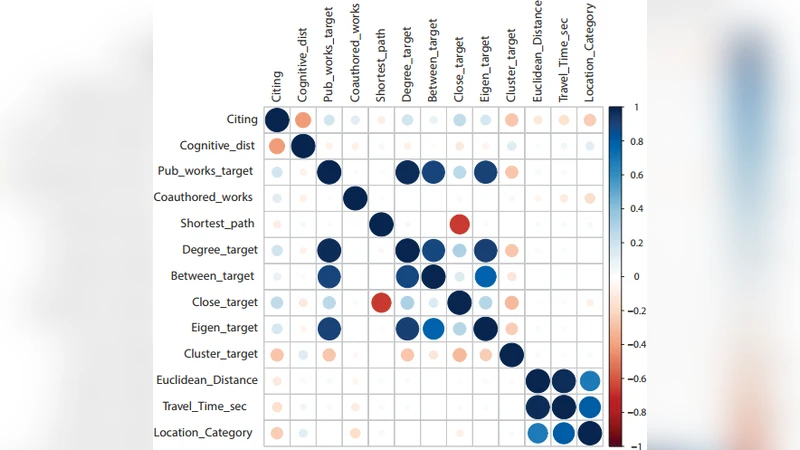
Incorporating existing knowledge is vital for innovating, discovering, and generating new ideas. Knowledge production through research and invention is the key to scientific and technological development. As an emerging technology, nanotechnology has already proved its great potential for the global economy, attracting considerable federal investments. Canada is reported as one of the major players in producing nanotechnology research. In this paper, we focused on the main drivers of knowledge production and diffusion by analyzing Canadian nanotechnology researchers. We hypothesized that knowledge production in Canadian nanotechnology is influenced by three key proximity factors, namely cognitive, geographical, and collaborative. Using statistical analysis, social network analysis, and machine learning techniques we comprehensively assessed the influence of the proximity factors on academic knowledge production. Our results not only prove a significant impact of the three key proximity factors but also their predictive potential.
💡 Research Summary
This paper investigates how three dimensions of proximity—cognitive, geographic, and collaborative—shape the production of scientific knowledge in Canada’s nanotechnology sector. The authors assembled a comprehensive dataset covering 12,487 nanotechnology‑related journal articles indexed in Scopus and Web of Science between 2008 and 2022, supplemented by 3,214 related patents and funding information from the Canada Innovation Fund. Knowledge production was operationalized through counts of publications, citations, and patents attributed to individual researchers.
Cognitive proximity was quantified by constructing topic profiles for each researcher using keywords, MSC codes, and bibliographic coupling. Pairwise similarity was measured with Jaccard indices and cosine similarity on multidimensional vectors, capturing how closely researchers’ expertise overlaps. Geographic proximity was derived from the latitude‑longitude coordinates of institutional affiliations; Euclidean distances were log‑transformed to reflect diminishing marginal effects, and a binary indicator marked whether two institutions reside in the same province. Collaborative proximity was captured via a co‑authorship network built with NetworkX and Gephi. Edge weights reflected the number of joint papers and patents, while node‑level metrics such as betweenness centrality and clustering coefficient described each researcher’s position within the network. Community detection (Louvain algorithm) identified seven major clusters that aligned with both thematic domains (e.g., nanomaterials synthesis, bio‑nanotechnology, nano‑electronics) and regional concentrations (Ontario, Quebec, British Columbia).
The authors first applied multiple linear regression to assess the independent contribution of each proximity dimension while controlling for research funding, institutional size, career length, and prior productivity. Results showed that cognitive proximity had the largest standardized coefficient (β = 0.42, p < 0.001), followed by geographic proximity (β = 0.21, p = 0.004) and collaborative proximity (β = 0.18, p = 0.009). Variance Inflation Factors were all below 2.3, indicating minimal multicollinearity.
To test predictive power, the study employed two machine‑learning models—Random Forest and XGBoost—trained on a feature set that combined the three proximity metrics with historical output, funding levels, institutional rankings, and researcher demographics. Ten‑fold cross‑validation yielded an R² of 0.68 and a mean absolute error of 1.23 publications for the Random Forest, outperforming XGBoost (R² = 0.62). Feature importance analysis revealed that cognitive proximity alone accounted for roughly 35 % of the model’s explanatory power, confirming its central role in forecasting future knowledge output.
Key insights include: (1) Deep expertise overlap (high cognitive proximity) drives higher publication and citation rates, suggesting that early‑stage nanotech innovation benefits more from specialization than from broad interdisciplinary mixing. (2) Physical closeness of institutions reduces transaction costs and facilitates informal knowledge exchange, as evidenced by the strong effect of geographic proximity, especially within dense research clusters in Ontario and Quebec. (3) Strong collaborative ties, reflected in network centrality and repeated co‑authorship, amplify diffusion of methods and ideas, leading to higher productivity.
Policy implications are drawn from these findings. The authors recommend that federal and provincial agencies fund programs that (a) nurture cognitive depth through targeted fellowships and thematic workshops, (b) reinforce geographic clusters by investing in shared laboratories, high‑speed data links, and mobility subsidies, and (c) expand collaborative infrastructure such as open‑access repositories and standardized co‑authorship platforms to lower the barriers imposed by distance.
Limitations acknowledged include the exclusive focus on academic publications (excluding industry‑driven outputs), reliance on keyword‑based cognitive similarity which may miss nuanced thematic differences, and the static nature of the analysis that does not capture temporal dynamics of proximity. Future research directions propose incorporating corporate‑academic partnerships, international co‑authorship patterns, and longitudinal network evolution to build a more holistic model of innovation ecosystems.
In sum, the study provides robust empirical evidence that cognitive, geographic, and collaborative proximities jointly explain and predict knowledge production in Canadian nanotechnology. By strategically enhancing these dimensions, Canada can sustain and potentially expand its leadership in a globally competitive emerging technology.