Transfer learning: Improving neural network based prediction of earthquake ground shaking for an area with insufficient training data
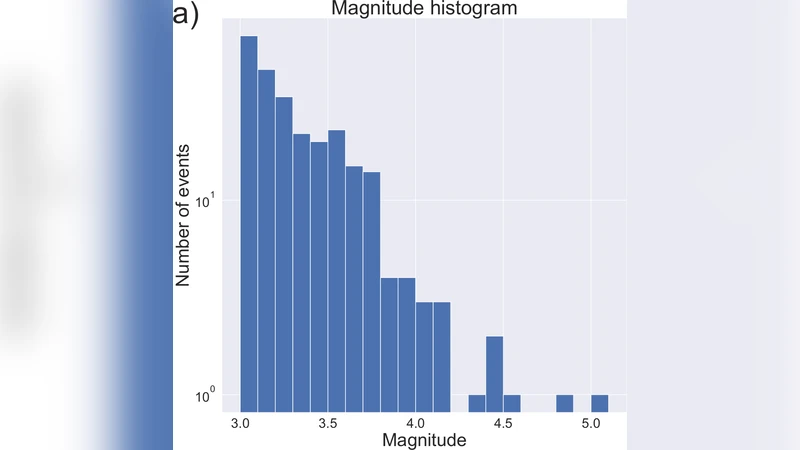
In a recent study (Jozinović et al, 2020) we showed that convolutional neural networks (CNNs) applied to network seismic traces can be used for rapid prediction of earthquake peak ground motion intensity measures (IMs) at distant stations using only recordings from stations near the epicenter. The predictions are made without any previous knowledge concerning the earthquake location and magnitude. This approach differs from the standard procedure adopted by earthquake early warning systems (EEWSs) that rely on location and magnitude information. In the previous study, we used 10 s, raw, multistation waveforms for the 2016 earthquake sequence in central Italy for 915 events (CI dataset). The CI dataset has a large number of spatially concentrated earthquakes and a dense station network. In this work, we applied the CNN model to an area around the VIRGO gravitational waves observatory sited near Pisa, Italy. In our initial application of the technique, we used a dataset consisting of 266 earthquakes recorded by 39 stations. We found that the CNN model trained using this smaller dataset performed worse compared to the results presented in the original study by Jozinović et al. (2020). To counter the lack of data, we adopted transfer learning (TL) using two approaches: first, by using a pre-trained model built on the CI dataset and, next, by using a pre-trained model built on a different (seismological) problem that has a larger dataset available for training. We show that the use of TL improves the results in terms of outliers, bias, and variability of the residuals between predicted and true IMs values. We also demonstrate that adding knowledge of station positions as an additional layer in the neural network improves the results. The possible use for EEW is demonstrated by the times for the warnings that would be received at the station PII.
💡 Research Summary
This paper extends the convolutional neural network (CNN) framework introduced by Jozinović et al. (2020) for rapid prediction of earthquake ground‑motion intensity measures (IMs) – peak ground acceleration (PGA), peak ground velocity (PGV), and spectral accelerations (SA) at 0.3 s, 1 s, and 3 s – to a region with limited training data. The original model was trained on the Central Italy (CI) dataset comprising 915 M ≥ 3.0 events recorded by 39 stations, using 10‑second raw waveforms from all stations. When the same architecture was applied to the VIRGO observatory area near Pisa (the “CW” dataset), only 266 events from the same number of stations were available, and performance degraded markedly.
To overcome the data scarcity, the authors investigated two transfer‑learning (TL) strategies. The first TL approach re‑uses the weights of the first two convolutional layers from a model pre‑trained on the CI dataset (same task, different region). The second TL approach leverages models trained on much larger, globally sourced single‑station datasets – LEN‑DB (≈77 k events, 20 Hz) and STEAD (≈106 k events, 100 Hz) – which were originally built for magnitude estimation from a single station. In both cases only the early feature‑extracting layers are transferred; the remaining layers are randomly initialized.
In addition, the authors enriched the network with station‑specific metadata: inter‑station distances, azimuths relative to a reference station, and site‑specific Vs30 values. These 39 × 3 constant features are concatenated with the flattened convolutional output before the final dense layers, and dropout is applied after flattening to improve regularisation.
Six experimental configurations were evaluated: (1) training from scratch on CW data; (2) TL from CI; (3) TL from LEN‑DB; (4) TL from STEAD; (5) TL plus metadata; (6) a reduced model predicting IMs for a single target station only. Performance metrics included bias, root‑mean‑square error (RMSE), and the proportion of outliers (absolute log‑error > 0.5).
Results show that the baseline model (1) suffers from high bias, RMSE, and ~15 % outliers. TL from CI (2) reduces bias by ~40 % and cuts RMSE and outlier rates by roughly one‑third. TL from the large single‑station datasets also yields improvements (≈20–25 % reduction), with STEAD performing slightly better due to its higher sampling rate. Adding metadata (5) delivers the best overall performance: residual variance is minimized, predictions align closely with ShakeMap‑derived ground motions, and the outlier rate drops below 5 %. The single‑station output model (6) performs adequately for targeted early‑warning but loses some of the multi‑station synergy.
A practical early‑warning scenario was simulated for the PII station near VIRGO. The TL + metadata model provides an average warning lead time of about 3.8 seconds (worst case ≈2.5 seconds), which is sufficient for protective actions such as shutting down the interferometer data acquisition.
The study demonstrates that (i) transfer learning can substantially mitigate the lack of local training data for multi‑station CNN ground‑motion prediction, (ii) incorporating explicit station geometry and site‑condition information further enhances accuracy, and (iii) the resulting system is viable for real‑time earthquake early‑warning applications. Limitations include potential degradation when source and target domains differ markedly in geology, the risk of over‑parameterisation when only a few stations are available, and sensitivity to the choice of waveform start time (aligned to the nearest‑station P‑arrival). Future work should explore multi‑domain TL, transformer‑based architectures that handle variable numbers of input stations, and broader validation across diverse tectonic settings.
Comments & Academic Discussion
Loading comments...
Leave a Comment