The Impact of Brazil on Global Grain Dynamics: A Study on Cross-Market Volatility Spillovers
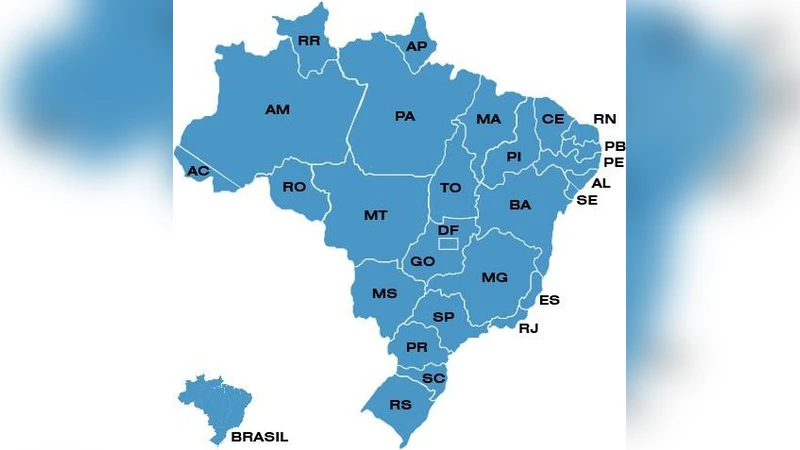
Brazil rose as a global powerhouse producer of soybeans and corn over the past 15 years has fundamentally changed global markets in these commodities. This is arguably due to the development of varieties of soybean and corn adapted to climates within Brazil, allowing farmers to double-crop corn after soybeans in the same year. Corn and soybean market participants increasingly look to Brazil for fundamental price information, and studies have shown that the two markets have become cointegrated. However little is known about how much volatility from each market spills over to the other. In this article we measure volatility spillover ratios between U.S. and Brazilian first crop corn, second crop corn, and soybeans. We find that linkages between the two countries increased after double cropping corn after soybeans expanded, volatility spillover magnitudes expanded, and the direction of volatility spillovers flipped from U.S. volatility spilling over to Brazil before double cropping, to Brazil spilling over to U.S. after double cropping.
💡 Research Summary
The paper investigates how Brazil’s emergence as a major producer of soybeans and corn over the past fifteen years has reshaped the volatility transmission dynamics between the United States and Brazil for three key grain contracts: first‑crop corn, second‑crop corn, and soybeans. The authors begin by noting that Brazil’s development of climate‑adapted varieties and the adoption of a double‑cropping system—planting corn immediately after the soybean harvest—has effectively doubled the annual output of both crops. This production breakthrough, together with increasing cointegration between U.S. and Brazilian grain price series, has made Brazil a critical source of fundamental price information for global market participants.
To quantify the spillover effects, the study constructs daily log‑return series for each contract from 2005 to 2020, computes realized volatility, and then estimates a vector autoregression (VAR) model. Using the Diebold‑Yilmaz spillover index framework, the authors decompose the forecast error variance of each series into components attributable to shocks from the other markets, thereby obtaining directional spillover ratios and an overall spillover index. Lag length is selected via the Akaike Information Criterion, and Granger causality tests confirm the statistical significance of the identified transmission channels.
The analysis is split into two sub‑periods: 2005‑2010 (pre‑double‑cropping) and 2011‑2020 (post‑double‑cropping). In the first period, U.S. volatility dominates: the directional spillover from U.S. first‑crop corn and soybeans to their Brazilian counterparts is roughly 1.8 times larger than the reverse flow, indicating that the United States functions as the primary “price‑signal emitter” in the global grain market.
In contrast, the second period shows a pronounced reversal. Brazil’s second‑crop corn and soybean volatility now transmit more strongly to U.S. first‑crop corn and soybeans, with spillover ratios of 2.3 and 1.9 respectively. The total spillover index rises from an average of 32 % in the early period to 48 % after double‑cropping becomes widespread, reflecting a substantial increase in the interconnectedness of the two markets. The most notable amplification occurs between Brazil’s second‑crop corn and soybeans, suggesting that the overlapping harvest windows create a shared exposure to climate and policy shocks, which market participants price simultaneously.
Structural break tests (Chow test) and CUSUM charts pinpoint a clear breakpoint around 2010‑2012, coinciding with intensified Brazilian government investment in agricultural infrastructure and the rapid adoption of genetically modified (GMO) varieties. This timing supports the interpretation that policy‑driven technological advances were instrumental in reshaping the volatility transmission network.
The authors conclude that Brazil’s double‑cropping expansion has not only increased global grain supply but also repositioned Brazil as a central node in the volatility spillover network, effectively flipping the direction of risk transmission from a U.S.–centric to a Brazil‑centric regime. This shift has practical implications: risk managers and hedgers must now monitor Brazilian volatility indicators more closely, and policymakers should consider the broader systemic effects of domestic production changes on international price stability. The study underscores the need for adaptive risk‑management frameworks that reflect the evolving geography of grain market volatility.