Jet-induced cratering of a granular surface with application to lunar spaceports
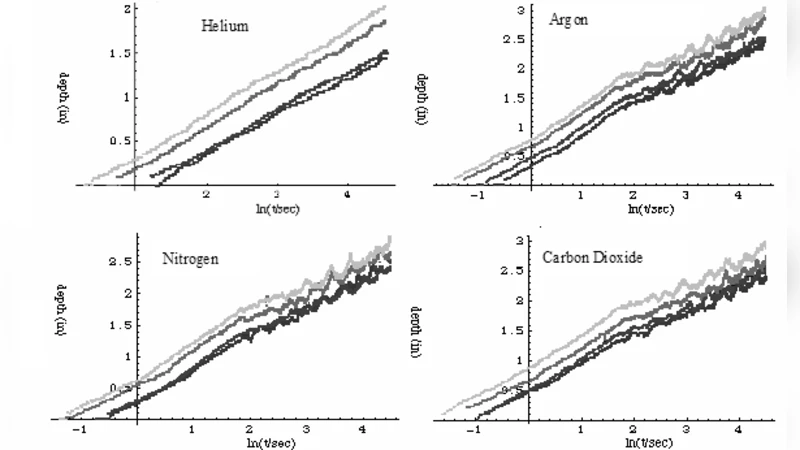
The erosion of lunar soil by rocket exhaust plumes is investigated experimentally. This has identified the diffusion-driven flow in the bulk of the sand as an important but previously unrecognized mechanism for erosion dynamics. It has also shown that slow regime cratering is governed by the recirculation of sand in the widening geometry of the crater. Scaling relationships and erosion mechanisms have been characterized in detail for the slow regime. The diffusion-driven flow occurs in both slow and fast regime cratering. Because diffusion-driven flow had been omitted from the lunar erosion theory and from the pressure cratering theory of the Apollo and Viking era, those theories cannot be entirely correct.
💡 Research Summary
The paper investigates how rocket exhaust plumes erode a granular surface, with a focus on lunar applications such as spaceport design and landing pad protection. Using laboratory experiments in which high‑pressure gas jets impinge on beds of sand or lunar‑regolith simulant, the authors measured crater geometry, growth rates, and internal gas pressure fields with high‑speed imaging, laser ranging, and embedded pressure transducers. The central discovery is the identification of a “diffusion‑driven flow” within the porous granular medium. Unlike the traditional pressure‑cratering models that consider only the direct mechanical impact of the jet on the surface, this flow arises from gas diffusing through the interstitial pores, generating a slow but persistent shear that mobilizes particles deep beneath the surface.
Crater development falls into two distinct regimes. In the slow regime, which occurs at lower jet pressures, larger stand‑off distances, and with thicker granular layers, the crater expands primarily by the recirculation of sand within the widening geometry. The crater diameter D and depth H follow power‑law scaling with time t (D ∝ t^0.5, H ∝ t^0.3). The sidewalls settle at a relatively constant angle (30°–45°), reflecting a self‑regulating balance between the outward diffusion‑driven shear and the gravitational confinement of the particles. The internal flow creates a “recirculation loop” where sand is lifted along the walls, transported inward, and redeposited at the crater floor, sustaining gradual widening.
In the fast regime, encountered at higher jet pressures and shorter nozzle‑to‑surface distances, the dominant mechanism is a direct impact‑erosion or “shock‑cratering” where the high‑velocity gas physically ejects particles, producing a deep, narrow crater almost instantaneously. Nevertheless, even after the initial shock, diffusion‑driven flow persists, smoothing the crater edges and contributing to later-stage lateral expansion.
The authors derive empirical scaling relationships that incorporate jet pressure P, nozzle area A, and material properties (particle density ρ, size d, internal friction μ). For example:
- D = k₁ · (P · A)^0.4 · t^0.5
- H = k₂ · (P · A)^0.3 · t^0.3
where k₁ and k₂ are constants calibrated from the experiments. By applying lunar gravity (1.62 m s⁻²) and vacuum conditions, these formulas can be extrapolated to predict crater dimensions for actual lunar landings.
A critical implication is that the classic Apollo and Viking pressure‑cratering theories omitted the diffusion‑driven component, leading to under‑prediction of crater size and dust lofting on the Moon, where the regolith is highly porous and loosely bound. The new model therefore provides a more accurate framework for assessing erosion hazards.
From an engineering perspective, the findings suggest several design strategies for lunar spaceports:
- Maintain a sufficient stand‑off distance between the engine nozzle and the landing surface to keep the flow in the slow regime, reducing direct shock erosion.
- Employ multi‑stage or deflection nozzles that spread the exhaust laterally, limiting peak pressure and minimizing the diffusion‑driven shear within the regolith.
- Reinforce landing pads with high‑density meshes, geotextiles, or compacted regolith layers to decrease pore connectivity and suppress gas diffusion.
- Implement real‑time monitoring using pressure sensors and laser profilers to detect rapid crater growth and trigger active mitigation (e.g., throttling engines, activating dust‑capture systems).
In summary, the paper introduces diffusion‑driven flow as a previously unrecognized but dominant mechanism in granular erosion by rocket plumes. It delineates slow and fast cratering regimes, provides robust scaling laws, and demonstrates that earlier lunar erosion theories are incomplete. These insights are essential for the safe design of lunar landing sites, the development of dust‑mitigation technologies, and the broader goal of establishing sustainable human presence on the Moon.
Comments & Academic Discussion
Loading comments...
Leave a Comment